

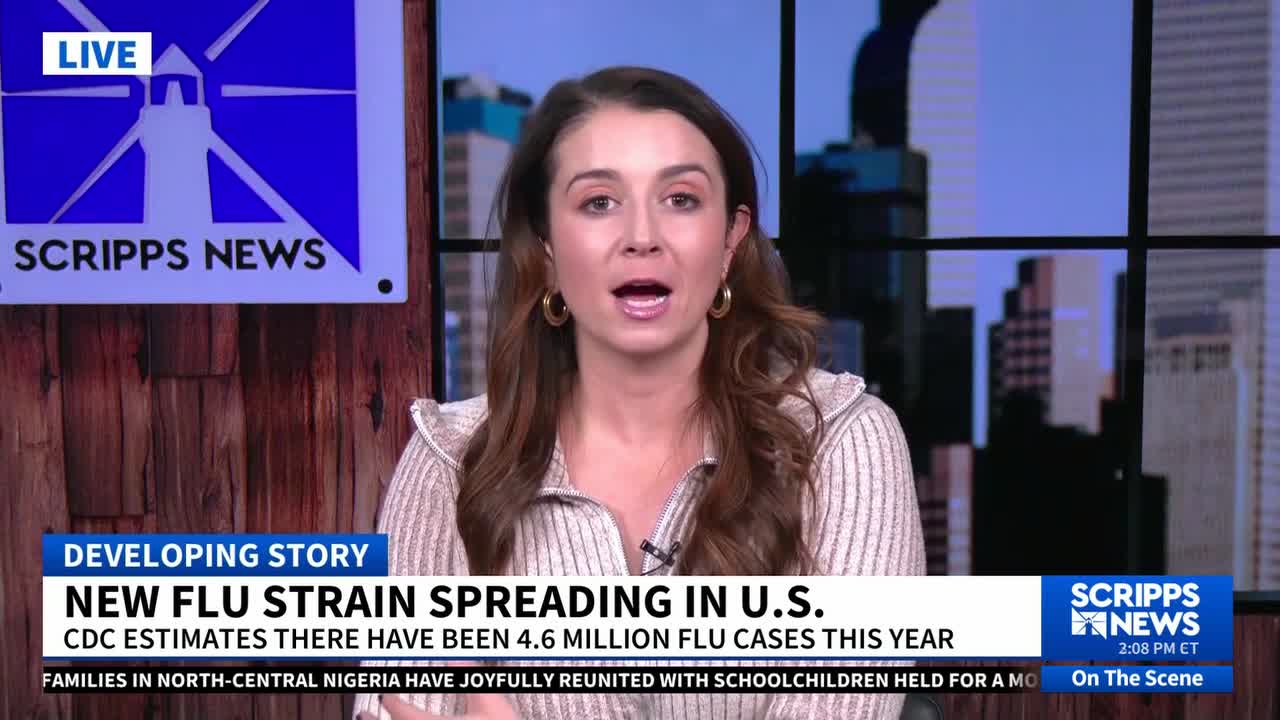


Health officials are increasingly concerned about surging flu cases nationwide.
The Centers for Disease Control and Prevention estimates there have been 4.6 million flu cases this season, along with 49,000 hospitalizations and 1,900 deaths. Two of those deaths were pediatric patients being treated last week.
For the week leading into Christmas, the CDC reported increases in doctor visits, hospitalizations, positive test results and deaths compared with the previous week.
RELATED STORY | New flu strain could escape vaccine immunity as holiday travel begins
Influenza A(H3N2) is driving most infections this season. Of the H3N2 viruses genetically analyzed by the CDC since late September, nearly 90% belonged to a single genetic group known as subclade K, according to the agency.
It's genetically different from the strain included in this year's flu vaccine. This means the new variant could potentially escape immunity even for people who have received their flu shot.
RELATED STORY | What is subclade K? The fast-spreading flu type drawing concern
However, the CDC still recommends that nearly everyone 6 months and older get the flu vaccine. The agency says it's the best way to reduce the risk of severe illness and death.
There are also four FDA-approved antiviral drugs to treat the flu this season:
- oseltamivir phosphate (available as a generic version or under the trade name Tamiflu®)
- zanamivir (trade name Relenza®)
- peramivir (trade name Rapivab®)
- baloxavir marboxil (trade name Xofluza®)
Health officials say the medications are most effective when taken within 1-2 days after flu symptoms begin.
