

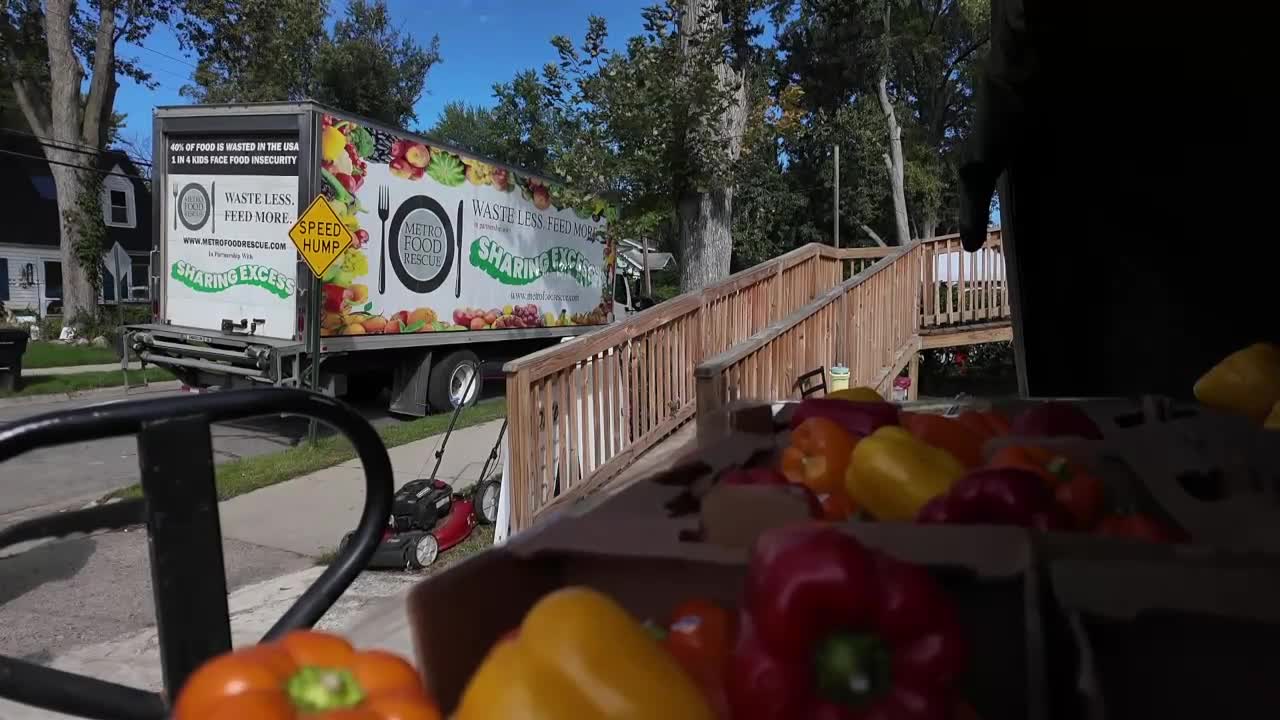


DETROIT, Mich. (WXYZ) — Metro Food Rescue is feeling the financial pressure of record diesel prices as the Detroit-area nonprofit works to deliver millions of pounds of food each year to families across Metro Detroit.
The nonprofit operates five box trucks six days a week, picking up surplus food from grocery stores, restaurants, and other businesses and delivering it to community food hubs across the region.
"We have five box trucks that drive around the city six days a week," Metro Food Rescue Founder and CEO Chad Techner said.
But keeping those trucks moving comes at a growing cost. Techner said the organization had planned to spend $50,000 on fuel this year — a budget it now expects to exceed.
Watch Carli Petrus's report in the video player below:
According to AAA, the national diesel average stands at $6.53 per gallon as of Sept. 22, 2026. Michigan's average is even higher at $6.81 per gallon — up more than $3 from $3.70 a gallon at this time last year.
For a nonprofit that spends so much time on the road, those costs add up quickly.
Techner said the concern goes beyond the price at the pump — it extends to what rising fuel costs could mean for the people waiting at the other end of each delivery.
SDM2 Project Education is one of about 150 food hubs Metro Food Rescue serves. Jacqueline Moore, founder and CEO of SDM2 Project Education, said the deliveries make a meaningful difference for the families who rely on them.
"Food should never be anything that we should worry about, and when we have organizations like Metro Food Rescue to at least take that off the plate, it makes a world of difference," Moore said.
The food that arrives at hubs like SDM2 Project Education is free to the families who take it home. Nicole Talley, who benefits from Metro Food Rescue, said she visits nearly every Tuesday to pick up healthy food for her family.
"With rising food costs and just rising costs of everything in general, it has really helped out," Talley said. "It has helped me to still be able to provide quality food for my household and not have to make as many sacrifices."
Metro Food Rescue is now turning to the community for help keeping its trucks on the road.
"The community has been amazing so far; we couldn't do this work without them. We don't pay for any of our food, we don't charge our partners to drop it off — we just need to fundraise our logistics, and our logistics, like everyone's, just got more expensive," Techner said.
The organization says every contribution helps it continue moving food to the community hubs that depend on these deliveries.
This story was reported on-air by a journalist and has been converted to this platform with the assistance of AI. Our editorial team verifies all reporting on all platforms for fairness and accuracy.
