



(WXYZ) — As America prepares to mark its 250th anniversary, we're looking at the people and ideas that helped shape the nation.
See the full story from Keenan Smith in the video below
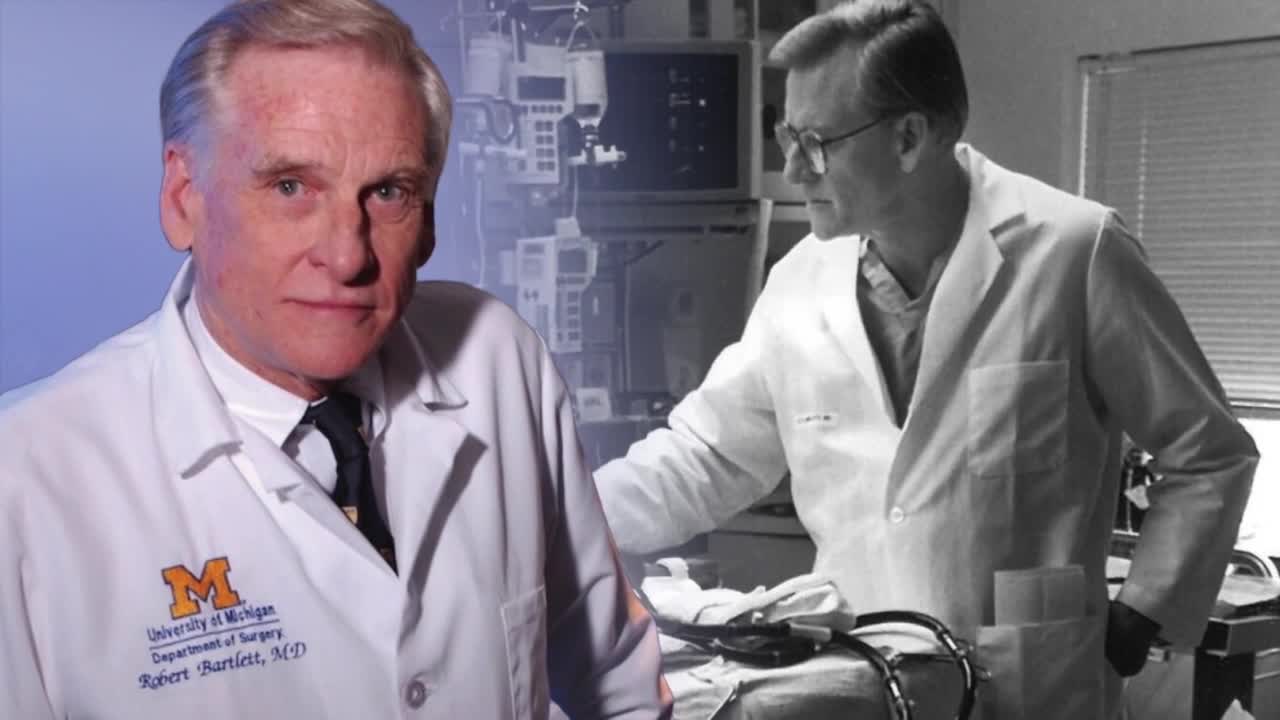
One of those is a medical breakthrough with deep Michigan ties. ECMO (Extracorporeal Membrane Oxygenation), is a life support technology developed in Ann Arbor by Dr. Robert Bartlett at the University of Michigan in the 1970s. It can take over the work of the heart and lungs of critically-ill patients.
It started as a bold idea, and is now used around the world to save newborns, children and adults, giving families time when moments are most precious.
Before Dr. Hannah Abraham ever held a stethoscope or enrolled in medical school, she was a newborn with failing lungs. The ECMO machine at the University of Michigan helped give her time.
"I would not be here today if it were not for ECMO," Abraham said.
When a patient's heart or lungs are failing, ECMO adds oxygen to the blood, removes carbon dioxide and sends it back to the body, giving the heart and lungs time to rest and heal.
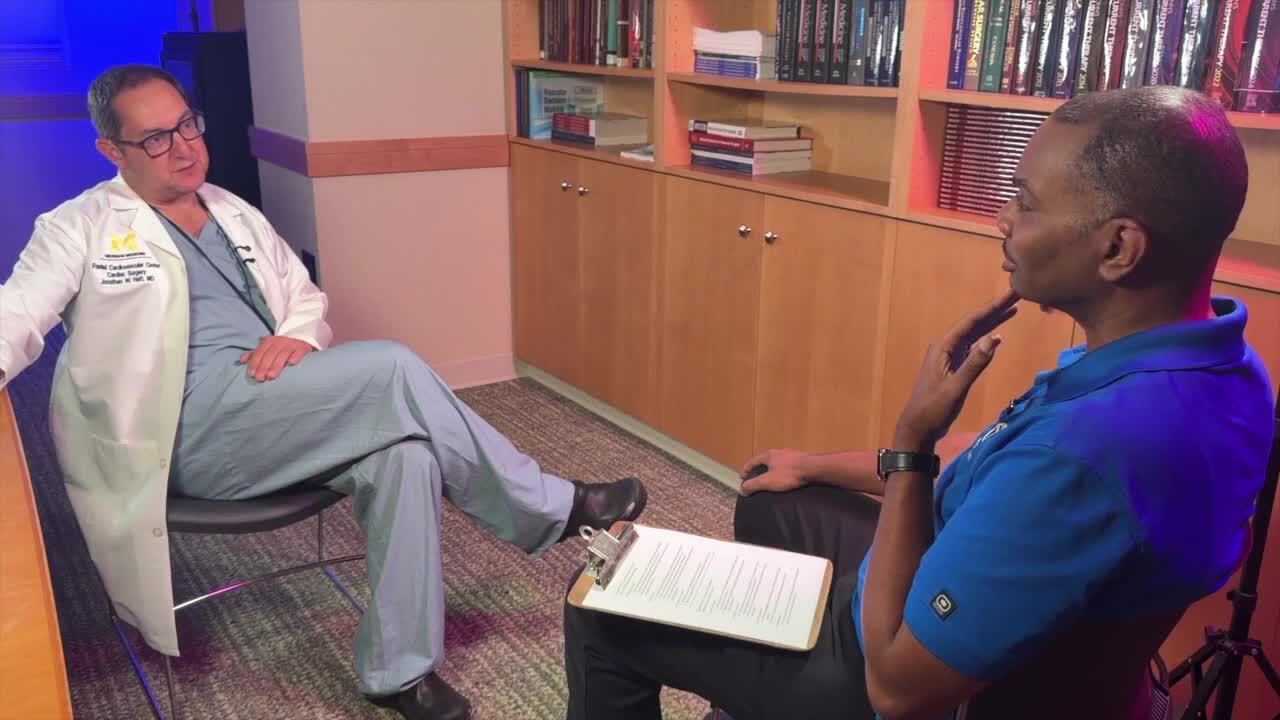
"ECMO is offered to people that otherwise would have no chance," Dr. Jonathan Haft, a cardiac surgeon at the University of Michigan, said.

Abraham's odds were slim as a baby born with respiratory distress syndrome. She was placed on ECMO for nine days.
Today, she's a hematology oncology fellow at the University of Michigan, caring for patients with cancer and blood disorders. A life saved is now spent serving others.
"You think about the rest of that person's life. We think of their potential life years is a way that we say it in medicine. All the ways that they are going to impact the world," Abraham said.
That impact started with Ann Arbor native and University of Michigan physician Dr. Robert Bartlett. He was a pioneer who helped turn ECMO from a possibility into a life-saving reality.

Colleagues say he was driven by the painfully human questions: Why did this patient die? And what can we do so the next one might live?
"He set his life's mission to first off develop that type of technology," Dr. Ronald Hirschl said. Hirschl is a pediatric surgeon at the University of Michigan and was a longtime friend of Bartlett.
Bartlett's work on ECMO first helped change the outlook for the smallest patients — newborns whose lungs needed just a few days to recover. Then, it expanded to children.
"His impact initially was national and quickly became international," Hirschl said.
Now, there are more than 800 ECMO centers around the world. Today, the International ECMO Registry includes about 260,000 cases. Roughly half or more of those patients – the sickest of the sick – survived.
Haft now directs the ECMO program once led by Bartlett. He said the technology has changed dramatically. The machines are smaller, safer and more advanced.
The work pioneered in Ann Arbor saved thousands of lives during the COVID-19 pandemic.
"Because the technology had changed and our protocols had also changed, it allowed us to do a lot more patients at the same time," Haft said.
Bartlett passed away in October. Those who knew him said his legacy is not only in the technology, it's in the way he lived...his curiosity, collaboration and refusal to accept the limits of medicine.
In archival video, Bartlett remembered how radical ECMO sounded to some.
"Especially with this invasive procedure that's called ECMO. Most of the practicing community thought, this is crazy," Bartlett said in the video.
But that idea lives on, and so do countless lives saved by Bartlett's work.
Abraham went from a baby saved by ECMO to a student in Bartlett's lab. He was there during her white coat ceremony and her medical school graduation.

"He is a model that I look up to. And so I can only hope to make changes as impactful as he had in his care," Abraham said.
Decades after Barlett's early work, the University of Michigan remains a leader in ECMO care, training and research.
Doctors say the next challenge is access, making sure more hospitals, more teams and more patients can benefit from a technology with deep Michigan roots and is now saving lives around the world.
