

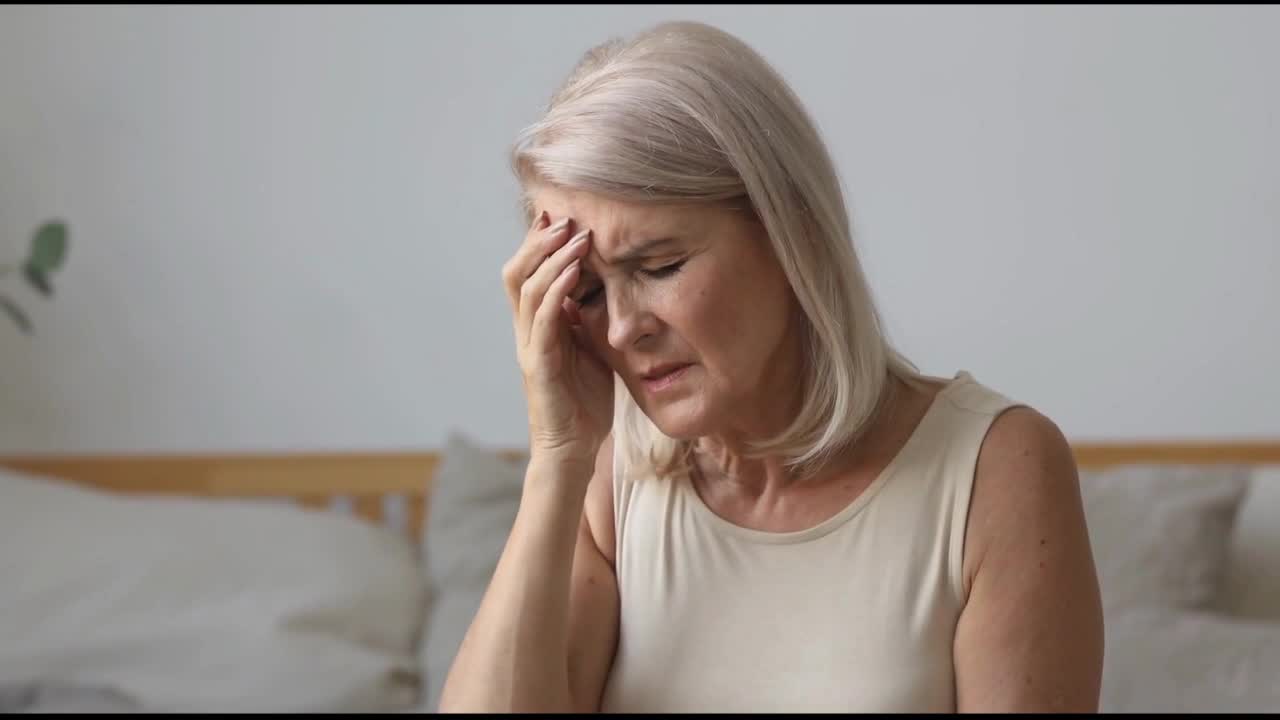


METRO DETROIT (WXYZ) — June is National Migraine and Headache Awareness Month, and for millions of Americans, a migraine is far more than a bad headache. It is a neurological disease that can affect work, family, school and quality of life. In fact, migraines have been identified as the leading cause of years lived with disability in people under 50.
This morning, I want to introduce you to a Southfield man who said when a migraine hits, everything else stops.
Watch Keenan's report below
On a good day, Walter Puckett is moving, walking, exercising, and doing what he can to stay ahead of something he knows can stop him cold. Walter is one of the millions of Americans living with migraine.

"It keeps me up, head feel like it's just going to explode," Puckett said. "At times I get them so bad, to where I feel like I'm going to be nauseous, I'm going to throw up, and that's how bad they are. So I can't even go to work that day."
It's a disease often dismissed as a headache, but Walter said that word doesn't even come close.
"That ain't no headache. I take a headache any day over migraines," Puckett said.

Dr. Amit Sachdev of Michigan State University's Health Care Department of Neurology-Ophthalmology said migraine is a neurological disease that can cause intense throbbing or pulsing pain, usually on one side of the head.
"Migraine is certainly a bad headache, but it is more than that," Dr. Sachdev said.
Warning signs start hours or days before the pain. Others experience aura with vision changes, numbness, dizziness, or trouble speaking.
"Some people may have trouble seeing, or some people have trouble feeling in a part of the face," Dr. Sachdev said.
Then comes the pain, which can last hours to days. Afterwards, many people describe brain fog, exhaustion, and irritability. Many migraine sufferers go undiagnosed, because the condition is widely misunderstood as "just a severe headache."
But it's a disability, sometimes marked by a dark room or missing a work shift.

"I work in the hospital, so I wouldn't feel safe taking care of other people," said migraine sufferer Kelly Green-Terry.
It can lead to cancelling plans, and a parent may need quiet when their child needs attention.

"My son sometimes gets the short end of the stick because… lights off. I need quiet time, so it impacts life a lot," said migraine sufferer Von Suber.
More than 1 billion people worldwide live with migraine. The American Migraine Foundation says that number includes 40 million Americans, roughly one in five women and one in 16 men. That's a difference believed to be driven by a combination of hormones, genetics, and brain biology.
"But migraines are migraines, they're bad. It just ain't for women. Men have them just as bad," Puckett said.
Walter has been seeing a neurologist for years and says stress, sleep, food, blood pressure, and even vibration play a role in his migraines. Dr. Sachdev said migraines come from brains that are a little different than others, and are best understood as a brain that needs support and care.
"That means regular sleep, regular meals, management of stress, avoidance of certain triggers," Dr. Sachdev said.
The good news is that treatment is advancing. There are now some medications designed to stop migraine once it starts. Others prevent attacks, and newer migraine-specific drugs are giving doctors more options than they had just a few years ago. Dr. Sachdev said that's why treatment matters. Because migraine doesn't just take time; it can steal life.
"It can take joy certainly from the patient, from the people around them," Dr. Sachdev said.
"It's nothing that you want to say. You wish on no one," Puckett said.
If you suffer from migraine, talk with your primary care provider or neurologist about treatment or prevention options. But if you experience a sudden, severe headache, new neurological symptoms, weakness, confusion, vision changes, trouble speaking, or the worst headache of your life, you should seek emergency care, as that could be a stroke or an aneurysm.
