

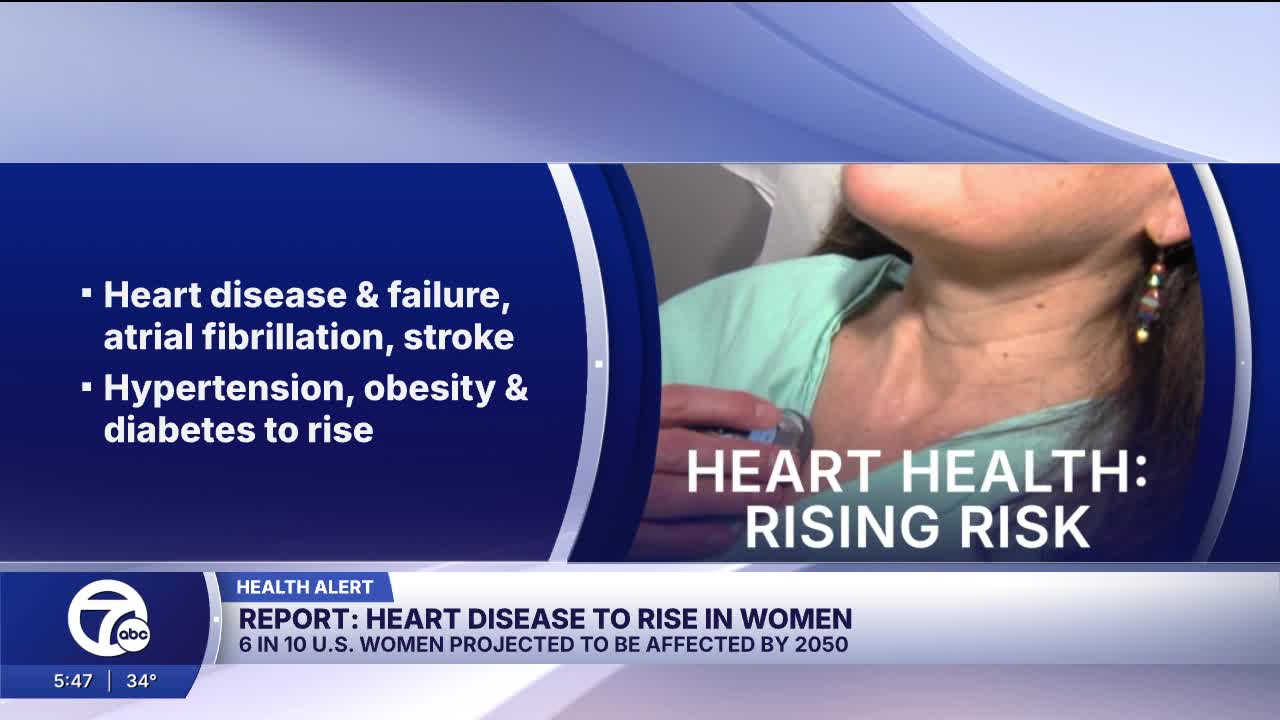


(WXYZ) — A new report warns heart disease could climb dramatically over the next 25 years. Researchers project 6 in 10 U.S. women may have at least one type of cardiovascular disease by 2050.
This is quite concerning because currently, about 1in 3 women will die from cardiovascular disease.
Now, the new report comes from the American Heart Association. It projects significant increases in women across all major forms of cardiovascular disease — including heart disease, heart failure, atrial fibrillation and stroke.
So, what is driving this predicted dramatic increase? Well, high blood pressure is a major factor, with nearly 60% of women projected to have hypertension by 2050. The report also projects that more than 60% of women could have obesity, and more than one in four may have diabetes in the next 25 years. These are all major health factors that raise the risk of heart disease.
What’s especially concerning is that this is not just a problem for older women. Nearly 1 in 3 women between 22 and 44 years old is projected to have some type of cardiovascular disease in the coming years. Diabetes rates in that age group could more than double. More than a third may have high blood pressure, and about 1 in 6 will have obesity.
This trend is expected to affect younger generations too, with nearly 32% of girls ages 2 to 19 projected to have obesity by 2050.
The impact is even greater among Black women and other women of color.
The encouraging news is that up to 80% of heart disease and stroke is preventable.
Start by knowing your numbers. High blood pressure often has no symptoms, so regular checks of your blood pressure, cholesterol and blood sugar are essential.
Daily habits also play a big role. Eat a heart-healthy diet with more fruits and vegetables, cut back on salt, and stay physically active. Maintain a healthy weight, get good quality sleep, manage stress and avoid tobacco. Limiting alcohol also helps.
Also, be sure to have regular check-ins with your health care provider. This is essential during pregnancy, perimenopause and menopause, as these periods can bring changes that affect your heart health.
And, importantly, we have to start early. Healthy habits in children and teens help prevent risk factors before they begin.
Heart disease is still the No. 1 health threat to women. But awareness and prevention can make a real difference.
