



(WXYZ) — In today’s Health Alert, a potential breakthrough in one of the deadliest cancers. A new drug is showing remarkable results in late-stage trials for pancreatic cancer.
The study showed the drug extended survival and also reduced the risk of death.
As a gastroenterologist, I often see and diagnose patients with pancreatic cancer. It’s one of the toughest diagnoses to face. That’s why this news is so encouraging.
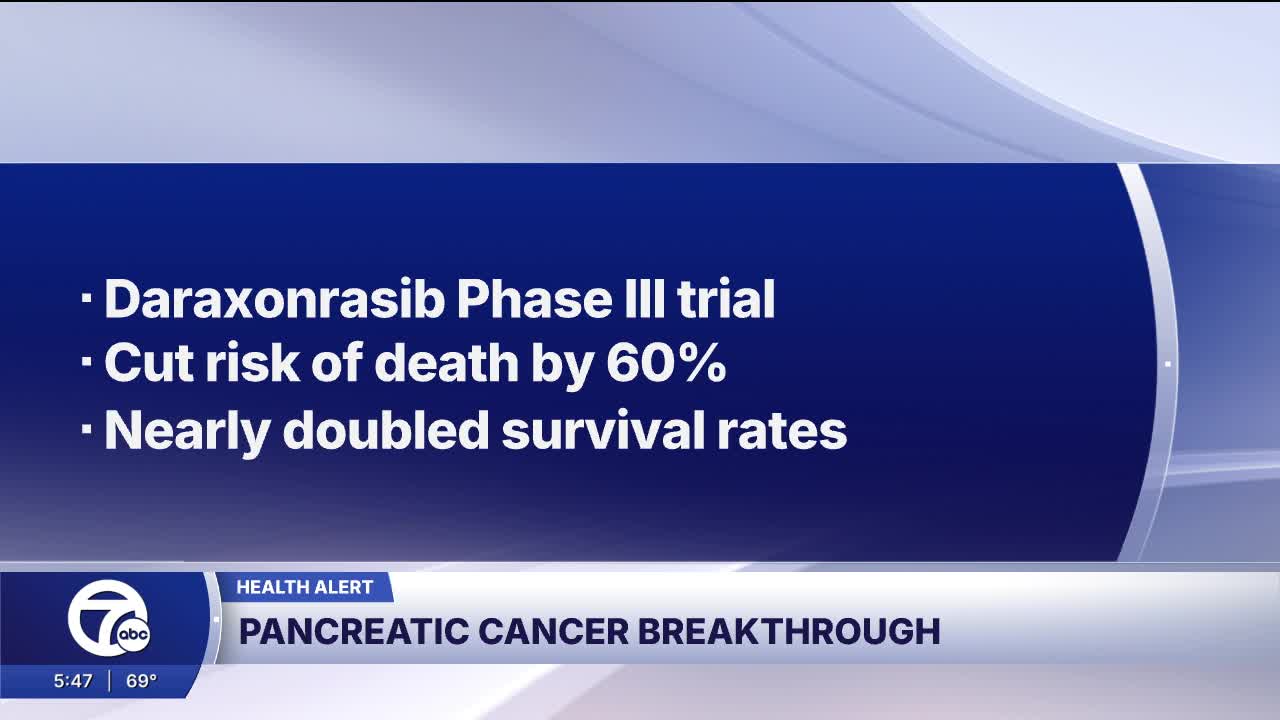
Now, the experimental drug is called daraxonrasib. In a Phase 3 trial, it cut the risk of death by about 60% in patients with advanced pancreatic cancer who had been previously treated. And it nearly doubled survival. Patients taking the pill lived about 13.2 months on average, compared to 6.7 months with standard chemotherapy. That’s a gain of about six and a half months. That may not sound like a lot, but it’s significant for this disease.
Pancreatic cancer is hard to catch early and often doesn’t cause symptoms right away. It’s aggressive and spreads quickly. It can be hard to treat, and survival rates remain low - about 13% at five years. That’s why results like this are being called “practice-changing.”
Pancreatic cancer starts as a growth of cells in the pancreas. This drug works by targeting what’s called a RAS mutation - a key driver for tumor growth in about 90% of pancreatic cancers. The drug essentially helps shut down tumor growth at the source.
As for the safety profile, the most common side effect reported was a skin rash. Most cases were mild. But under 10% of patients developed a more dramatic rash. Treatments like antibiotics or temporarily pausing the drug reportedly helped.
Now, the company is preparing to seek approval from the Food and Drug Administration. They’ve received a special priority voucher to speed up the review process, so this could move more quickly than usual. They’re also conducting a trial for patients who have been newly diagnosed with this cancer. And I’m hopeful it will help extend survival rates even more.
In my opinion, this brings real hope to patients and families facing one of the toughest cancers. And it’s a reminder - if you notice ongoing symptoms like unexplained weight loss, abdominal pain, or yellowing of the skin or eyes, get it checked out by your doctor. It’s also important to know the risk factors, like smoking, long-term diabetes, obesity, and chronic pancreatitis - and to manage them.
