

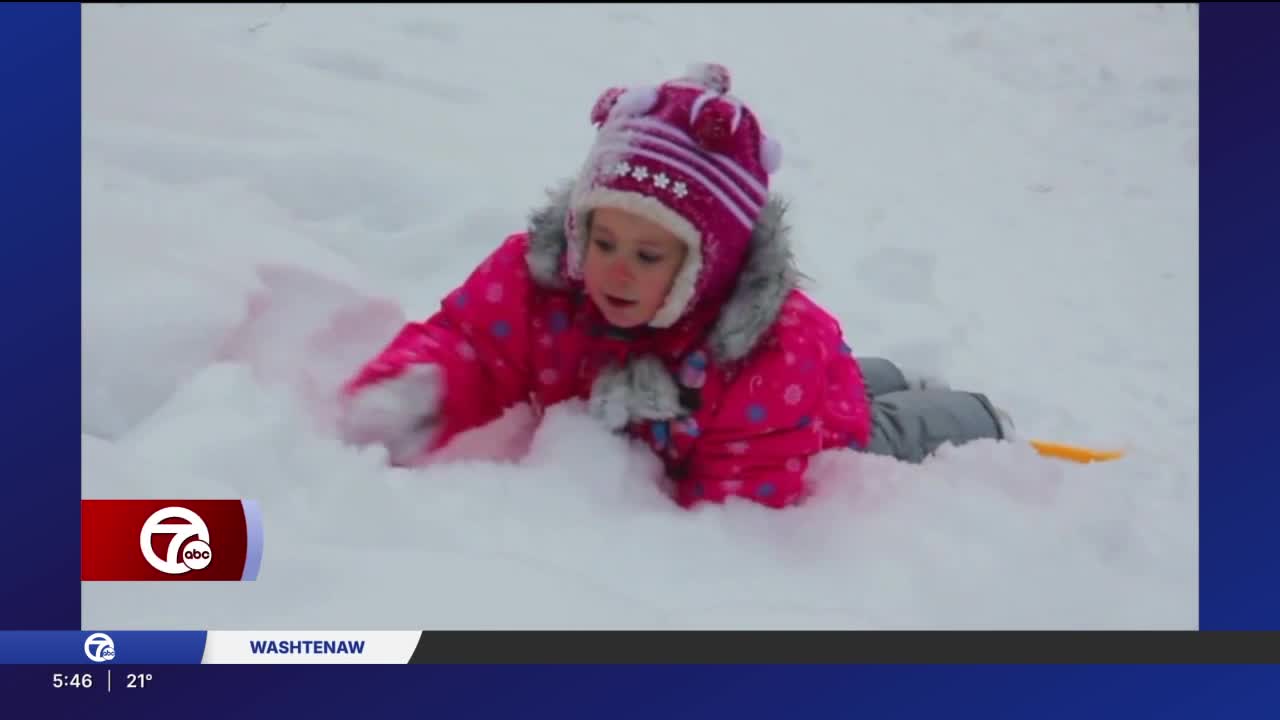


(WXYZ) — In today’s Health Alert, dangerously cold temperatures are raising concerns for families across the country. So, how does extreme cold specifically affect kids?
As a parent of young kids who love being outdoors, I get wanting to dress them warmly. But more isn’t always better.
That’s because if kids get overdressed, they can get hot and start sweating. Once that moisture cools, it pulls heat away from the body, increasing the risk of hypothermia. That’s when the body loses heat faster than it can make it.
So, what really works is smart layering. Start with a base layer that keeps moisture off the skin, like merino wool, polyester blends, or thermal knits. Avoid cotton, because it holds onto sweat. Then add a warm middle layer like fleece. Finish with an outer layer that blocks wind and snow.
Children are actually more at risk than adults in cold weather. Their bodies are smaller, so they lose heat faster. And often, they don’t notice how cold they’re getting.
Now, cold air can trigger health issues. For some kids, especially those with asthma, breathing in very cold air can tighten the airways and cause symptoms.
There’s also frostbite. That usually affects fingers, toes, ears, noses, and cheeks. Tomorrow and Saturday, temperatures are expected to be in the single digits or below zero. When you add in wind chill, it feels much colder. Even a light wind over 5 miles per hour can cause exposed skin to start freezing in about 30 minutes. It’s generally recommended to keep kids indoors when temperatures or wind chills reach minus 15 degrees Fahrenheit. In extreme cold, uncovered skin can begin freezing within minutes.
So if your kids play outside, watch for signs of frostbite, including cold, prickly skin, numbness, and red, white, bluish, or grayish skin. For hypothermia, signs include shivering, confusion, exhaustion, and clumsiness. Get medical help if you suspect either condition.
To avoid these, my advice is simple. Check the wind chill before kids head out, limit outdoor time in extreme cold, build in warm-up breaks, and change wet clothing right away.
This week on the Dr. Nandi Show:

Recognizing the signs of self-harm. Why some people struggle, how it links with other mental-health conditions, and the practical steps towards recovery and safety.
Tune in this Sunday at 5:00 p.m.
