

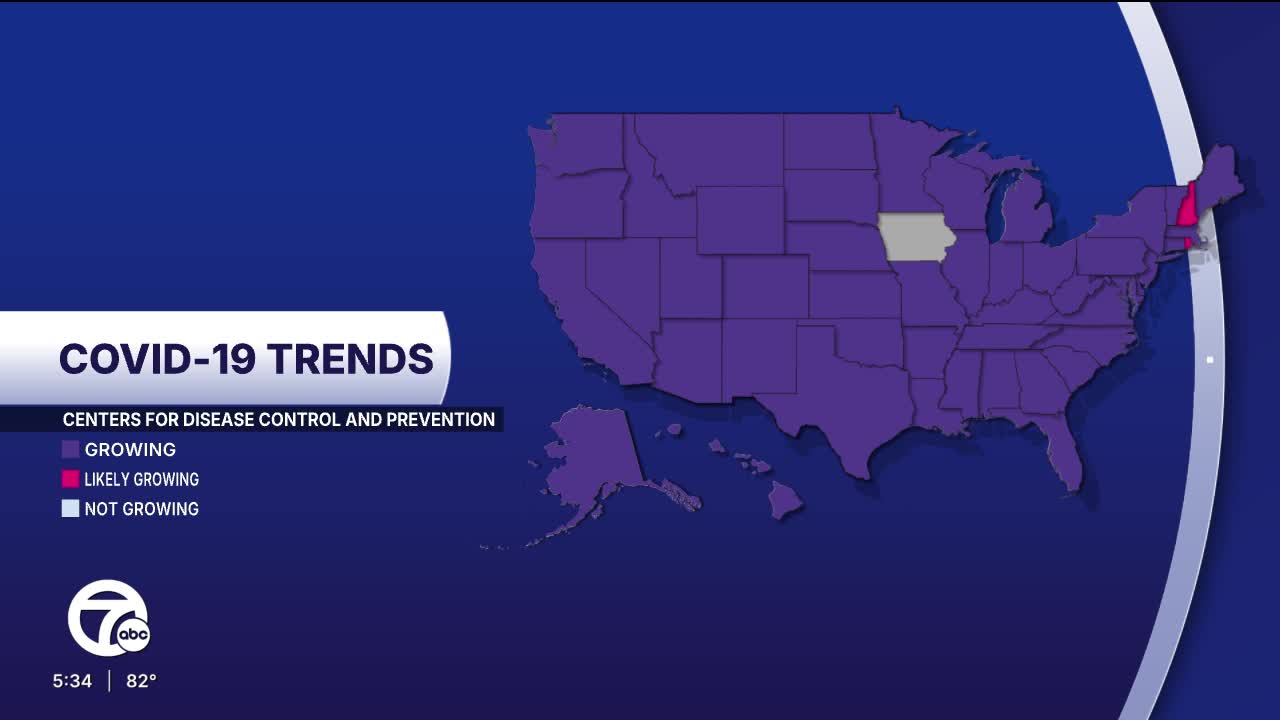


(WXYZ) — In today’s Health Alert, a late-summer COVID-19 wave is rising across the country. Cases remain relatively low, but that could change as children head back to school.
It’s that time of year when summer winds down and COVID winds up. According to the CDC, COVID activity is increasing in all 50 states, with the South and West seeing some of the biggest increases. The latest WastewaterSCAN data from a Stanford University-run monitoring program show that SARS-CoV-2 levels in wastewater are now high nationwide and have climbed significantly over the past three weeks. That’s a 106% increase from July.
At the moment, this wave appears much smaller than some of the summer surges we’ve seen in previous years. But we could see transmission increase as vacations wrap up and kids return to busy classrooms.
As for variants, we’re seeing a mix of familiar ones. XFG.1.1 is currently the dominant strain, making up roughly 22 to 40 percent of U.S. cases in recent CDC estimates. Another variant, BA.3.2, also known as Cicada, is responsible for about 15% of cases. That’s a heavily mutated strain that began spreading worldwide but hasn’t really taken off in the U.S.
The symptoms are still very similar to what we’ve seen with recent Omicron variants. Watch for a cough, sore throat, congestion, fatigue, fever, chills, headache, or shortness of breath. Some people can also have nausea, vomiting, or diarrhea.
Since COVID-19 often looks like the flu or a common cold, testing can help you know what you’re dealing with. There are treatment options that can help lessen symptom severity and shorten the duration of illness when started early. For older adults, infants, people with weakened immune systems, or certain underlying conditions, COVID can still lead to serious illness - which leads me to vaccines.
The updated COVID vaccine is expected to become available this fall, likely sometime in September. It can help protect against severe illness, hospitalization, and death. And it may also lower your risk of long COVID. It’s especially important for people at higher risk and pregnant women to stay up to date on their vaccines.
So, while we don’t know yet how big this wave will be, there are simple things you can do to protect yourself. Stay home when you’re sick, protect those who are vulnerable, and talk to your doctor if you have concerns.
