

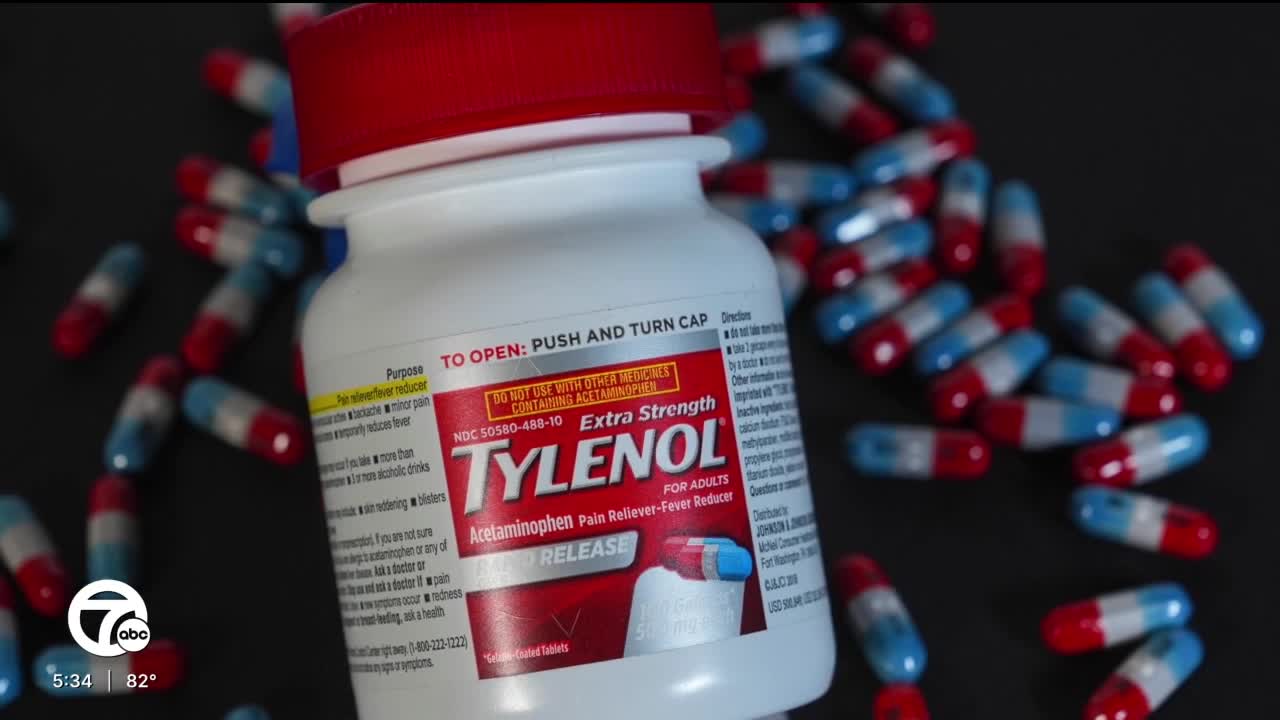


(WXYZ) — In today’s Health Alert, a new study finds that liver injuries linked to medications and other substances have increased nearly 400% over the past 25 years. Acetaminophen - the active ingredient in Tylenol - is behind many of these cases.
Researchers looked at more than 220,000 cases of liver injury reported to U.S. poison centers between 2000 and 2024. They found the rate of these injuries rose from about 11 cases per million people to nearly 53 per million. And medications accounted for the vast majority of the cases - 85% among men and 94% among women. More than 80% of these liver injury cases required hospitalization.
Now, the medication most often involved was acetaminophen, the active ingredient in Tylenol. According to the study, acetaminophen alone was involved in about a third of the cases among men and nearly half among women. Researchers also found alcohol was a contributor, although it was a distant second. Other causes included stimulants, street drugs, supplements, and environmental toxins, but these were less common.
So what sort of damage can happen? Well, your liver is super important and helps process medications and clear them from your system. If it becomes injured or is not working properly, it can struggle.
Unfortunately, too much acetaminophen can cause liver failure that may require a transplant. In fact, about half of all cases of sudden liver failure in the US are linked to acetaminophen.
When it's taken as directed, acetaminophen is considered safe and effective. The problem is that acetaminophen is found in hundreds of medications. So someone might take Tylenol for a headache and then take a cold or flu medicine without realizing it contains the same ingredient. Just because a medication is over-the-counter doesn't mean it's risk-free. Taking more than recommended can cause serious problems for anyone.
Also, some folks are at greater risk. That includes people with existing liver disease - like fatty liver disease or hepatitis C - and those who drink more than moderate amounts of alcohol. If you fall into one of these groups, talk with your doctor about whether acetaminophen is right for you.
So my advice is simple: read the label every time you take a medication. And follow the dosing instructions. If you're taking multiple medications and are unsure of the ingredients, speak to your doctor or pharmacist and ask whether they contain acetaminophen.
The important thing is that this type of liver injury is often preventable. So check your medications and make sure you're not doubling up on acetaminophen.
