


(WXYZ) — In today’s Health Alert, winter weather is hitting Detroit hard. Families are concerned about children exposed to extreme cold, especially those who walk or take the school bus.
What are the risks of hypothermia, and what should everyone know about the early stages?
Hypothermia is a dangerous condition that occurs when the body’s core temperature falls below 95°F. The body loses heat faster than it can produce it, affecting the heart, nervous system, and other organs.
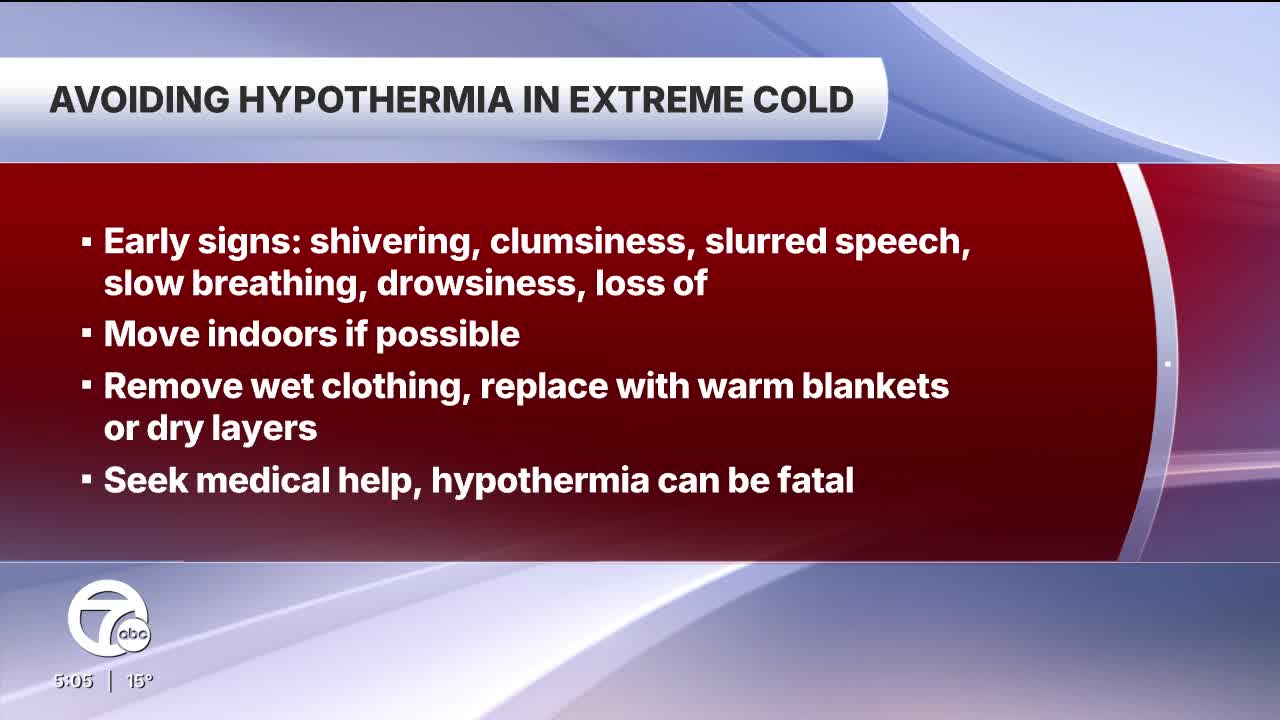
Now, early signs include shivering, clumsiness, slurred speech, slow or shallow breathing, drowsiness, confusion, or loss of consciousness. Anyone affected should be moved indoors if possible. Remove wet clothing and replace it with warm blankets or dry layers. Be sure to seek medical help because hypothermia can be fatal.
And what about frostbite? How can you tell if you have it?
Frostbite happens when the skin and tissue underneath start to freeze. It usually begins with tingling, numbness, or a cold feeling. Mild cases improve with rewarming. Moderate to severe frostbite can turn the skin white or blue-gray, cause blisters, and even permanently damage underlying tissue.
If you suspect frostbite, get out of the cold, remove wet clothing, protect the affected area, avoid walking on frostbitten feet if possible, and sip a warm, nonalcoholic beverage. Mild to moderate frostbite should be evaluated by a healthcare professional.
With this extreme cold, many parents worry about kids waiting at the bus stop. When does it become dangerous?
At moderately cold temperatures, a few minutes outside may be okay, but very low wind chills can be dangerous. The National Weather Service’s wind chill chart shows that frostbite can happen in as little as 10 minutes when wind chills drop below –19°F. So, even a short time outside can be risky, especially if kids are standing still.
Parents should dress their children in layers - hats, mittens, scarves, and warm boots. Younger kids and those with health conditions are especially vulnerable. Parents should check wind chill forecasts, limit outdoor times, and consider indoor shelter or school delays when it’s extremely cold.
