



(WXYZ) — In today’s Health Alert, the World Health Organization has declared an Ebola outbreak a “public health emergency of international concern.” Cases are rising in parts of the Democratic Republic of Congo and Uganda, with more than 390 cases suspected and over a hundred suspected deaths.
The World Health Organization is calling it a public health emergency of international concern because cases continue to grow. Also, health officials believe the outbreak may be much larger than what’s currently being reported. And there’s concern that the virus may spread into neighboring countries near the Democratic Republic of Congo.
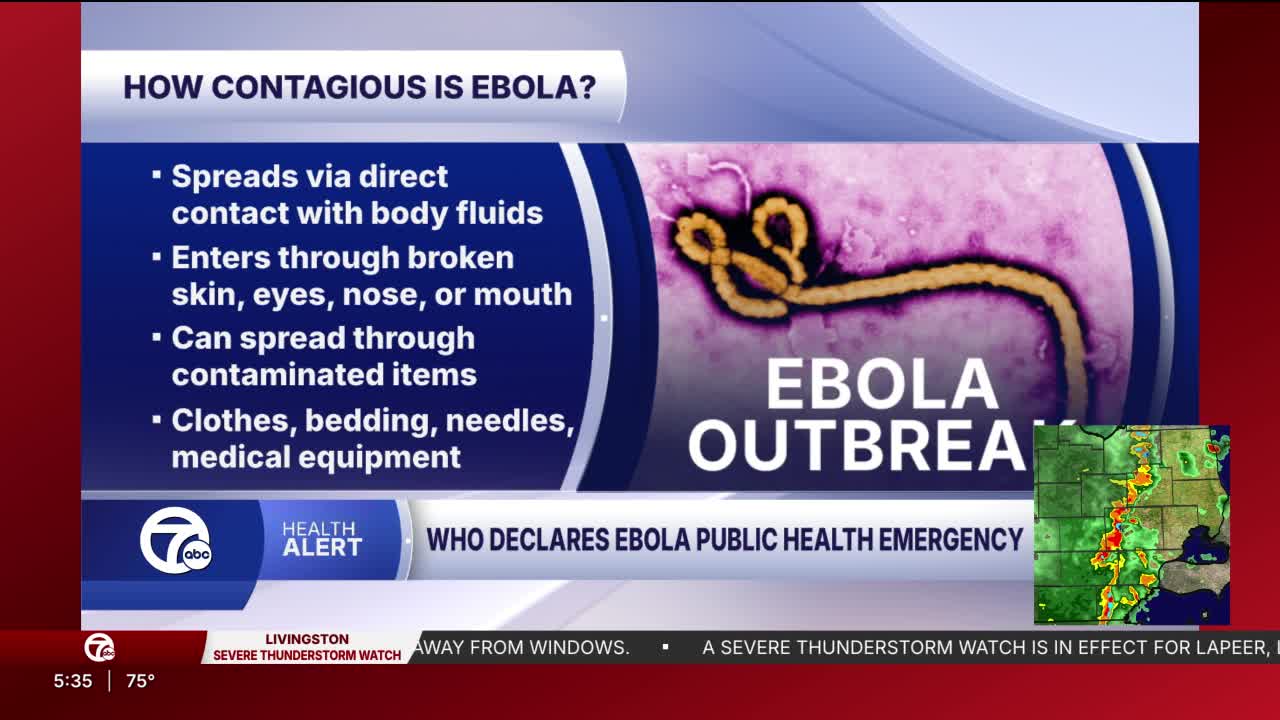
As for how contagious Ebola is, it is not airborne like COVID or the flu. Ebola is a serious viral illness that spreads through direct contact with the body fluids of an infected person. People can become infected if the virus enters through broken skin or the eyes, nose, or mouth after contact with things like blood, urine, saliva, sweat, feces, vomit, breast milk, or other bodily fluids. It can also spread through contaminated items like clothes, bedding, needles, or medical equipment used by someone who is sick or has died from the disease.
Now, the key concern is how quickly it can spread in close-contact settings like households or healthcare environments. Ebola can be quite deadly, depending on the strain. In this outbreak, the Bundibugyo virus has been identified, and it’s estimated to be deadly in about 25 to 40% of cases.
Early symptoms often look like the flu - fever, fatigue, muscle aches, headache, and sore throat. As it progresses, patients can develop vomiting, diarrhea, abdominal pain, and in severe cases, internal or external bleeding.
Now, there is no specific cure or approved vaccine for the Bundibugyo strain driving this outbreak. However, there is supportive care that can help improve survival - mainly IV fluids, electrolytes, fever control, and managing complications if they occur.
For some Ebola strains, there are approved treatments and vaccines, but they don’t yet cover this specific variant.
On the containment side, health agencies like WHO are tracking cases, isolating patients, tracing contacts, and increasing screenings in affected regions. As for the risk to the United States, there are no confirmed cases in our country. US health officials are increasing screenings for travelers arriving from affected regions and putting temporary travel restrictions in place for some non-U.S. travelers. The CDC says the immediate risk to the American public remains low. Officials are closely monitoring the situation and working to contain the outbreak.
