



(WXYZ) — In the past few years, the Food and Drug Administration has investigated about 25 foodborne illness outbreaks annually. So far this year, the FDA has posted 20 outbreak investigations, including 12 in just the past two months. But what stands out is how many people are getting sick.
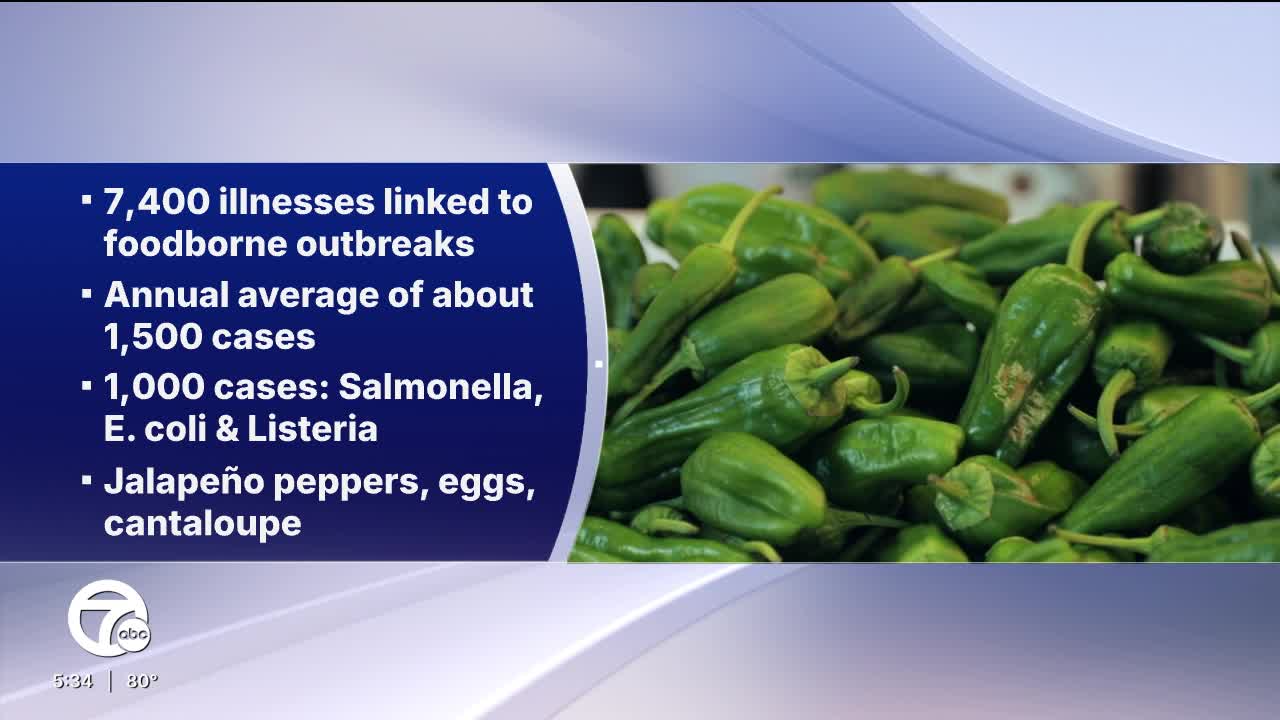
About 7,400 illnesses have been linked to foodborne outbreaks so far this year. That’s nearly five times higher than the annual average of about 1,500 cases between 2021 and 2025. And thousands more are still under investigation.
Now, most of those illnesses are tied to Cyclospora, including a large outbreak linked to iceberg lettuce. But more than 1,000 cases are linked to outbreaks involving Salmonella, E. coli and Listeria. That includes Salmonella outbreaks linked to foods like jalapeño peppers, eggs, cantaloupe and moringa leaf powder.
So why is it so hard to find the source? Think of it like putting together a puzzle. Investigators interview people who got sick about what they ate, often days or weeks after exposure. Then they look for common foods or suppliers.
On top of that, there are added challenges this year. Extreme heat can help bacteria grow, and cyclospora can be particularly difficult to trace back to its source. Public health agencies are also dealing with federal funding cuts, leaving the system stretched thin. And keep in mind, finding the source was already difficult. Over the past five years, the FDA was not able to identify a food source in about 40% of outbreaks.
Delays in finding a source can put consumers at risk. The longer it takes to identify a source, the longer a contaminated food could potentially remain in circulation.
But there are steps you can take. First, pay attention to recalls and public health alerts. If you have a recalled food, just throw it away.
At home, wash your hands before preparing food, wash fresh produce thoroughly under running water, keep raw meat, poultry and eggs away from ready-to-eat foods and clean cutting boards and countertops after preparing raw foods. Also, store perishable foods at 40 degrees or below, and cook them to the right temperature to kill harmful germs.
I don’t want people to be afraid of fresh fruits and vegetables. They’re a super important part of a healthy diet. The main thing is to lower your risk by handling them safely.
This Week on the Dr. Nandi Show

We humans like to think we’ll be here forever, but the geological record shows that’s unlikely. Earthquakes, rising seas, asteroids — all of these have the potential to put our entire species at risk. So does humanity need a contingency plan? Dr. Partha Nandi raises the issue with Naveen Jain, whose company, Moon Express, is building machines to mine the moon for raw materials and professor Paul Van Susante of Michigan State, whose work with NASA involved looking at the nitty-gritty details of what it takes to send humans to other planets. Tune in Saturday, Aug. 15 at 1 p.m.
