

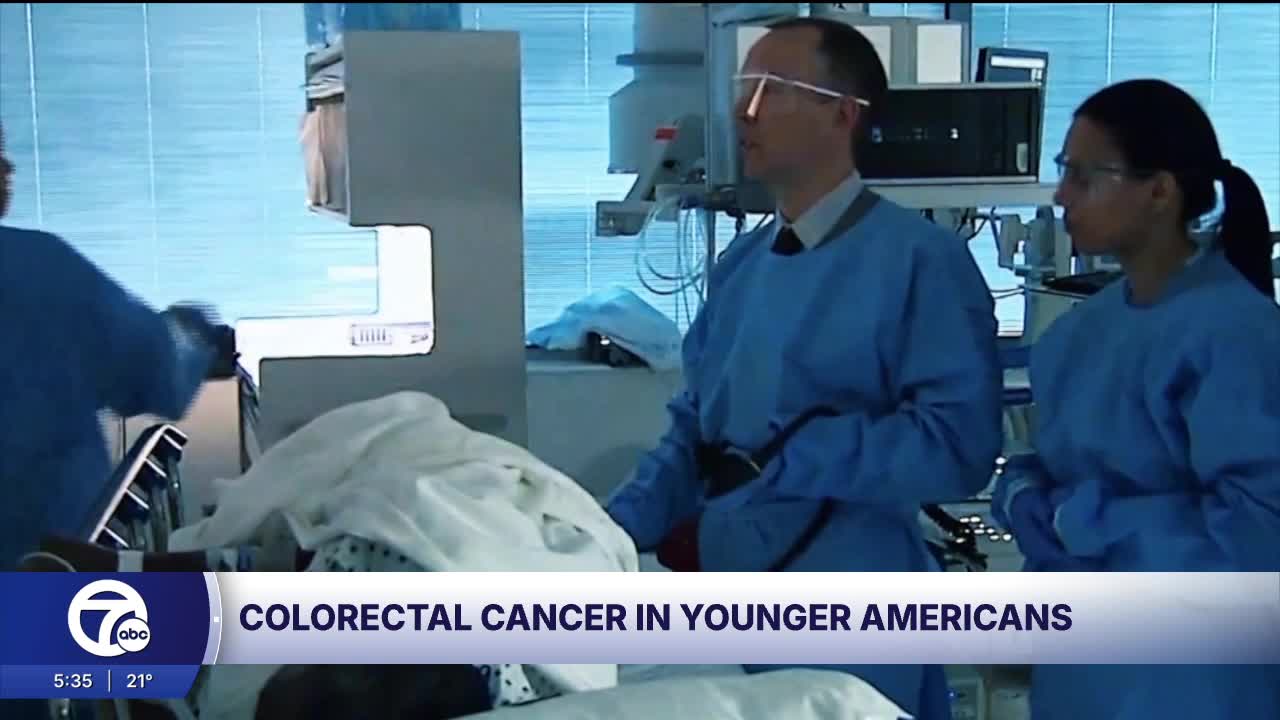


(WXYZ) — It was once considered a disease of older adults. Now, colorectal cancer is increasingly affecting younger Americans.
New research shows it is now one of the leading causes of cancer-related deaths among Americans under 50.
It’s heartbreaking and, unfortunately, something I’m seeing far too often in my practice. Over the past three decades, colorectal cancer diagnoses have steadily increased among adults in their 20s, 30s, and 40s.
Deaths have risen as well.
For men under 50, colorectal cancer is now the leading cause of cancer-related death, and for women under 50, it’s the second.
Now, what makes this especially concerning is how late many younger patients are diagnosed. About two-thirds are already in stage three or stage four when the cancer is found, which makes treatment more difficult and outcomes worse.
As for why this is happening, the honest answer is we don’t fully know yet.
Research is looking at things like diets high in ultra-processed foods, processed meats, low-fiber intake, and disruptions to the gut microbiome. It’s likely multiple factors working together, not one cause.
When it comes to younger adults, cancer is not on their radar. So, symptoms can be overlooked or brushed off.
Common warning signs to look for include persistent changes in bowel habits, a feeling that you haven’t fully emptied your bowels, blood in the stool or rectal bleeding, ongoing abdominal pain or discomfort, losing weight without trying, and fatigue.
As for ways to lower your risk, screening is very important. Age 45 is the recommended starting age for average-risk screening.
That matters because people ages 45 to 49 make up about half of colorectal cancer diagnoses under age 50.
That said, if you have a family history, screening may need to begin even earlier than 45.
Now, lifestyle choices can also help. A plant-forward diet that includes fruits, vegetables, beans, whole grains, and other fiber-rich foods is associated with a lower risk of colorectal cancer. Regular physical activity is protective as well. It’s also best to avoid smoking, limit alcohol, and maintain a healthy weight.
It’s really important that people know colorectal cancer is no longer just an older person’s disease. So, know the signs, take symptoms seriously, live a healthy lifestyle, and follow screening guidance.
