

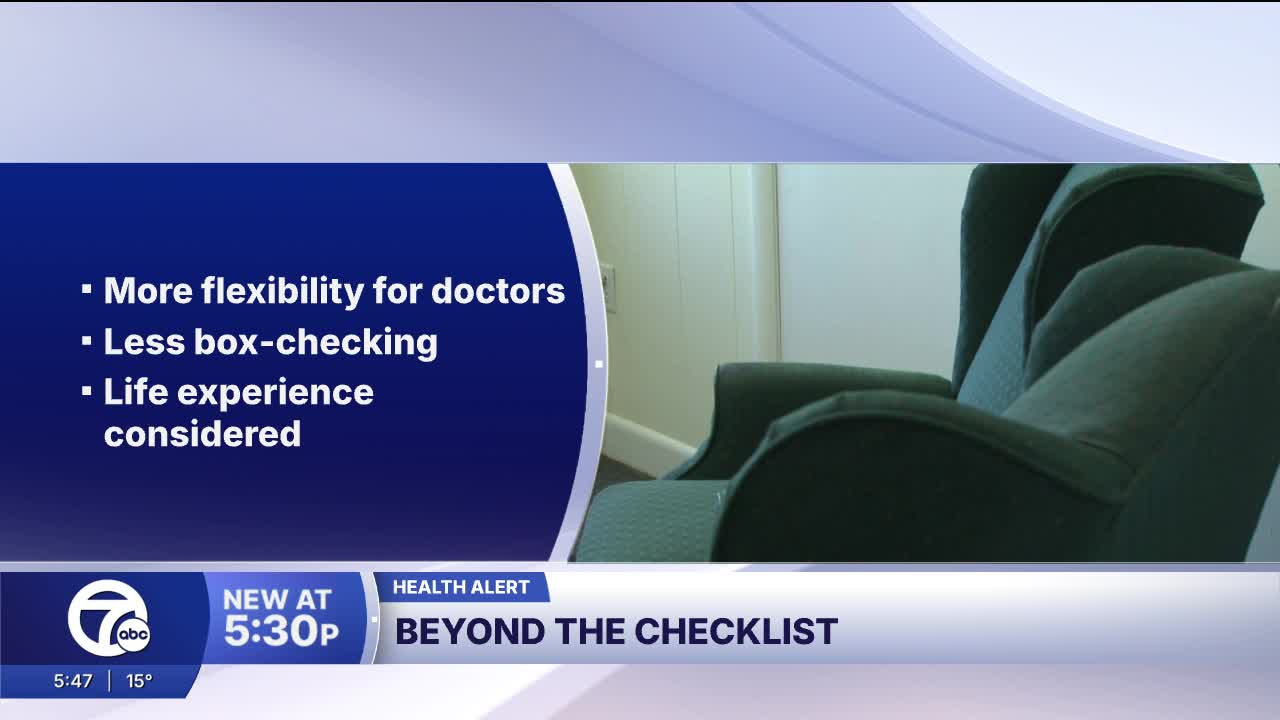


(WXYZ) — In today’s Health Alert, the way mental illness is diagnosed could soon change in a positive way. The American Psychiatric Association is rethinking the DSM, the main guide doctors use for mental health diagnoses. What could this mean for patients and care?
This is really about seeing people as a whole, not just checking boxes. For decades, doctors have relied on the DSM - which stands for Diagnostic and Statistical Manual of Mental Disorders - to help diagnose mental health conditions.
What the American Psychiatric Association is proposing is a shift to a more flexible, educational guidebook. Instead of mostly focusing on a list of symptoms and what doctors observe, the DSM changes would consider more of a person’s life experience. That includes trauma, stress, upbringing, and even biological factors that science may be able to measure in the future.
Another big change is who gets to weigh in. People with lived experience of mental illness would help shape how conditions are described and diagnosed.
Now, the goal isn’t to get rid of or replace existing diagnoses like depression, anxiety, or substance use disorders. Labels are still important for treatment, insurance, and access to care. But these changes would add more context. That way, hopefully, clinicians can better understand why someone is struggling and provide more effective treatments.
According to research, more than half of all people will experience a psychiatric disorder at some point. Right now, many are dealing with the winter blues.
The winter blues is actually a general term and not considered a medical diagnosis. It usually means feeling more tired, less motivated, or a little down during winter. This is very common and typically mild and short-lived.
Now, seasonal affective disorder, or SAD, is a medical diagnosis, and people often confuse it with the winter blues. But SAD is a form of depression tied to shorter daylight hours. It interferes with daily life over a longer period of time. People may withdraw, have low energy, oversleep, feel hopeless, or lose interest in things they usually enjoy.
The good news is that both are very treatable. Getting outside during daylight, regular exercise, and light therapy can help. Talk therapy is also very effective, and in some cases, medication may be appropriate.
If mood changes are affecting your work, relationships, or daily life, that’s a sign to talk with your doctor or a mental health professional.
We know that mental health isn’t one-size-fits-all. Care works best when doctors look at the whole person, not just a checklist. That’s why these changes to the psychiatric DSM manual matter.
