

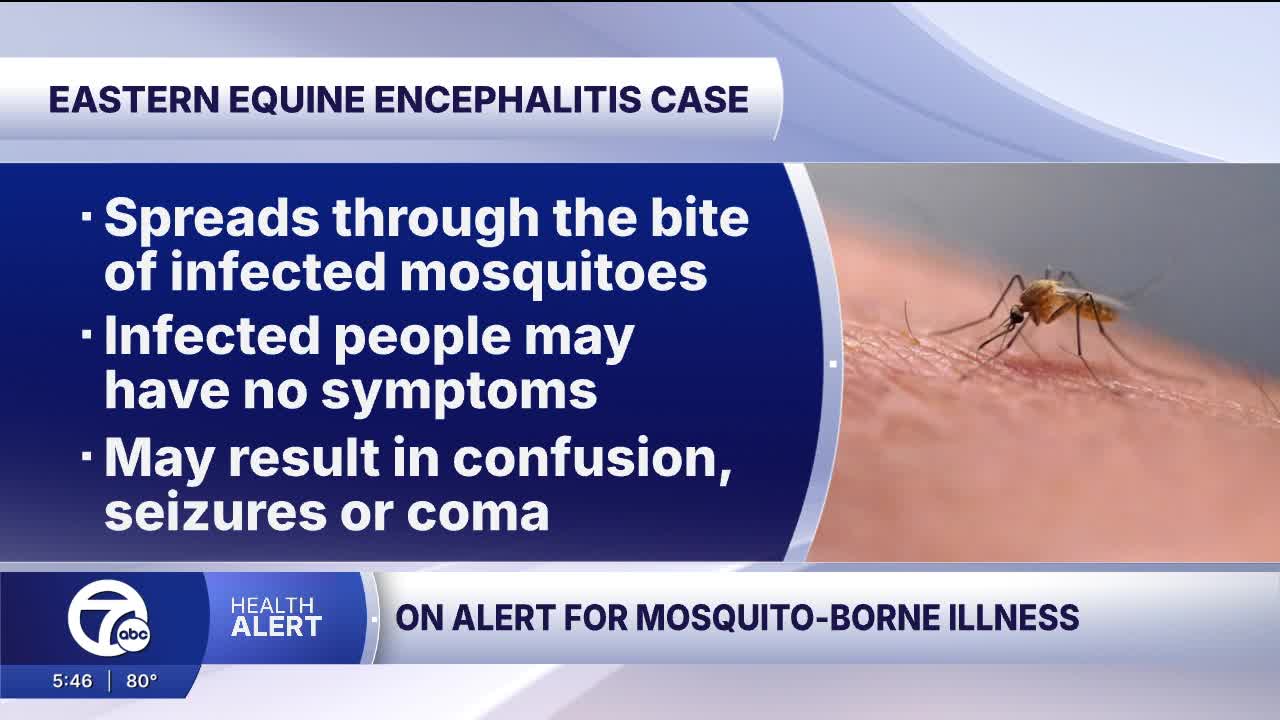


In today’s Health Alert, Michigan has confirmed its first human case of eastern equine encephalitis, or EEE. The mosquito-borne disease is rare across the U.S with only a few human cases reported every year - this is the first case in our state since 2021. Our Chief Health Editor, Dr. Partha Nandi, joins us now with more. Dr. Nandi, what do we know about this case, and just how serious can EEE be?
According to the Michigan Department of Health and Human Services, the resident is from Roscommon County. No additional details have been released. But mosquito trapping and testing are now underway in that county to better understand the risk level in the area.
So, what is Eastern equine encephalitis, or EEE? Well, it’s caused by a virus found in North America and the Caribbean. It spreads to people through the bite of an infected mosquito. Many people who are infected do not develop symptoms. Others may have a flu-like illness, with fever, chills, headache, weakness, and nausea. But in some people, the virus can cause inflammation of the brain. That can lead to severe symptoms like confusion, seizures, and even coma.
And this is where it can become especially concerning. About 30% of people who develop severe EEE die. And many survivors are left with long-term neurologic problems, including memory and personality changes, seizures, or paralysis. So while it is rare, it can be devastating. And there is no specific medicine to treat EEE and no vaccine for people. That’s why prevention is our best defense.
EEE isn't the only illness mosquitoes can spread. What else should people know about, and how can they protect themselves?
That’s right. Mosquitoes can spread other harmful diseases to humans and animals, such as West Nile virus. It’s the leading cause of mosquito-borne disease in the U.S., and Michigan has had one case this summer. Also, depending on where you travel, there are other potentially serious mosquito-borne diseases, including dengue, Zika, and chikungunya.
The good news is there are simple steps you can take to lower your risk.
First, use an EPA-registered insect repellent and follow the directions on the label. Wear long sleeves, long pants, socks and shoes when you’re outside. Make sure your doors and windows have tight-fitting screens that are free of holes. And around your home, empty standing water at least once a week, since that’s where mosquitoes can breed.
Now, if you develop a fever, severe headache, confusion, or other concerning symptoms after mosquito exposure, contact your family doctor. Again, EEE cases are rare, but this case is a reminder that they can still occur. So, the best thing you can do is avoid mosquito bites.
This Week on the Dr. Nandi Show
Modern science is showing us that the idea that “your genes are your destiny” is outdated. Dr. Nandi speaks with Dirty Genes author, Dr. Ben Lynch about how we can clean up our genes to achieve greater health. United Nations Global Ambassador (and former homeless teen) Bryant McGIll is living proof that our genes don’t have to limit us. And lots more. Tune in this Monday, August 24th at 2:30 AM.

