



(WXYZ) — In today’s Health Alert, the FDA has approved a new targeted drug for advanced pancreatic cancer. In a clinical trial, it helped patients live twice as long compared to those treated with standard chemotherapy.
This is big news. Rasonque, also known as daraxonrasib, is a once-daily pill. It’s approved for adults with metastatic pancreatic adenocarcinoma who have already received treatment or are not candidates for combination therapies.
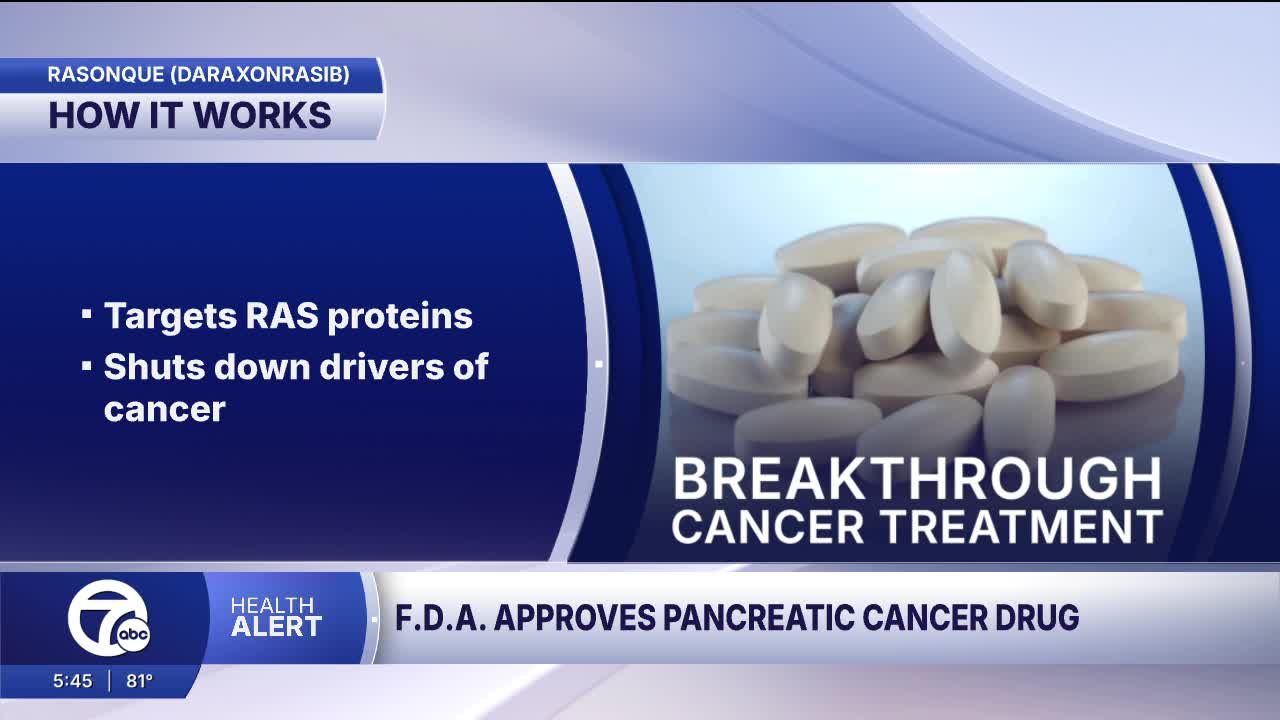
What makes this new drug different is that it targets RAS. These are proteins that can help drive tumor growth in most pancreatic cancers. For decades, scientists struggled to find a way to target this pathway effectively. But this drug uses a new approach to essentially grab onto and shut down these cancer-driving proteins.
And the results are very encouraging. In a clinical trial of 500 patients with previously treated metastatic pancreatic cancer, those taking Rasonque had a median overall survival of 13.2 months, compared with 6.7 months for patients receiving standard chemotherapy.
Now, overall, that may not seem like a long time. But for patients with advanced pancreatic cancer, this is the first treatment to substantially extend survival - and those extra months can be significant.
Like many cancer drugs, Rasonque can cause side effects. The most common include rash, diarrhea, mouth sores, nausea, fatigue, vomiting, abdominal pain, swelling, loss of appetite, and bleeding.
Now, why is pancreatic cancer so deadly? There are several reasons. First of all, the pancreas sits deep in the abdomen, making tumors difficult to detect during a routine exam.
Also, early pancreatic cancer often causes no symptoms. When symptoms do develop, they can include jaundice, abdominal or back pain, unexplained weight loss, loss of appetite, nausea, itchy skin, dark urine, and fatigue. By the time many people are diagnosed, the cancer has usually spread. Unfortunately, it’s often aggressive and has historically been difficult to treat because it can be resistant to many common cancer drugs.
That’s why so many of us in the medical field are encouraged by the results of the Rasonque trial. While it’s not a cure, the new treatment does offer more time for some patients with advanced pancreatic cancer. And researchers are now studying similar drugs and combinations that could potentially help even more patients in the future.
