

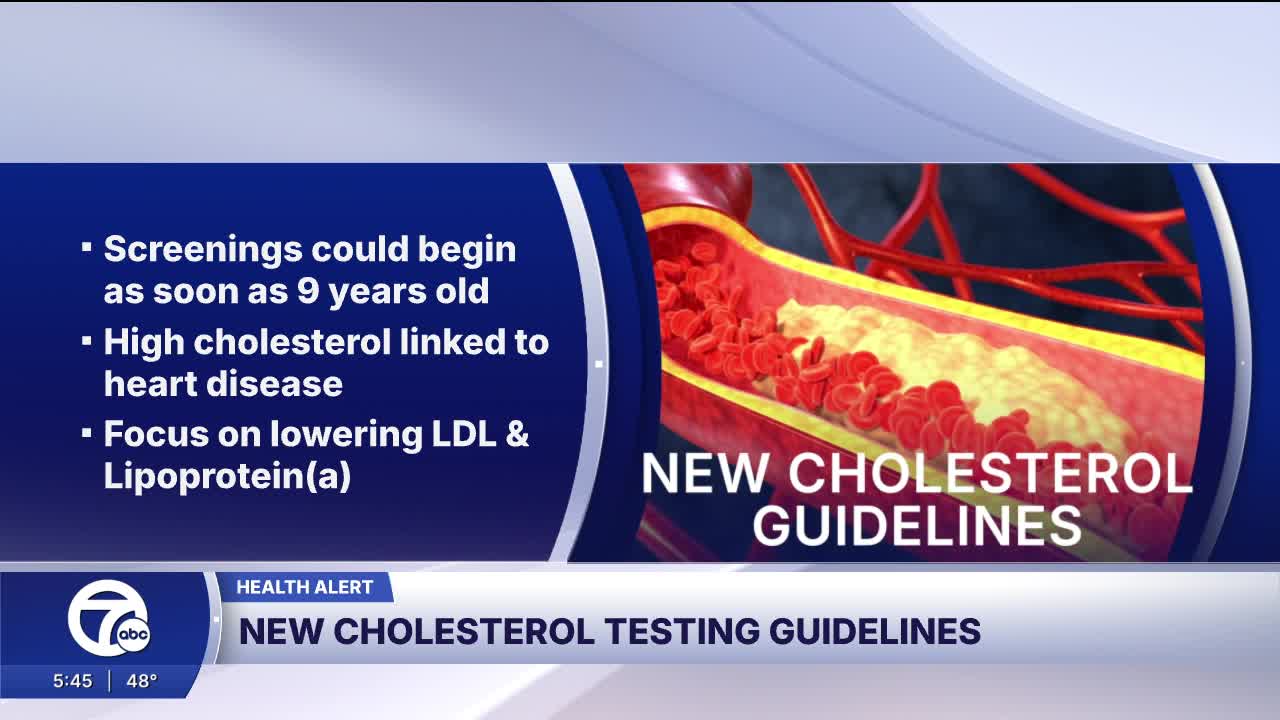


(WXYZ) — In today’s Health Alert, new cholesterol guidelines are changing when we should start thinking about heart health - and it may be earlier than you expect. In some cases, testing may start as young as 9.
It’s been about six years since these guidelines were updated. And now there’s a real shift toward prevention much earlier in life. So what that means is, some children between the ages of 9 and 11 may be screened if heart disease runs in the family. That’s because high cholesterol can begin to affect future heart disease risk as early as childhood and adolescence.
Now, the guidelines also focus on lowering LDL, or “bad” cholesterol, but also checking for other fats in the blood like lipoprotein(a). That’s a genetic risk factor that can raise heart disease risk by 40% or more, depending on levels.
What’s also new is a more personalized approach. So care is tailored to each person based on their health and medical history. Doctors will be looking at what’s called “risk enhancers”. These include things like chronic inflammatory conditions, family history of heart disease, early menopause, preeclampsia, and gestational diabetes. All of this helps guide treatment decisions.
High cholesterol can quietly damage your arteries over time. Cholesterol is a waxy substance that can build up in blood vessels. It narrows and hardens the arteries, reducing blood flow. Over time, that can lead to heart attacks and strokes.
Now, the encouraging part is that up to 80 to 90 percent of your risk is tied to habits you can change. A healthy lifestyle is the foundation - that means maintaining a healthy weight, staying active, avoiding tobacco, and getting good sleep. If those steps aren’t enough, doctors may recommend medication earlier than before to help bring cholesterol down and keep it there long term.
Also, the guidelines recommend that people in higher-risk groups - like those who are pregnant or breastfeeding, older adults, or anyone managing chronic conditions or cancer - to check in regularly with their doctor to make sure they’re getting the best care.
Right now, about 1 in 10 adults in the US is living with high blood cholesterol. So the goal is really to catch problems early. The earlier you start with prevention strategies, the more you can protect your heart for years to come.
