



(WXYZ) — Cold and flu season isn't over yet and now that allergy season is here, it can be hard to tell what's causing your misery.
It can be hard because the common cold, flu, RSV and allergies all affect your respiratory system. So, while some symptoms overlap, there are key differences.
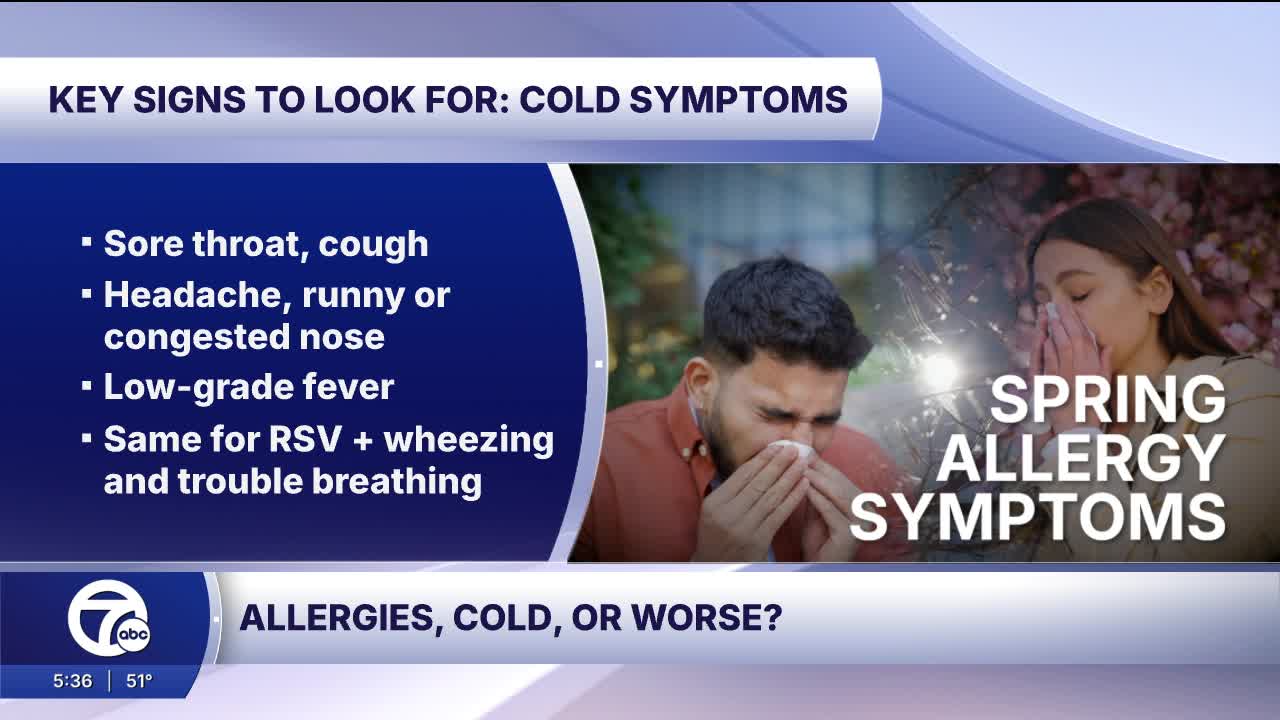
With a cold, you might feel run-down. You could have a sore throat, cough, headache, runny or congested nose and maybe a low-grade fever.
RSV is similar but can sometimes cause wheezing and trouble breathing.
With the flu, symptoms can be the same, but they tend to hit harder. You may also have a high fever, chills, body aches, fatigue and sometimes nausea. People often say they feel like they’ve been “hit by a truck.”
Now, allergies are different. They’re not caused by a virus. It’s your immune system reacting to something you’re allergic to like pollen.
So, symptoms can include itchy, watery eyes, sneezing, puffiness around the eyes and a congested or runny nose. But you usually won’t have a sore throat, cough or fever.
Also, if your symptoms show up around the same time every year and last for weeks, it’s more likely allergies. Colds and flu usually clear up within seven to 10 days, although a cough may linger longer.
Treatment depends on the cause. If it’s a cold or RSV, the focus is on supportive care. That means rest, fluids and over-the-counter medications like saline nasal spray, acetaminophen or ibuprofen if you need to ease symptoms.
Some people use zinc, which may slightly shorten a cold, but you don’t want to overdo it, as it can be toxic.
For the flu, the same basics apply. However, if you catch it within the first 48 hours, antiviral medications may help reduce severity and prevent hospitalization.
As for allergies, you’ll want to reduce your exposure to triggers like pollen if you can. Medications like antihistamines or nasal steroid sprays can help control symptoms. And simple steps like rinsing your sinuses with saline, can make a big difference.
Now, RSV, the flu and even the common cold can lead to pneumonia and bronchiolitis. So, if you’re high risk or something feels off, like symptoms lasting too long, getting worse or shortness of breath, it’s a good idea to check in with your doctor.
