

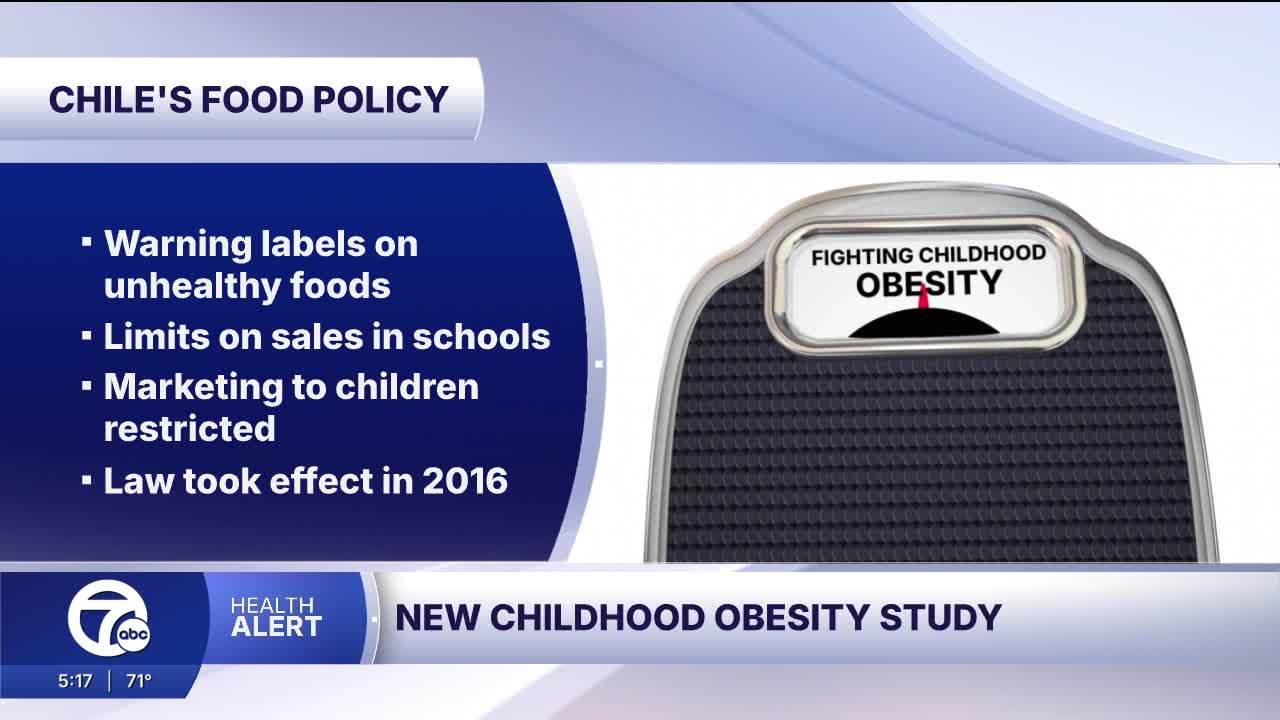


(WYXZ) — In today’s Health Alert, a new study suggests government food policies may help reduce childhood obesity rates. Researchers in Chile saw measurable changes after the country introduced warning labels and restricted sales and marketing to school-age children.
This is a very interesting study. Researchers studied more than 300,000 children between the ages of 4 and 6 in Chile. The country introduced a law requiring foods and drinks high in sugar, saturated fat, salt, or calories to carry a warning label on the front of the package. It also restricted sales in schools and banned marketing aimed at children.
So, how much of an effect did this law have? Well, researchers found meaningful improvements within the first 18 months after the law was introduced in 2016. Girls had a 2.9% lower risk of being overweight or obese, and boys had about a 2.4% lower risk.
That may not sound like much, but even small reductions in excess weight during childhood can make a big difference later in life. That’s because childhood obesity is linked to a higher risk of type 2 diabetes, high blood pressure, heart disease, and continued obesity into adulthood. And adults with obesity are also at higher risk for stroke, many types of cancer, and early death.
Now, the study results may not end there. Chile rolled out phases 2 and 3 of the food policies in 2018 and 2019. So researchers expect to see a larger impact because those phases set stricter limits.
Right now, about 1 in 5 American children and teens has obesity. Rates are higher among teens, Hispanic and Black children, and children living in lower-income households.
As for whether the U.S. would benefit from similar policies, the Chile study shows us it’s not just about personal choice. It’s also about the environment kids grow up in - the foods marketed to them, what’s available in schools, and how easy or hard it is to make healthy choices.
So, in my opinion, policies like clearer food labeling and limits on junk-food marketing to children could help support healthier choices. That said, childhood obesity is influenced by many factors - not just diet. Genetics, eating habits, physical activity, sleep, and access to health care all play a role.
If parents are concerned about their child’s weight, talk with your pediatrician. The goal is not just about food - it’s about helping children build healthy, lifelong habits.
