

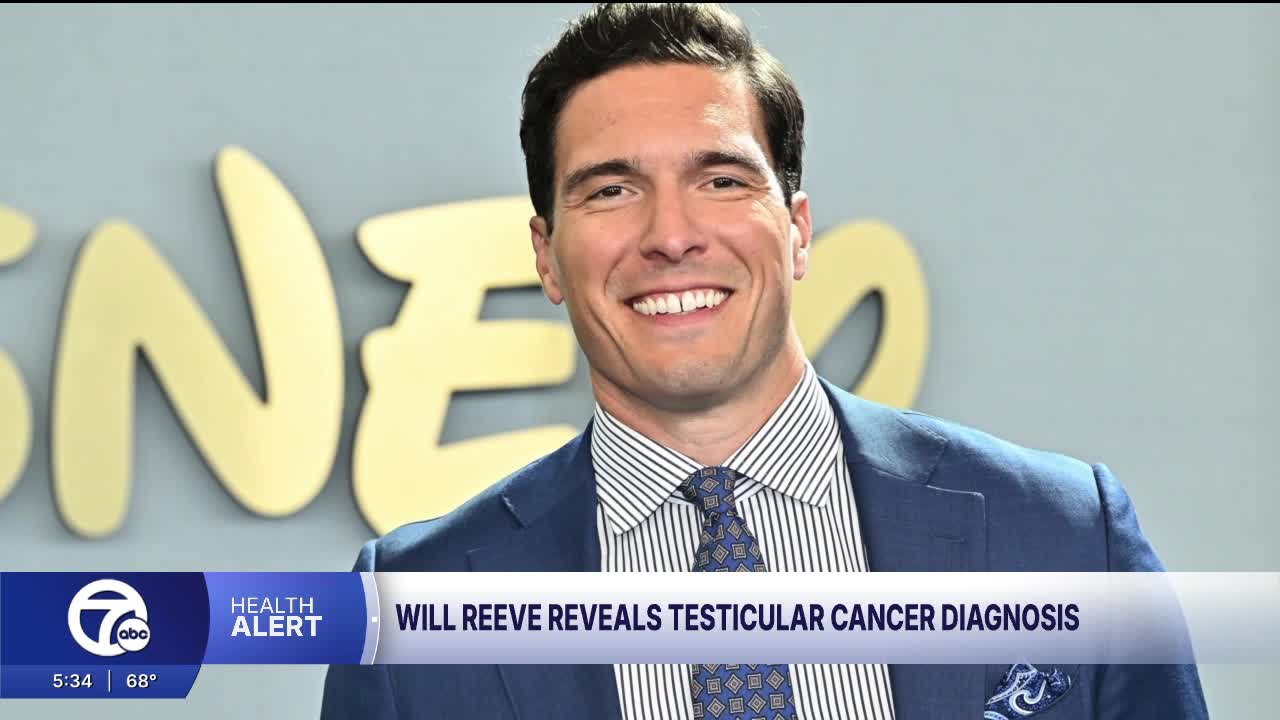


(WXYZ) — ABC News correspondent Will Reeve was diagnosed with testicular cancer earlier this year. His cancer spread to his lymph nodes, but he has successfully completed treatment.
Testicular cancer is considered rare. However, it’s most common in men between the ages of 20 and 39. And Reeve was just 34 when he was diagnosed.
He first noticed a lump on his left testicle. His wife encouraged him to see his doctor back in April. That led to an ultrasound and then surgery to remove the testicle. He was diagnosed with an aggressive form of testicular cancer called embryonal carcinoma. And because the cancer had spread to lymph nodes, he underwent surgery to remove them followed by chemotherapy.
His treatment was completed in July and he decided to speak out to help raise awareness about testicular cancer.
Now, the cause of this type of cancer is not known. But some factors can increase the risk, including abnormal testicle development, a family history, a previous testicular cancer diagnosis, being white or having had an undescended testicle — meaning one or both testicles didn’t move down into the scrotum before birth. But here’s the important point: many men who develop it have no known risk factors.
The most common sign is a painless lump or swelling in a testicle. You may also notice a change in how a testicle feels, pain or discomfort, or a dull ache in the lower abdomen or groin. Sometimes, fluid can suddenly build up in the scrotum.
As for self-exams, there isn’t enough evidence to say that routine self-exams reduce the risk of dying from testicular cancer.
That said, it’s important to know your body and what’s normal for you. If you notice a new lump, swelling or other changes, or aren’t sure, don’t ignore it. Get it checked by your doctor. A lump or change doesn’t always mean cancer. It could be other things, like a cyst or an infection.
The good news is that testicular cancer is usually very treatable. Reeve’s story is a reminder that you shouldn’t ignore changes or hesitate to speak up when you have a concern.
