

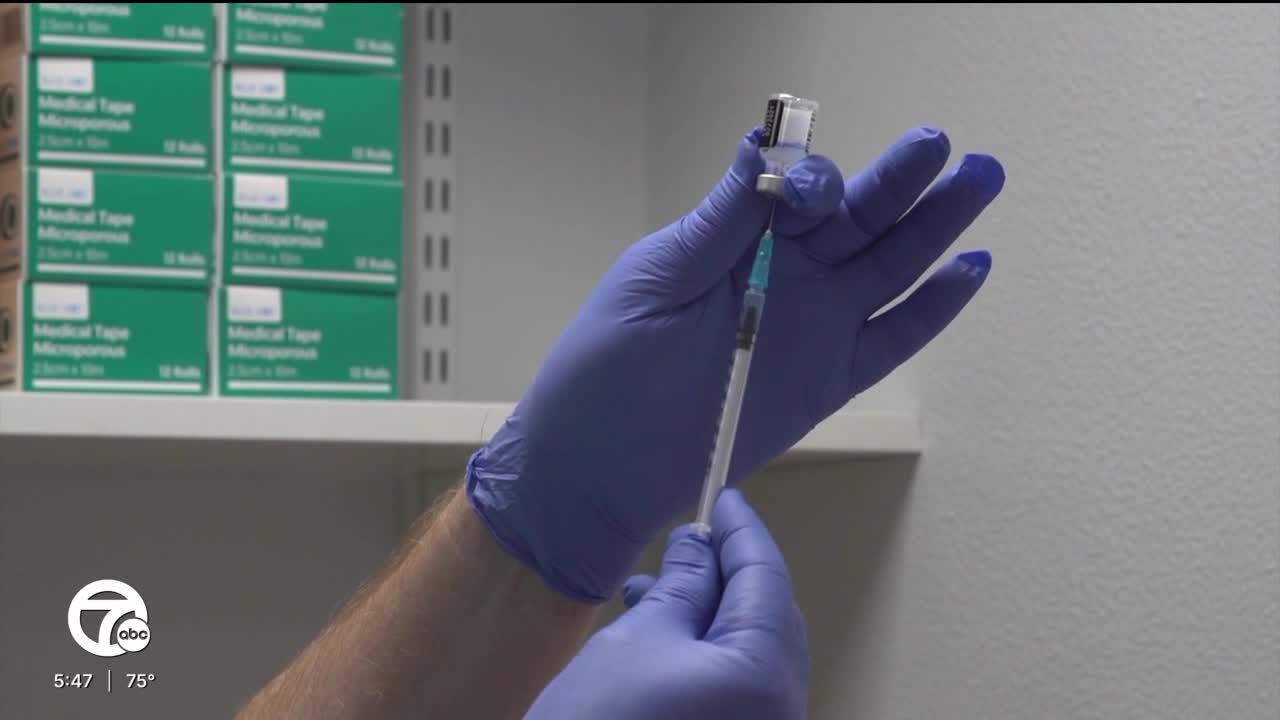


(WXYZ) — In today’s Health Alert, researchers have reached a major milestone in vaccine development. Scientists in the United Kingdom have successfully tested the world's first vaccine designed using artificial intelligence.
The vaccine is intended to provide protection against a broad range of coronaviruses, including some that could emerge in the future.
This is a fascinating development because artificial intelligence was used to design the vaccine's key component rather than relying solely on traditional laboratory methods. Researchers analyzed genetic information from many different coronaviruses and used AI to identify features those viruses have in common. The goal was to create a vaccine that targets the entire family of viruses instead of just one specific strain.
What's especially exciting is that this vaccine has now completed its first human safety trial and was found to be safe and well tolerated. Researchers also saw immune responses against multiple coronaviruses, including SARS-CoV-2, the virus that causes COVID-19, as well as related viruses that could potentially jump from animals to humans in the future.
It's important to emphasize that this is still early research. The vaccine is not yet available to the public, and larger studies are needed to determine how well it protects people from illness. But it represents a potentially important step toward broader, more proactive pandemic preparedness.
Could artificial intelligence change the future of vaccine development and help us respond faster to future outbreaks?
Potentially, yes.
One of the biggest challenges in vaccine development is time. Traditionally, researchers identify a virus, study it, determine which parts of it should trigger an immune response, and then develop and test a vaccine. That process can take years. AI may help accelerate some of those early steps by analyzing enormous amounts of genetic and biological data much faster than humans can alone.
What's particularly promising here is the idea of creating so-called "universal" vaccines. Instead of chasing each new variant after it appears, researchers are trying to identify features shared across entire families of viruses and build protection against them before the next outbreak occurs.
That said, AI is not replacing scientists. Human researchers still design studies, conduct clinical trials, and carefully evaluate safety and effectiveness. We should think of AI as a powerful new tool that may help speed discovery and improve preparedness. The science still has to prove itself through rigorous testing.
If these larger trials continue to show positive results, this could represent an entirely new approach to preventing future pandemics and protecting global public health.
