

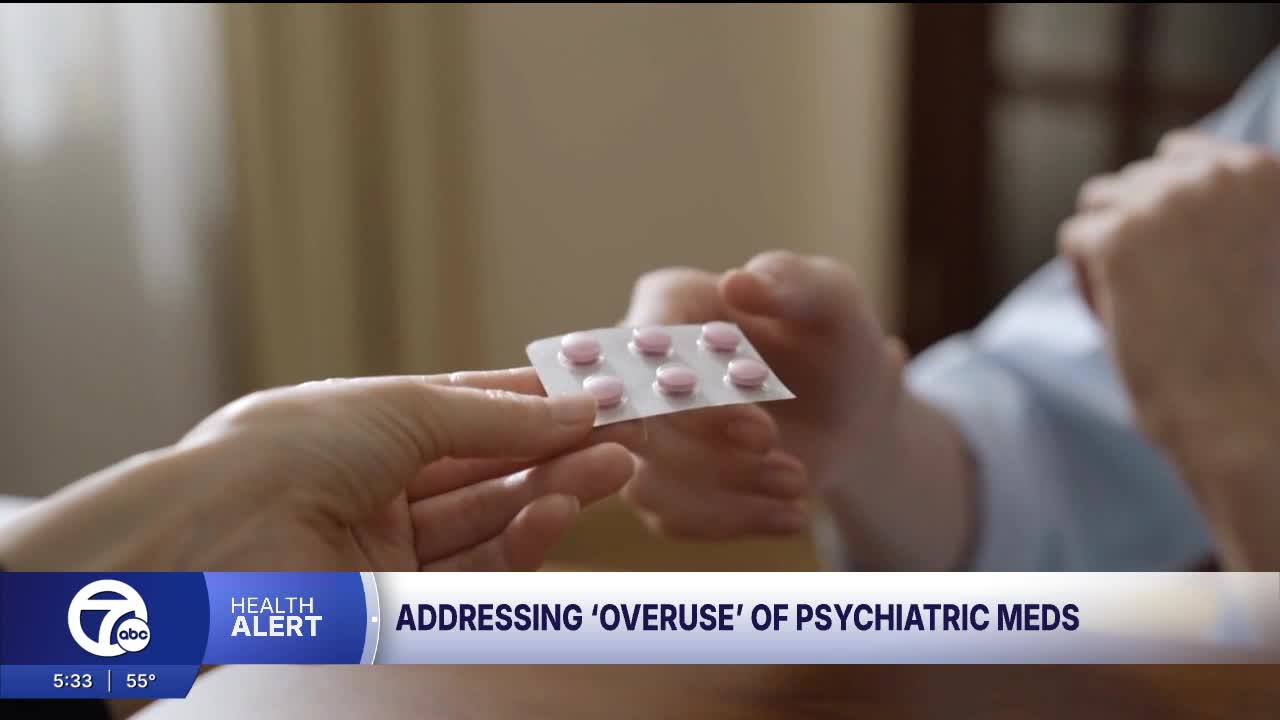


(WXYZ) — The U.S. Department of Health and Human Services is launching a new plan focused on psychiatric medications and what officials call overprescribing.
The effort is encouraging more personalized mental health care and greater use of non-medication treatments when appropriate.
First of all, it’s important to say that psychiatric medications can absolutely be life-changing and even lifesaving for many people. Mental health conditions like depression, anxiety, bipolar disorder, OCD and others can really impact daily life. A treatment plan - regardless of what form it takes - is often needed for symptom management.
Now, the approach put forth by the U.S. Department of Health and Human Services is focused on reducing what officials describe as the overuse, or overprescribing, of psychiatric medications, particularly in children. This refers to situations where medications may be prescribed when they’re not truly needed, continued longer than necessary or used when they’re no longer providing a clear benefit.
The plan encourages careful tapering or deprescribing when it’s medically appropriate. That does not mean that treatment has to end. It’s a discussion between the doctor and the patient to determine whether the medication is still necessary and still provides benefits.
The initiative also highlights informed consent, shared decision-making and a shift toward prevention and a broader, more holistic approach to mental health care.
The non-medication approaches mentioned include things like psychotherapy or talk therapy, family and social support, behavioral approaches, regular physical activity, better sleep habits, stress management and nutrition-focused strategies.
Research suggests that regular exercise may help reduce symptoms of depression, and healthier eating habits may also improve mood and mental health for some people. But these approaches are not one-size-fits-all, and they are not meant to replace medication in every case. Treatment should be tailored to the person, their symptoms, medical history and their goals.
Now, if you are taking medication, do not stop it on your own. Suddenly stopping certain medications can cause serious withdrawal symptoms or a return of symptoms. Instead, talk with your doctor or mental health professional about the risks and benefits together. If changes are needed, they should happen gradually and under medical supervision.
Everyone’s mental health is so important, and when it comes to a treatment plan, the benefits and risks should be carefully weighed before moving forward.
This Week on the Dr. Nandi Show

Learn the ABCs of organic gardening with Dr. Partha Nandi, MD. Expert guests demonstrate easy step-by-step instructions for planting your own garden and share why organic food is better than conventionally grown crops. Nandi speaks with a pediatrician who reveals how pesticides can affect children’s health and the improvements seen after switching to an organic diet. Also, how chemicals can affect our gut health and hormones, plus two quick and delicious veggie recipes. Tune in this Sunday, May 10 at 12:30 p.m.
