



(WXYZ) — Michigan's cyclosporiasis outbreak continues to grow, with reported cases reaching 572 as of July 4. The Michigan Department of Health and Human Services has issued additional recommendations to help prevent foodborne illness.
A source has not been identified. No supplier, specific grower or type of produce has been linked to this outbreak yet. The investigation is still ongoing.
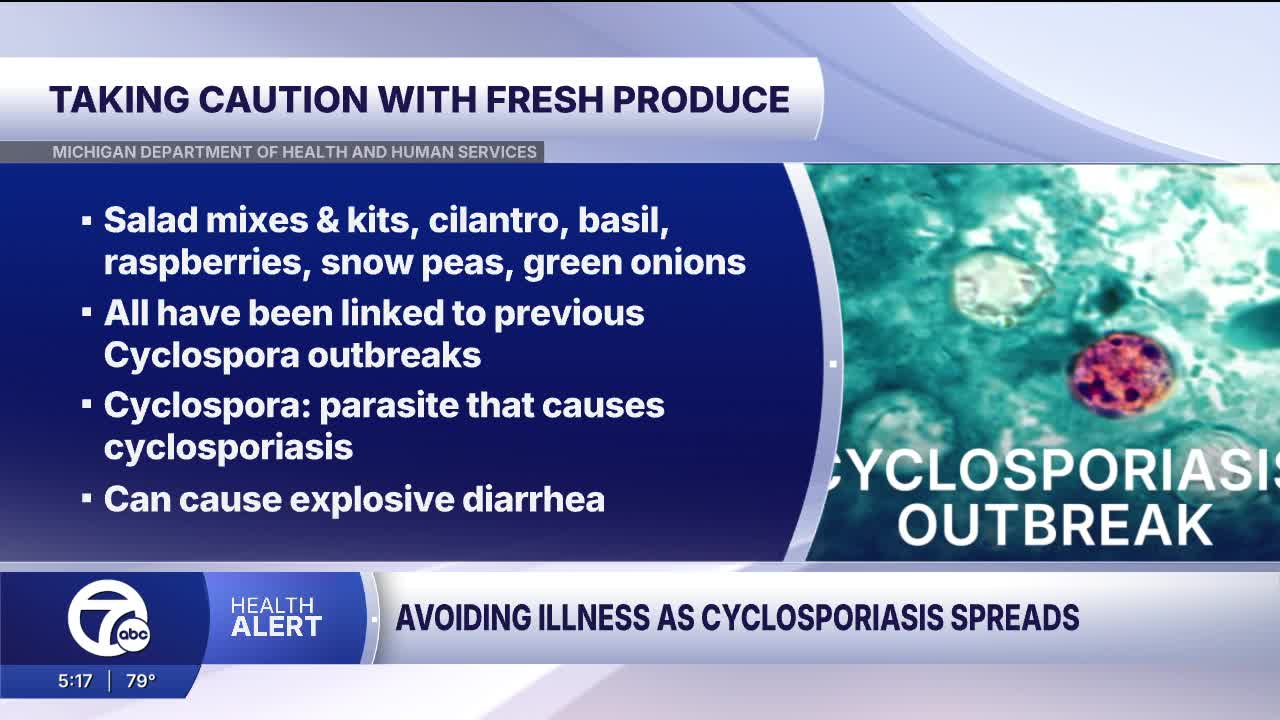
So, because of that uncertainty, the MDHHS is recommending extra caution with fresh produce. They specifically list bagged salad mixes and kits, fresh cilantro, fresh basil, raspberries, snow peas and green onions. These have all been linked to previous Cyclospora outbreaks. Cyclospora is the parasite that causes cyclosporiasis, an intestinal illness that can cause explosive diarrhea.
Now, instead of pre-cut or bagged salad mixes, health officials recommend buying whole heads of lettuce and removing the outer two to three leaves. The same goes for green onions — just be sure to cut off the root end. All fresh produce — and not just the ones I listed — should be thoroughly washed under running water. If it has leaves, like cilantro and basil, separate them as you wash them.
Snow peas and any firm fruits and veggies should be scrubbed well, even if you plan to peel them. Also, be sure to trim away any damaged spots. And whenever it's appropriate, cook produce to 158°F or higher because heat kills the parasite.
Always wash your hands with soap and water before and after preparing food. Keep cutting boards, utensils and kitchen surfaces clean by washing and sanitizing them before and after preparing fresh produce. Also, be sure to refrigerate peeled or cut fruits and veggies right away.
These precautions are especially important for people at higher risk of serious illness, like older adults, young children and anyone with a weakened immune system. That’s because the biggest concern isn't usually the parasite itself; it’s dehydration from prolonged diarrhea.
Now, if you develop persistent watery diarrhea, especially if it lasts several days or keeps coming back, it’s really important to contact your family doctor. Cyclosporiasis can be treated with antibiotics, along with plenty of fluids and rest to prevent dehydration.
The good news is that direct person-to-person transmission is unlikely. And cyclosporiasis is not usually life-threatening. Most people recover completely. But early treatment can help shorten the illness and reduce the risk of complications, especially for those who are most vulnerable.
