



(WXYZ) — The U.S. Army Corps of Engineers and other partners are working to find new ways to address ice in the Soo Locks, which can cause significant shipping delays during the winter shipping season.
Each winter and spring, according to the Corps of Engineers, the Poe Lock experiences navigational impacts due to ice flow. The Poe is the largest lock in the Soo, and officials expect to see the same challenges at the new lock when it's complete in 2030.
During the spring, ice flows into the lock chambers, which slows traffic and forces the locks to cycle more often, which adds wear and tear. Interlake Steamship Company, which operates nearly a dozen ships on the Great Lakes, said that one ship was held up for nearly 10 hours because of the ice earlier this year.
See inside the facility and during the testing in the video below
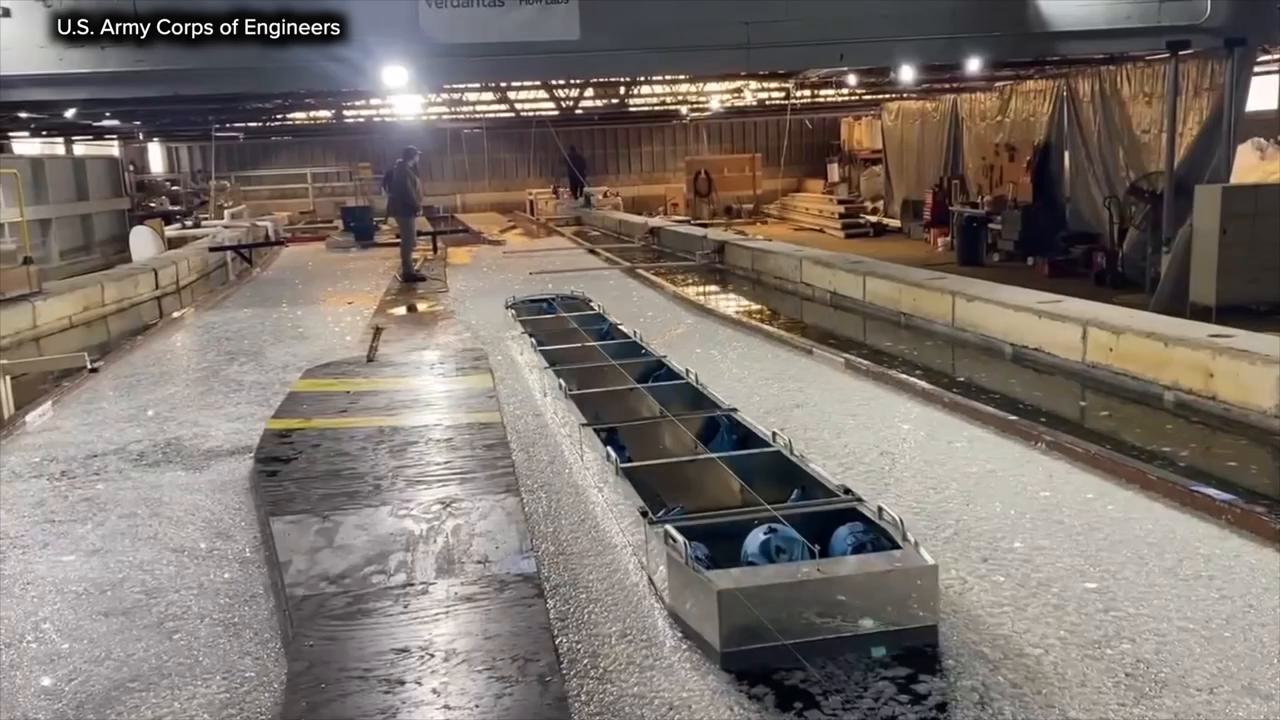
Because of that, the Army Corps of Engineers and industry partners, including the Lake Carriers Association, traveled to Massachusetts, where companies Arcadis Bergman and Verdantas Flow Labs built a 1:32-scale model of the Soo Locks.
That model included 10,000 pounds of synthetic ice, which mimics real ice's buoyancy and movement.
The study kicked off in 2023. Interlake and others joined the Army Corps of Engineers in Massachusetts to see the Soo Locks model. Paul Christiensen, Interlake's VP of operations, and Ship Captains Brad Newland and Mike King, provided their input.
During the testing in Massachusetts, the study used a model freighter based on Interlake's M/V Paul R. Tregurtha, the largest ship on the Great Lakes.

“The amount of thought and detail put into this project exceeded anyone's expectations. Having all these people in one room, striving for the same goal, meant everyone’s input mattered," King said in a statement posted to the Interlake Facebook page. "It was an honor to be involved and exchange information with such a great group of people."
According to the U.S. Army, ice mitigation features will allow them to maximize the utilization of hands-free mooring and optimize winter operations of the new lock and Poe Lock.
Interlake said that over 40 days of testing, engineers will trial various mitigation strategies on the model to see what works best.

“It is always a privilege to work with the Army Corps of Engineers and be a part of making the Soo locks even safer, more reliable, and efficient,” Christensen said in a statement.
According to the Army, there are seven potential features being investigated. Those features include:
- Ice booms – long, log-like structures to hold back ice
- Bubbler curtains upstream of the New Lock and Poe Lock, which would direct ice
- Bulkhead across the upstream side of the MacArthur Lock – it would operate as a temporary wall on the upstream end of the MacArthur Lock that wouldn't extend to the water's surface, so ice could flow over the bulkhead
- Ice-shedding wall coatings
- Radiant heating in specific areas of the lock
- Bubbler curtains in the chamber
- Additional point-source bubblers
Interlake said that reducing ice-related delays will mean that commerce can continue flowing through the locks and critical infrastructure will be protected.
The study is set to wrap up in the summer of 2026, and officials from the U.S. Army Corps of Engineers anticipate having a variety of features they can implement to help deal with the ice.

