


(WXYZ) — Six species are being added to Michigan's invasive plants list, according to the Michigan Commission on Agriculture and Rural Development.
According to the commission, they decided to add the six species following public comments and a "rigorous, scientific review process led by the Michigan Department of Agriculture and Rural Development."
The proposal to add the species to the list received more than 2,000 public comments, according to the state, with more than 90% in favor of adding them to the invasive species list.
Four species will be added to the restricted species list. That means, effective Jan. 1, 2028, it will be unlawful to introduce, import, sell, possess with intent to distribute or intentionally propagate these species in Michigan:
- Common buckthorn
- Glossy buckthorn
- Callery pear
- Japanese barberry
Two other species will be added to the prohibited species. That means that effective June 19, 2026, it will be unlawful to introduce, import, sell, possess with intent to distribute, or intentionally propagate these species in Michigan:
- Water hyacinth
- Water lettuce
Property owners are not considered in violation if these species are already established on their property or waterway.
The department proposed to add them to the invasive species list in November 2025 after weed risk assessments.
A breakdown of each species is below
Common buckthorn
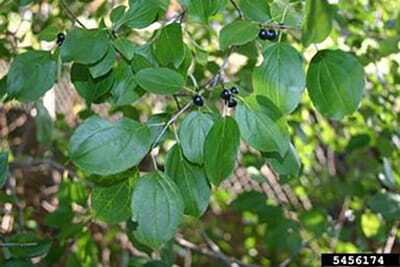
IDENTIFICATION
- Deciduous small tree or shrub – can reach 25 feet tall.
- Leaves are dark- green, oval and slightly toothed.
- In spring, small, yellow-green, four-petaled flowers grow in clusters of two to six at the base of leaves.
- Small, purple to black fruits ripen in the fall.
- Twigs often have a single, sharp thorn at their tip.
- Distinctive orange inner bark.
Glossy buckthorn
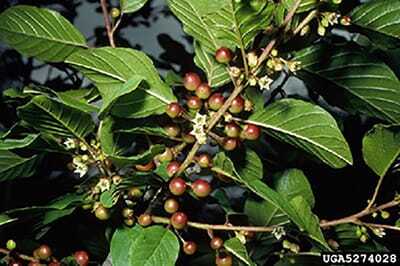
IDENTIFICATION
- Small tree or shrub – can reach 18 feet tall.
- Leaves are simple, alternate, shiny and un-toothed.
- Flowers are tiny, contain five greenish-white petals and are clustered at the base of leaves (late May-September bloom).
- The plant does not have thorns.
- Pea-sized fruits ripen from green to red to dark purple (June-September).
- Distinctive orange inner bark.
Callery pear
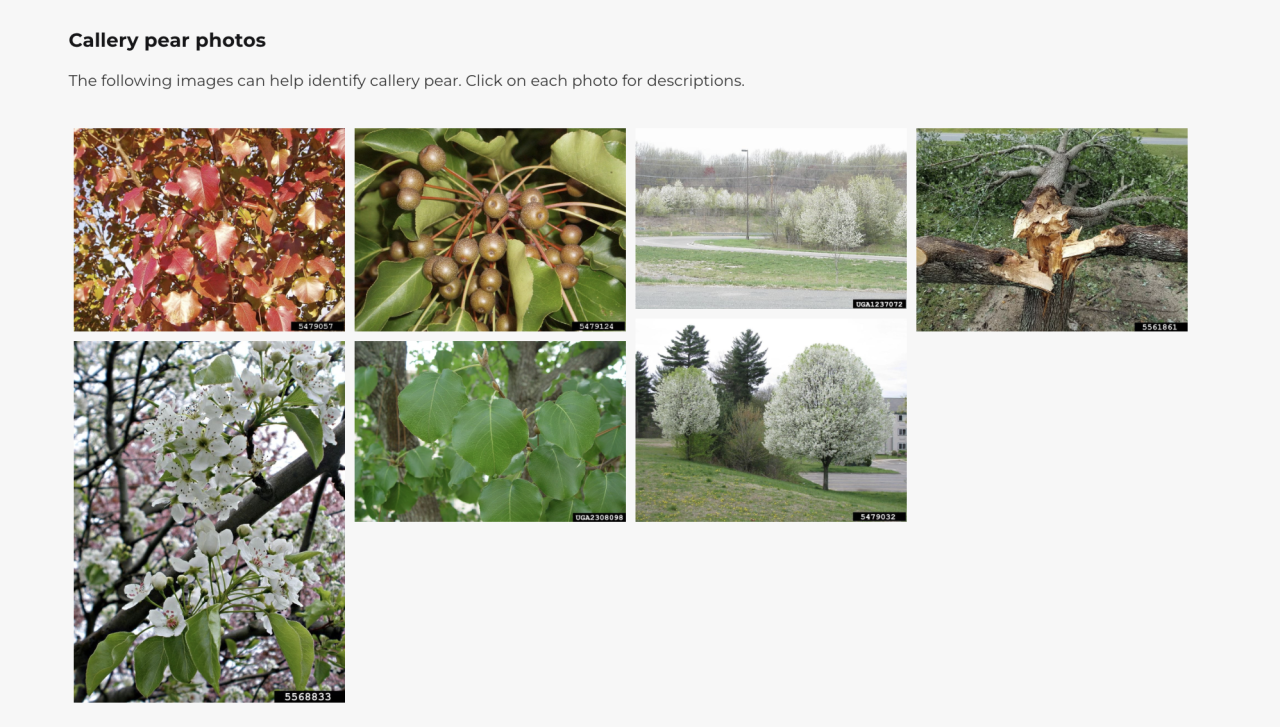
IDENTIFICATION
- Medium-sized, fast-growing tree with smooth young bark and scaly bark when older.
- Small white flowers with five petals emerge before leaves in spring; many varieties have an unpleasant odor.
- Leaves are teardrop- to heart-shaped, shiny, dark green and leathery with a wavy edge; some trees have bright red fall foliage.
- Fruits are small (½ inch diameter), hard, and green to brown; when cut, they resemble a tiny apple or pear. Several attach by long stems to the same point on a twig.
- Some twigs develop sharp thorns, particularly near flowering stems.
Japanese barberry
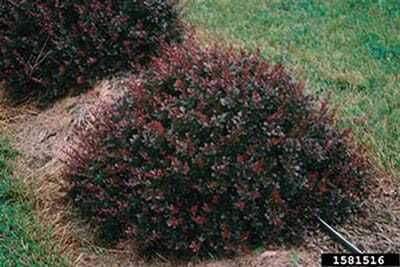
IDENTIFICATION
- Spiny, deciduous shrub usually 1-2 feet, but can grow up to 6 feet in height.
- Small, oval-shaped green leaves with smooth edges turn red in the fall.
- Brown to reddish stems with thorns at each node.
- Small, pale yellow flowers with six petals hang from stems, blooming in spring.
- Fruits are small, bright red, egg-shaped berries that persist into winter.
- Can be confused with the native American barberry, which has toothed leaves.
Water hyacinth
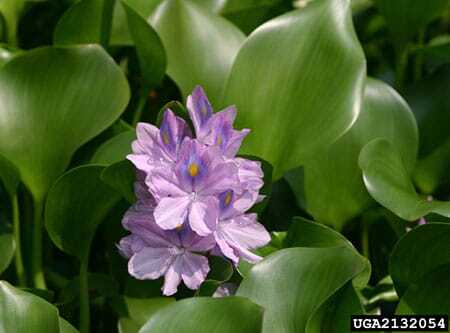
IDENTIFICATION
- Erect, free-floating perennial herb.
- Short, bulbous leaf petioles.
- Distinctive air bladders that keep leaves afloat.
- Rounded, leathery leaves arranged in whorls of 6-10.
- 14-day flowering cycle produced lavender flowers with central yellow fleck.
Water lettuce
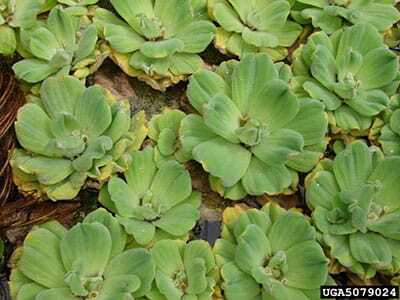
IDENTIFICATION
- Free-floating – forms a rosette of leaves that resembles an open head of lettuce.
- Leaves are thick, ridged, rounded at the end, light green, and have short, white hairs.
- Produces small, white to pale green flowers.
- Many feathery roots dangle under the rosette.
