

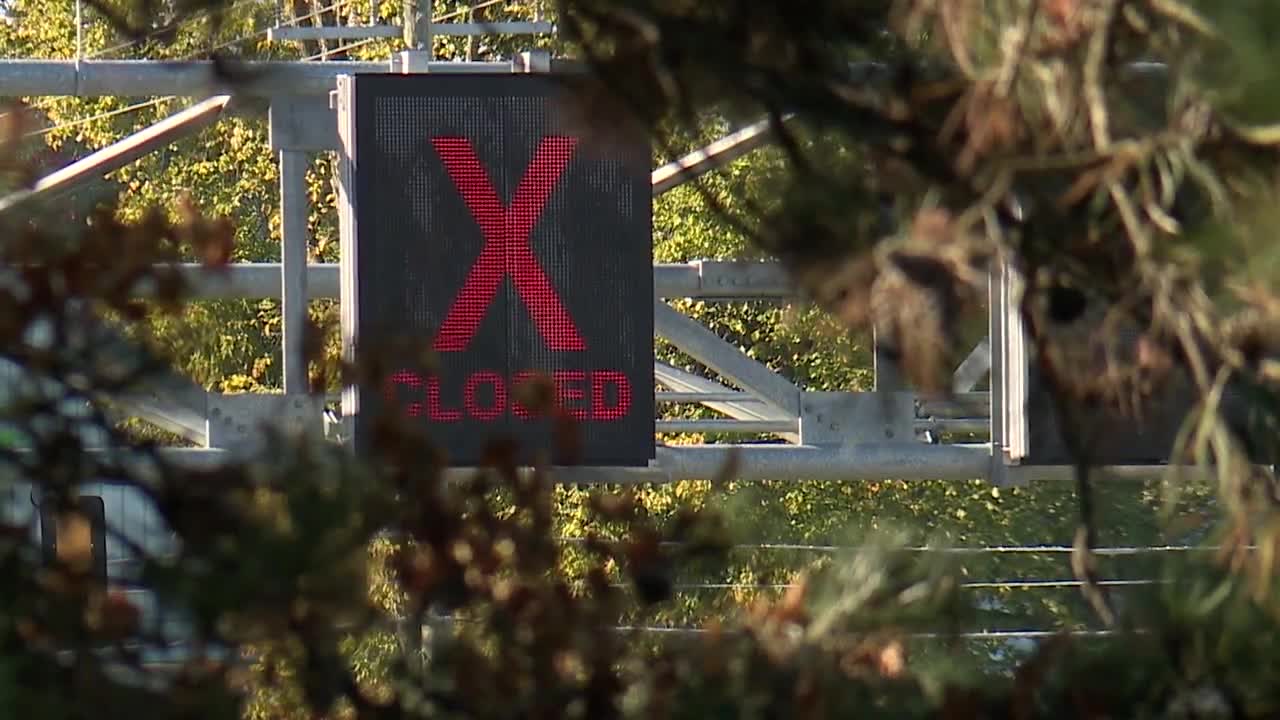


BRIGHTON, Mich. (WXYZ) — Anyone who drives the US-23 Flex Route has probably asked the same question: if traffic is backed up, why isn't the flex lane open?
That's exactly what one metro Detroit driver wanted to know after repeatedly encountering heavy congestion while the lane remained closed.
Driver Questions Flex Lane Operations
Kevin Telepo drives US-23 several times a week and says he's often frustrated when traffic slows to a crawl but the flex lane stays closed.
"You're driving and there is a lot of traffic, and you wonder why that left lane isn't open," Telepo said.
Watch Ali Hoxie's video report below:
Telepo described seeing miles of bumper-to-bumper traffic while overhead signs continue displaying red Xs, preventing drivers from entering the lane.
"When you get down to the very end, the last red X and you see the red line and then traffic opens up in that third lane and branches out and it's wide open, it just seems like it is an obstruction almost," he said.
How the US-23 Flex Route Works
According to the Michigan Department of Transportation, the US-23 Flex Route uses the shoulder as a temporary third lane during periods of high traffic volume. MDOT says the approach is a more cost-effective alternative to widening the freeway.
Behind the scenes, operators monitor traffic conditions from one of MDOT's Transportation Operations Centers. Staff watch 49 cameras along the corridor between M-14 and I-96.
"From 5 a.m. to 9 p.m., we have a dedicated operator and that is their job. They are operating that flex route," said Stephanie Palmer, MDOT's University Region Traffic Safety and Operations Engineer.
When Does the Flex Lane Open?
Palmer said the flex lane operates on a regular schedule during peak commuting hours:
- Southbound: 6 a.m. to 9:30 a.m.
- Northbound: 3 p.m. to 7 p.m.
Outside those times, MDOT considers two primary factors before opening the lane.
First, the traffic backup must be significant enough that it's not expected to clear quickly.
"You might be in traffic congestion and it may be something short-term, like a police officer has pulled someone over up ahead and it's going to be a smaller impact on traffic," Palmer explained.
Second, operators must determine that it is safe to open the lane.
"It takes at least 10 minutes for us to do our checks, our safety checks, to get that lane open," Palmer said.
Study Shows Safety Benefits
Despite frustrations from some drivers, research suggests the flex route is improving safety.
A Michigan State University study published in December 2021 evaluated the US-23 Flex Route between M-14 and M-36 and found:
- A 17% reduction in overall crashes.
- A 34% reduction in southbound crashes.
- Approximately a 50% reduction in southbound crashes during peak traffic periods.
MDOT Says It Continues to Review Operations
Palmer said driver feedback is valuable and can help MDOT improve how the system operates.
"I appreciate the feedback, and one of the things we will do is go back and look at our operations," Palmer said. "We can look at areas where it was congested and it looks like we didn't open the flex route. We do have those resources available to keep checking and trying to improve operations."
Telepo hopes those reviews lead to improvements.
"It would be nice to be looked into to see what can be done," he said.
Additional Flex Lane Openings
MDOT says the agency also opens the flex lanes for major events, including University of Michigan football games, as well as during periods of heavy summer travel.
Drivers can learn more about the flex route on MDOT's website: US-23 Flex Route Information.
Have a traffic concern you'd like investigated? Email ali.hoxie@wxyz.com.
—————
This story was reported on-air by a journalist and has been converted to this platform with the assistance of AI. Our editorial team verifies all reporting on all platforms for fairness and accuracy.
