

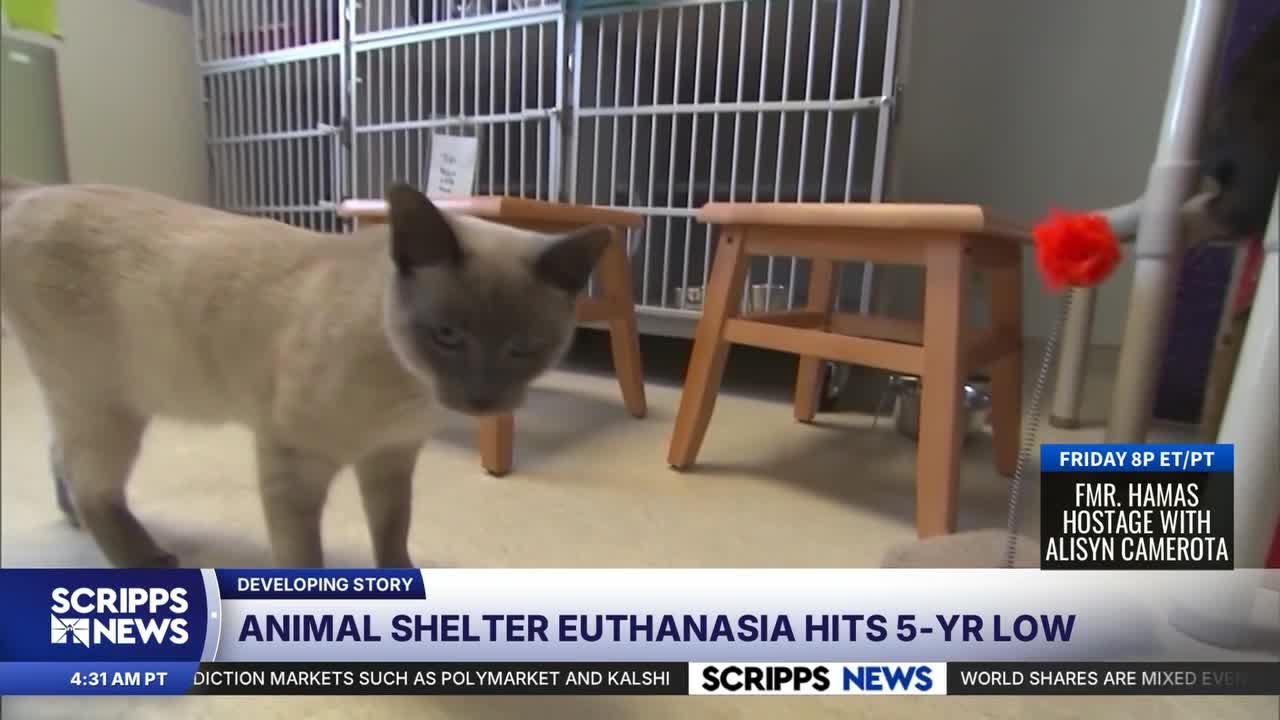


U.S. animal shelters are reporting their biggest drop in euthanasia since 2020. New data shows 34,000 fewer cats and dogs were euthanized for space in 2025 compared with 2024.
About 4 million dogs and cats were adopted from shelters last year, pushing the country closer to “no-kill” status — defined as a 90% save rate for animals entering shelters. More than two out of three U.S. shelters reached that benchmark in 2025, and nearly half of the remaining shelters would need to save fewer than 100 additional pets to get there.
RELATED STORY | Some families are 'adopting' turkeys for Thanksgiving instead of eating them
“2025 was a turning point for animal sheltering in the U.S., and the data shows an undeniable momentum for the movement to end the killing of healthy, treatable pets in shelters,” said Julie Castle, CEO, Best Friends Animal Society. “The number of no-kill shelters in this country is at an all-time high, with 68% of shelters reaching this milestone last year, and of those that are not yet no-kill, nearly half have fewer than 100 additional pets to get there. This progress didn’t happen by chance or by working alone. This is a clear example of what happens when pet lovers, shelters, and rescue groups work together to save lives.”
Best Friends Animal Society said that shelters that have adoption rates of over 90% are considered "no-kill" because less than 10% of animals are suffering from irreparable medical or behavioral issues. These pets are generally not able to be rehomed.
RELATED STORY | Senior dog adopted by senior citizen gains new life and new fame
Advocates say, however, that adoption rates remain below pre-pandemic levels.
