

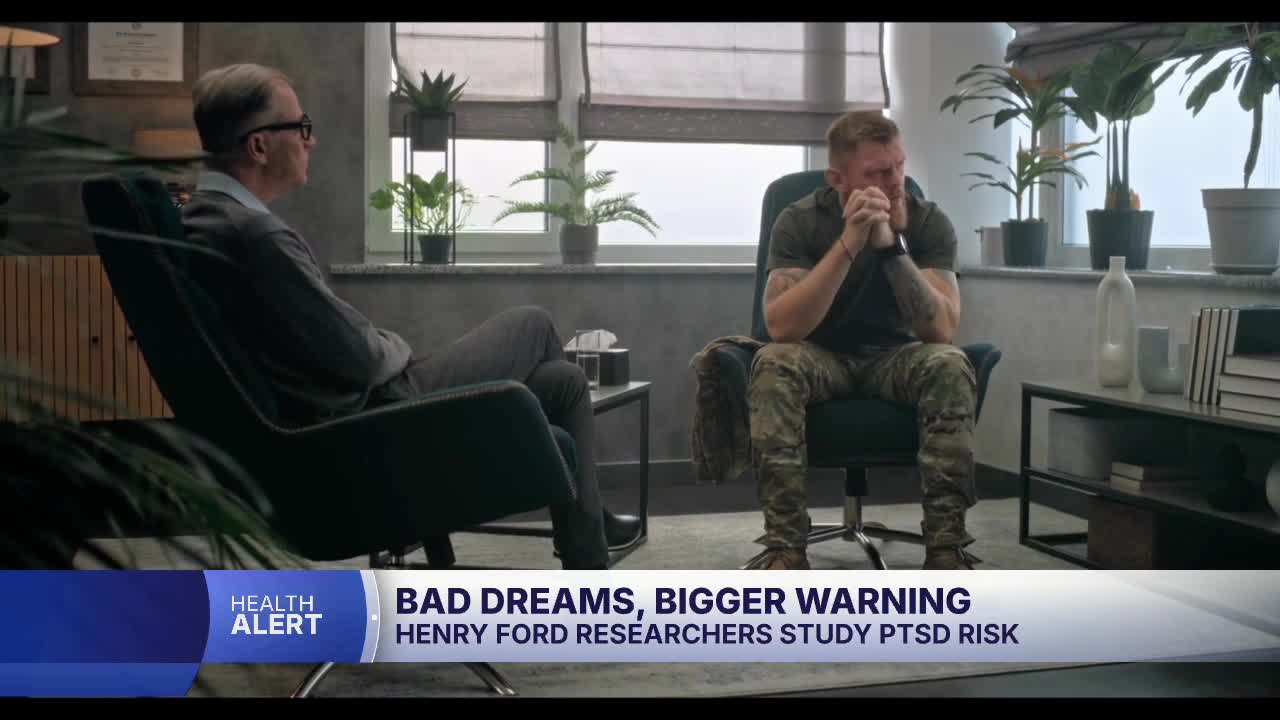


Nightmares following a traumatic event may be more than just bad dreams. Researchers at Henry Ford Health have found they can predict more severe symptoms of post-traumatic stress disorder (PTSD) months later.
WATCH Could treating nightmares after trauma help prevent PTSD? Henry Ford Health researchers investigate
Now, they're investigating whether treating those sleep problems early could help prevent PTSD and connect more trauma survivors with mental health care.
Nightmares may signal something more serious
In earlier research, Henry Ford Health investigators found that nearly 80% of patients who experienced interpersonal violence, such as physical assault, reported significant nightmares following their trauma.
That compares with approximately 40% of patients who experienced other traumatic injuries, including car crashes and falls.
Researchers also found that nightmares predicted more severe PTSD symptoms months later and were associated with the development of suicidal thoughts.
"The nightmares are a signal, almost like that canary in the coal mine, that something bigger is happening, but then they're disrupting sleep, which then worsens our emotional functioning during the day," said Dr. David Moore, director of Trauma and Acute Care
Surgical Psychology Services at Henry Ford Hospital.
Moore explains that occasional disturbing dreams are common after traumatic experiences.
But nightmares accompanied by intense fear, a racing heart, sweating or the sensation of reliving the event may signal a need for additional support.
Reaching trauma survivors before PTSD develops
Those findings helped inspire Henry Ford Health's ongoing RESTED clinical trial.
Researchers are contacting patients within 72 hours of being discharged from the emergency department following a traumatic injury, offering virtual treatment focused on nightmares, insomnia or sleep education.
The goal is to determine whether intervening early can improve psychological recovery and potentially reduce the risk of PTSD.
So far, more than 76% of enrolled participants have begun treatment, a promising finding given the challenges many trauma survivors face in accessing mental health services.
Moore believes the approach may help overcome the stigma surrounding mental health treatment.
"Nightmares are a really tangible symptom, and we found that it's made the treatment much more approachable," Moore said.
Instead of immediately asking survivors to confront their traumatic experiences, providers can begin with a more familiar concern: helping them sleep better.
The convenience of telehealth may also make treatment easier to access. More than 71% of surveyed participants said attending in-person appointments would have been difficult.
What happens next?
The trial is expected to continue enrolling patients through fall 2027. Although preliminary findings are encouraging, researchers have not yet established whether treating nightmares early can prevent PTSD.
If successful, the approach could eventually benefit veterans, first responders and others frequently exposed to traumatic events.
Moore also emphasizes that people who experienced trauma months or even years ago shouldn't assume it's too late to seek help.
"No matter how long it's been, there are treatments there that can help," Moore said.
He encourages anyone struggling with persistent nightmares, anxiety or other trauma-related symptoms to talk with their primary care provider about available mental health treatments.
This story was reported on-air by a journalist and has been converted to this platform with the assistance of AI. Our editorial team verifies all reporting on all platforms for fairness and accuracy.
