

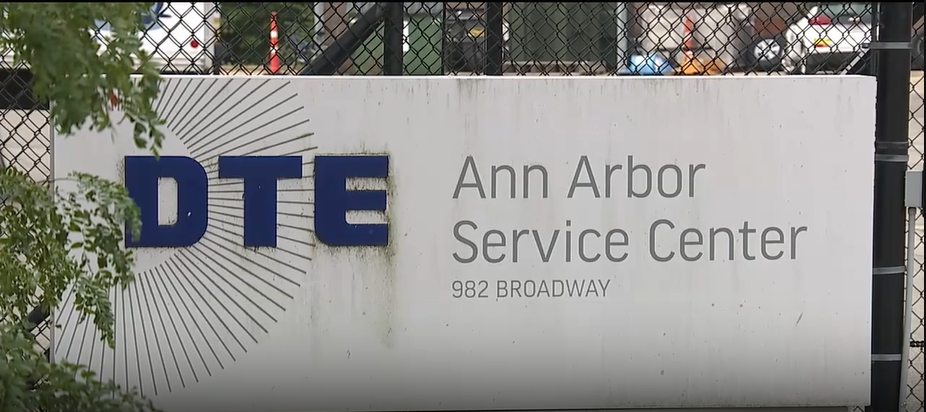


ANN ARBOR, Mich. (WXYZ) — For more than 100 years, DTE has provided power to Ann Arbor. Now, residents will have the chance to vote on whether to change that.
Watch Brett Kast's report below
A ballot proposal on the Nov. 3 general election ballot would establish a governing board to explore creating a city-owned public utility — replacing DTE as the provider for Ann Arbor residents.
Sean Higgins, president of Ann Arbor for Public Power, said his group gathered the more than 5,000 signatures needed to put the question before voters. He said frustrations with rising costs, frequent outages and DTE's reliance on fossil fuels drove the effort.

"This is the first time we are really going to the people of Ann Arbor to say whether or not they are on board with the idea of public power," Higgins said.
"This is just a utility that in so many ways is not aligned with the values of the city of Ann Arbor," Higgins said.
More than 40 municipalities in Michigan already operate their own public power utilities, though all were established at least a century ago. The American Public Power Association estimates public power customers pay 14% less on their bills and experience 4.5 fewer hours without power during major events.
"A public utility has so much potential in terms of benefits to the people," Higgins said.
Higgins said a yes vote would only establish a governing board to first explore the potential for city-run power. But Ann Arbor City Councilwoman Erica Briggs said the proposal carries far greater consequences.
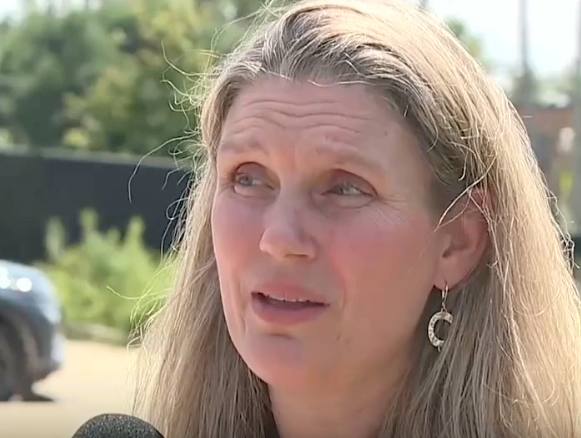
"I think there's a lot of confusion about what it is and what's on the ballot, and how its being billed is it's not a big deal. But the reality is it's a huge deal," Briggs said.
Briggs said the cost of a phase 2 study to explore the idea exceeds $1 million. If the city moves forward, she said it would need to go to court to purchase DTE's existing Ann Arbor assets at a price determined by a judge — a legal battle she estimates would cost $3 million per year in legal fees, with an estimated $1 billion purchase price.
"The costs are potentially bankrupting the city, it's a substanital cost" Briggs said. "There is no funding associated with this, so that means we're going to need to either cut services to move forward or we're going to have to put a millage in front of voters."
Higgins pushed back on those financial concerns and said the purchase could be handled by a municipal bond.
"In sort of the short term, we would take out this large bond for the acquisition. It would be paid out over time in rates, not taxes. This is not something that would not impact taxes. And over the long term it would just save the city of Ann Arbor so much money because of the revenue stream from the electric rate base," Higgins explained
In a statement, a DTE spokesperson said in part: "The proposal to take over Ann Arbor's electric grid will cost the City of Ann Arbor nearly $1 billion on day one, leading to skyrocketing costs for Ann Arbor businesses and residents. Last year, DTE delivered the best electric reliability Ann Arbor has experienced in nearly 30 years. It's proof that DTE's five-year, $270 million plan to modernize Ann Arbor's electric system is working. We will remain focused on our work and will continue to deliver the reliable, affordable, clean energy future Ann Arbor deserves."
Ann Arbor resident Ellie Yamakawa said she is open to the idea of public power but wants more information before November.

"I think they've (DTE) been doing their best most definitely, but I would say that most Ann Arbor residents more over than anything would like to have a shorter downtime and faster restoration of our power," Yamakawa said.
"I'm gonna do what most of us in this city are taught to do which is do our research, research and research," Yamakawa said.
Briggs urged voters to reject the proposal, while Higgins is hopeful the momentum continues their way in the November election.
"Ultimately, I'm encouraging people to vote no on this ballot proposal. I think it's ill conceived, it's reckless," Briggs said. "I don't want to spend a billion dollars on DTE's failing infrastructure, I want them to pay for that and make it work.”
Higgins said the long-term case for public power remains strong.
"At the end of the day you look at municipal utilities, it's a much more streamlined and efficient economic model," Higgins said. “When you talk to people from Traverse City, from Wyandotte where they have public utilities, they pay less, they have better reliability and these are structures that are just accountable to the people.”
Ann Arbor residents can find this issue on their ballot for the general election on Nov. 3.
This story was reported on-air by a journalist and has been converted to this platform with the assistance of AI. Our editorial team verifies all reporting on all platforms for fairness and accuracy.
