

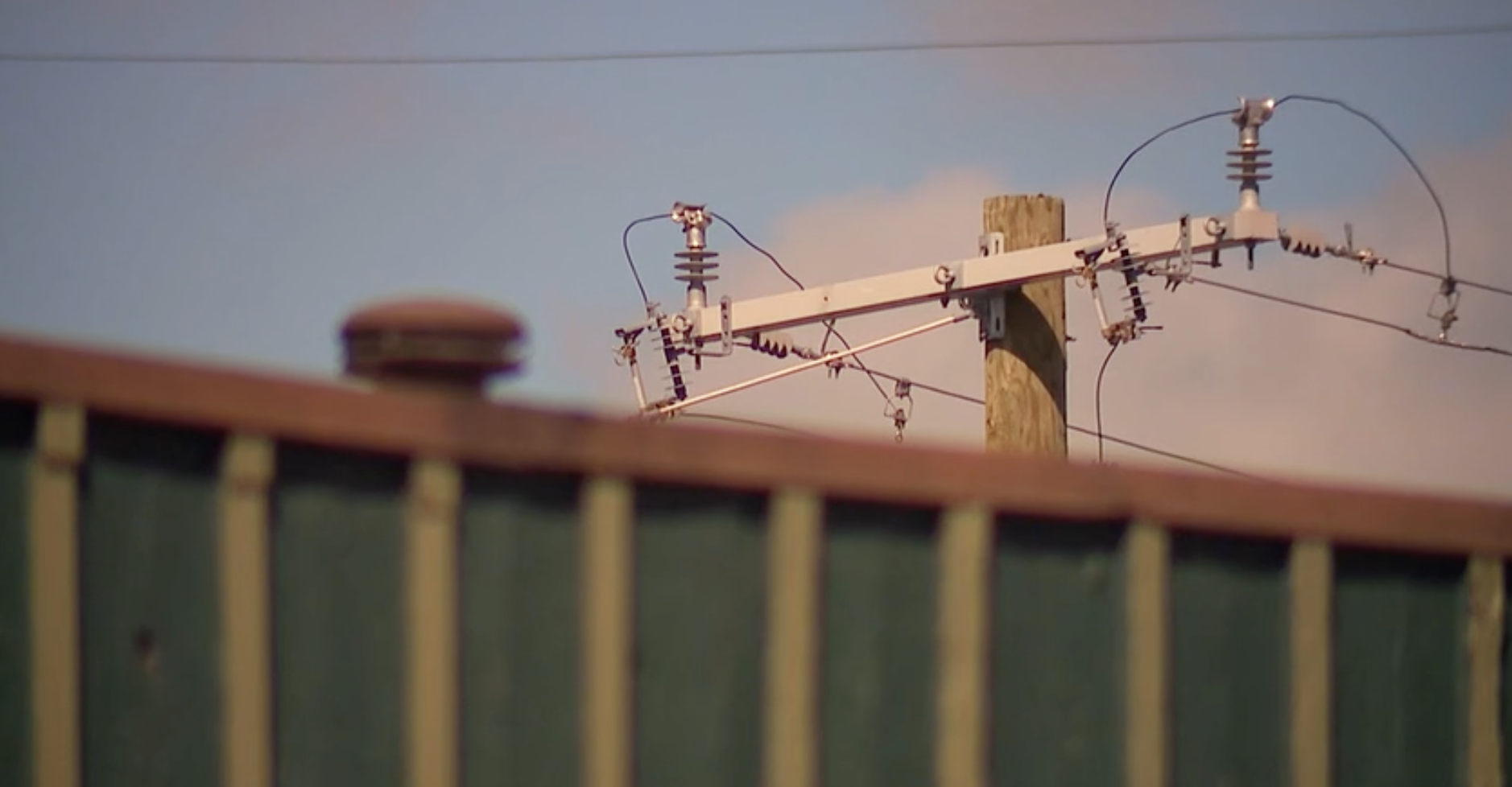



Ann Arbor city leaders are planning to publicly oppose a Nov. 3 ballot proposal that would establish a new board to explore creating a public utility company in place of DTE.
See the full story in the video below
Residents say high energy bills and frequent outages have fueled frustration with DTE. Mashiat Rabbani, who recently pursued graduate studies in Ann Arbor, said she and her friends have felt the impact firsthand.
"Relative to everything else, the price of energy is quite high," Rabbani said.
The ballot proposal is backed by the group Ann Arbor for Public Power, which has led efforts to eventually set up a city-owned utility — similar to what roughly 40 other Michigan communities, including Wyandotte, have done.
Brian Geiranger, the group's leader, said the proposal is a measured first step.
"This is a step toward public power. Full acquisition would only happen after another study is done," Geiranger said.
The American Public Power Association says public power customers pay an estimated 14% less on their bills and experience 4.5 fewer hours without power.
Geiranger pushed back on concerns about the cost of building a public system.
"I'd say we don't have the money to not have our own system. Right now we pay $32 million a year straight to DTE shareholders," Geiranger said.
Doug Price, a resident I spoke with at Westside Book Shop, acknowledged the complexity of the issue.
"It's a pretty expensive thing to run a big company and a complex thing like electricity," Price said.
Mayor Chris Taylor told me the idea of a city-owned utility is not cost effective and is the wrong answer to a legitimate problem. He said the proposal would require the city to pay hundreds of millions of dollars to acquire DTE's existing infrastructure.
"This would require the city to pay hundreds of millions of dollars to take DTE's existing infrastructure in its current condition and use that to serve power to residents. Where would money come from? Residents of Ann Arbor," Taylor said.
DTE has also issued a statement saying the move would result in skyrocketing costs — to the tune of nearly $1 billion. The mayor added that millions in tax revenue DTE currently pays would be lost, which could harm schools.
Taylor pointed to an existing pilot project combining battery and solar power, with DTE as a backup, as a more affordable path forward.
"It is on the ground now in 2026, serving 100 homes in our Bryant neighborhood. 100% renewable, reliable and affordable energy. We are going to expand that city wide," Taylor said.
City Council is expected to pass a resolution next week opposing the ballot proposal. DTE continues to say it is by far the most affordable option.
This story was reported on-air by a journalist and has been converted to this platform with the assistance of AI. Our editorial team verifies all reporting on all platforms for fairness and accuracy.
