



DEARBORN, Mich. (WXYZ) — Twenty-five years after September 11 became one of the darkest days in American history, Arab and Muslim Americans in Dearborn say they grieved alongside the rest of the country — but in the years that followed, many found themselves defending something they never thought they'd have to explain: their American identity.
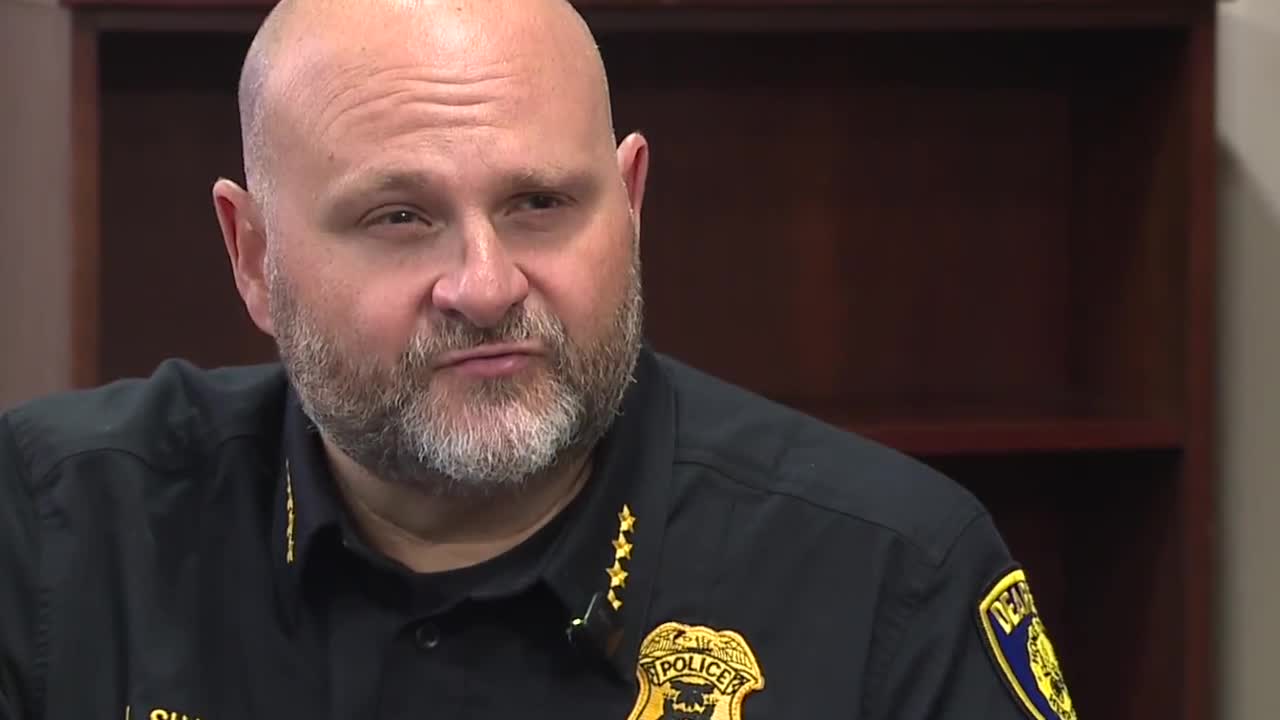
Dearborn Mayor Abdullah Hammoud, Dearborn Police Chief Issa Shahin, and entrepreneur and philanthropist Haider Koussan each remember exactly where they were when the attacks happened.
See the full story in the video below
"I woke up that day and my wife says, 'Come watch the news,'" Koussan said.
"I was in middle school," Hammoud said.
"I was in bed getting ready to go to work that morning," Shahin said.
But for many Arab and Muslim Americans, the fear did not end with the attacks.
"I knew our nightmare started that day," Koussan said.
"And we suffered for years to come," Koussan said.
Koussan was 31 and already running one of Dearborn's first major Arab-American businesses when the attacks occurred. He says the threats came quickly.
"I personally took two threatening calls. We're gonna burn you. Another incident where they wanted us to go back to our country. I remember telling the guy, 'This is my country,'" Koussan said.
At the same time, an 11-year-old Hammoud was trying to make sense of a tragedy that had suddenly changed the way some people saw him.
"You know when I was walking home from school in the days after 9/11, I remember an individual pulled a gun out from his second-floor window... pointed at us and said, keep walking before I decide to shoot you Muslim kids. And that was just another series of incidents to myself and others who look like me who are perceived to be Arab or Muslims," Hammoud said.
Shahin, who was a patrol officer at the time, described a painful dual reality for the community.
"Arab Americans suffered like the rest of the nation. They were concerned and scared. But then there's this other dynamic at play. People started to look at our community differently. We felt potentially targeted or misrepresented," Shahin said.
Hammoud described the impossible position many in the community found themselves in.
"We as Americans were trying to reckon with the idea that our country had just been attacked by terrorists. And at the same time... we were now under greater scrutiny and being the target of other individuals' hate," Hammoud said.
For Shahin, the normalization of that hate carried serious consequences.
"Once hate becomes normalized against a group of people, I'm concerned as the chief of police because what follows after that is violence," Shahin said.
In the 25 years since, the three men's lives tell a story of resilience. The business owner who received death threats became a respected entrepreneur and philanthropist. The patrol officer became chief of police. And the middle school student was voted in as mayor.
"Proud of the work that we are doing here in public service, I think that's a part of the American dream, that a son of an immigrant can assume a public office," Hammoud said.
Despite everything they experienced, all three remain fiercely proud to call themselves American.
"My father immigrated in 1967 came from Egypt, with nothing more than a few dollars in his pocket. He was able to work hard raise three boys, who have now all moved on and have families of their own. I mean there are not a lot of countries where you can do that. And so I love this country, what it represents, I'm proud to be an American as always and I think better days are ahead," Shahin said.
Yet 25 years later, one question still lingers. When asked if he is tired of proving himself as a patriotic American, Koussan did not hesitate.
"I'm very tired," Koussan said.
Hammoud reflected on what that burden has meant.
"I think as the 11-year-old boy in that time, I was American before and after. I think to many outside of the city of Dearborn, I was American with an asterisk. One who had to continually demonstrate their Americanness, how much they love this country. I think it's as a result of what befell this country decades ago," Hammoud said.
Shahin described the toll of nearly three decades of service alongside that persistent scrutiny.
"Yeah, it's really upsetting. I mean, look, I've spent 30 years almost safeguarding the people in this community, their property and their lives. Any police officer that wears this badge has, and we don't ask your ethnicity, your race, your background when we do that. I mean, that's our responsibility. It's the oath that we've taken. But yet, you know, over the last 25 years and even most recently, as you've seen with some of the folks that have come to town to portray us in negative ways, Constantly having to profess my patriotism or my loyalty in ways that I don't think is right or fair," Shahin said.
Hammoud acknowledged the reality his community continues to navigate.
"People have a bull's eye on this city, on this community for all the wrong reasons," Hammoud said.
"Thus is life. These are the cards that we have dealt. This is the road that we have to navigate. And you know, we're not the only community that has been the target of such bigotry throughout our existence. You know, I look to our neighborhood city, Detroit, one of the most beautiful and black cities in America," Hammoud said.
Still, despite the pain, all three refuse to let the past define the future.
"Whether you call me Muslim American, Arab American, I am an American," Hammoud said.
"I think it's important as Americans that we recognize that there's far more that we have in common that separates us," Shahin said.
"This is a country where individuals from all corners of the earth have come together to build something beautiful," Hammoud said.
"It's a shining example on the hill, right, of how people can coexist," Shahin said.
"And we are creating that tapestry together and working each day to make it more perfect," Hammoud said.
This story was reported on-air by a journalist and has been converted to this platform with the assistance of AI. Our editorial team verifies all reporting on all platforms for fairness and accuracy.
