

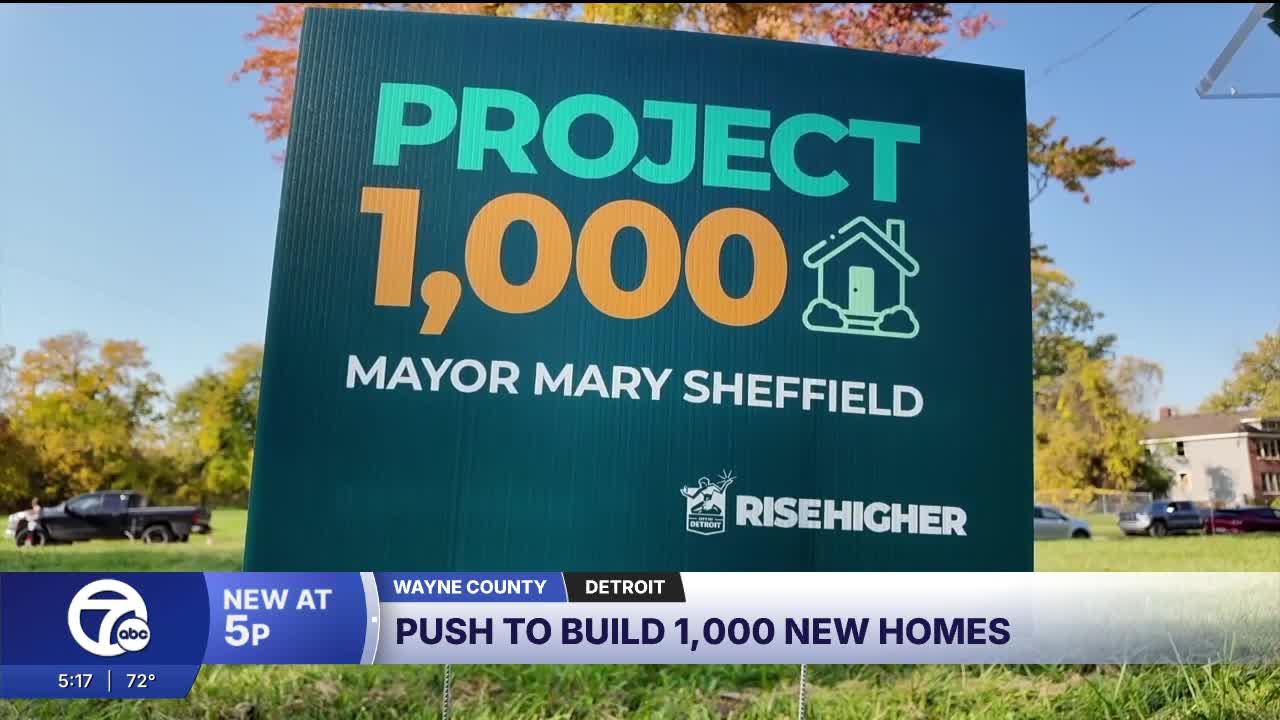


DETROIT, Mich. (WXYZ) — Detroit Mayor Mary Sheffield is launching an ambitious new housing strategy aimed at bringing 1,000 new homes to neighborhoods across the city by 2031.
The initiative, known as Project 1,000, is designed to eliminate some of the barriers developers face when trying to build housing in Detroit while turning vacant lots into new opportunities for residents and neighborhoods.
For residents like Tania Rosenberg, the impact of new development has already been seen.
Rosenberg has lived in Detroit's Northwest Goldberg neighborhood for four years and said the area has changed since she arrived.
"When we first moved into this house, we were one of three houses that were inhabited. Everything else was either desolate, the blight you see here or these houses that had been abandoned," Rosenberg said.
She said she's watched new development gradually bring more people to the neighborhood.
"It's been really cool to see the development in the neighborhood and see actual families move in," Rosenberg said.
But creating additional housing isn't always easy.
Daniel Washington, executive director of NW Goldberg Cares, said developers can face a complicated process as they work to move a housing project from an idea to reality.
"To get designs that'll get approved, to then sitting down with the community, and have a real good chance of making that house a reality, it's hard," Washington said.
Sheffield launched Project 1000 on Wednesday as a strategy to address some of those challenges and encourage more housing construction across Detroit.
"Detroiters are finally coming back home and new neighbors are moving in and they all deserve quality homes on strong blocks in our city," Sheffield said.
The goal is to build 1,000 new homes across Detroit by 2031 by cutting red tape and making it easier to get projects underway.
"Just getting the infrastructure and system in place that can deliver about 250 homes every year, we believe we have it place now and now we can actually start the process," Sheffield said.
The plan includes proposed zoning changes that would allow more construction on small lots, the creation of a library of pre-approved designs, blight removal, and targeted investments.
Marcell Todd, director of the Detroit City Planning Commission, said those changes are intended to make the development process easier for a wide range of builders.
"Developers for profit or non-profit, government entities who want to do this work, will now have a much easier path to building housing in the city of Detroit and we're not stopping here," Todd said.
David Alade, CEO of Century Partners, said creating a more stable environment for developers will be critical as Detroit looks to grow.
"Where we can de-risk some of the barriers to entry, where we can de-risk some of the barriers for capital. We want to grow the city and we need pro growth tools," Alade said.
For residents and community leaders, the hope is that those efforts ultimately translate into more homes and more neighbors.
"I would love to have more neighbors and see this community come back," Rosenberg said.
"We want to see housing, we need people and residents who want to be part of the neighborhood," Washington said.
