

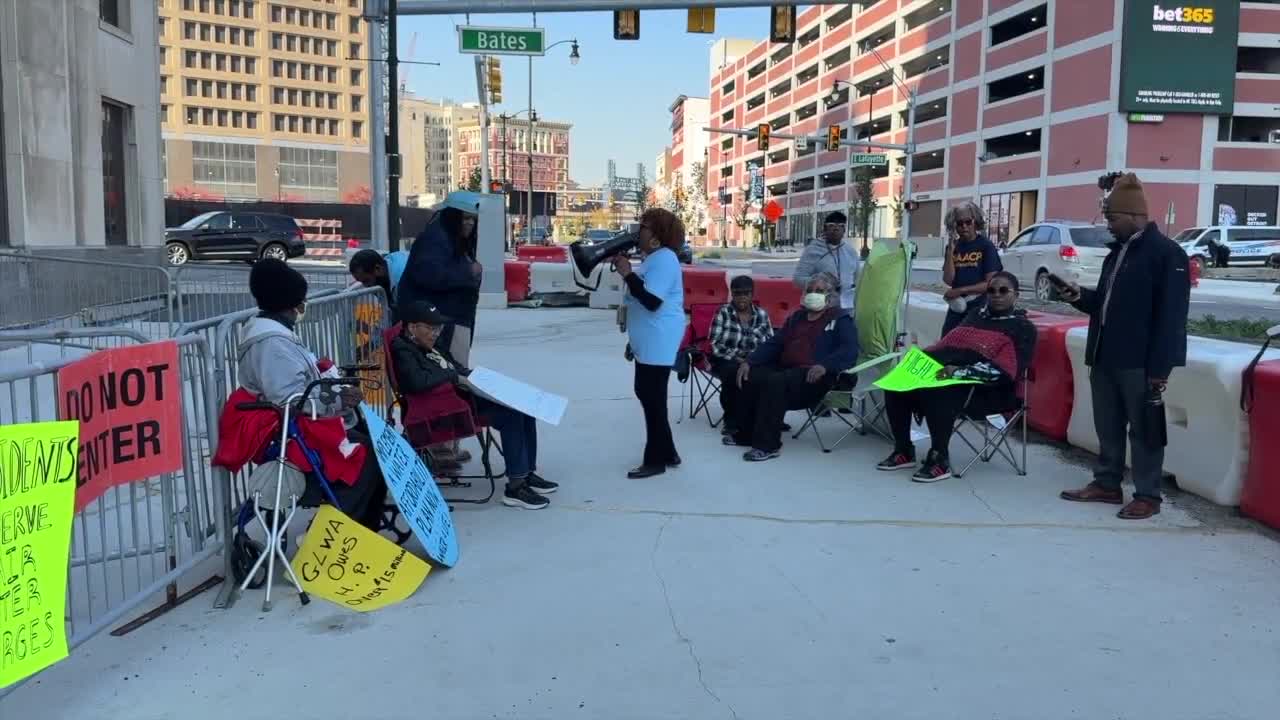


HIGHLAND PARK, Mich. — Highland Park residents say they are being improperly charged for their water and sewer rates, and spent Wednesday demanding change outside the Great Lakes Water Authority's (GLWA) headquarters.
The city wants $1.5 million dollars cut from its combined sewer overflow charges. Highland Park says it's being charged a disproportionate amount of the region's sewer costs, despite data the city says shows its actual contribution is much smaller.
Mayor Glenda McDonald, alongside other residents, held a peaceful protest outside GLWA headquarters during the authority's Board of Directors meeting Wednesday afternoon.
You can watch Ruta Ulcinaite's full report below:
"We're looking to try to get them to bring down these rates, because our citizens of Highland Park are suffering here," Mayor McDonald said. "They're charging us four times the amount that they charge other small cities like this with the amount of people that we have."
Charlene Turner Johnson is an organizer with Highland Park Water Advocates. She says she has seen the firsthand effects of these high bills.
"We're the smallest user in the system, and we're paying more than the other users, which are all larger cities. So that's unfair," Turner Johnson said. "They could at least listen to us and hear our complaint and tell us what they're going to do to resolve it."
Residents say the bills are getting harder to manage as other everyday expenses add up.
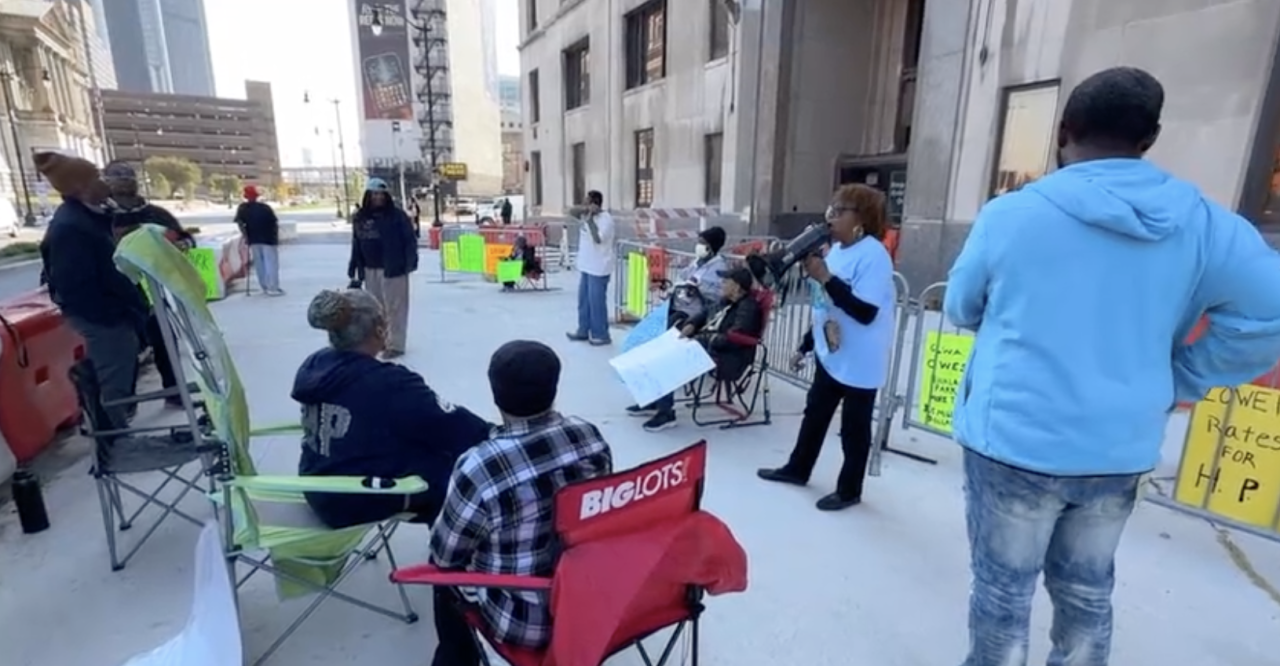
"You already have high food, high DTE, high gas and now we're adding high water rates. These people can't survive it. They just can't," Mayor McDonald said.
The city says the problem comes down to how GLWA divides the cost of combined sewer overflows, when heavy rainfall can overwhelm the sewer system. The city argues the current formula needs to change so it is charged for what it actually uses.
"The data is showing that we're not using what they're charging, but they refuse to lower the rates," McDonald said.
In a statement to 7 News News Detroit, GLWA stated the following:
"The Great Lakes Water Authority (GLWA) is aware of concerns expressed by Highland Park residents regarding wastewater charges and respects their right to make their voices heard.
GLWA continues to operate in accordance with the agreements entered into by the parties in 2024, including Highland Park's wastewater disposal services contract, which establishes requirements for wastewater treatment services and combined sewer overflow (CSO) cost allocation. The methodology used to allocate CSO costs was originally established through a 1999 rate settlement agreement and remains in effect through subsequent federal orders.
Under these existing agreements, GLWA maintains that an adjustment to Highland Park's charges is not appropriate. The parties have agreed to resolve their outstanding disputes through arbitration, and GLWA looks forward to a timely and final resolution through that process.
GLWA remains committed to working collaboratively with Highland Park and all its member partner communities to provide reliable water and wastewater services while ensuring charges are administered in accordance with established agreements."
"Listen to us. Listen to our hardships. Listen to what's going on with us and honor what you agreed to," Mayor McDonald added.
______________
This story was reported on-air by a journalist and has been converted to this platform with the assistance of AI. Our editorial team verifies all reporting on all platforms for fairness and accuracy.
