

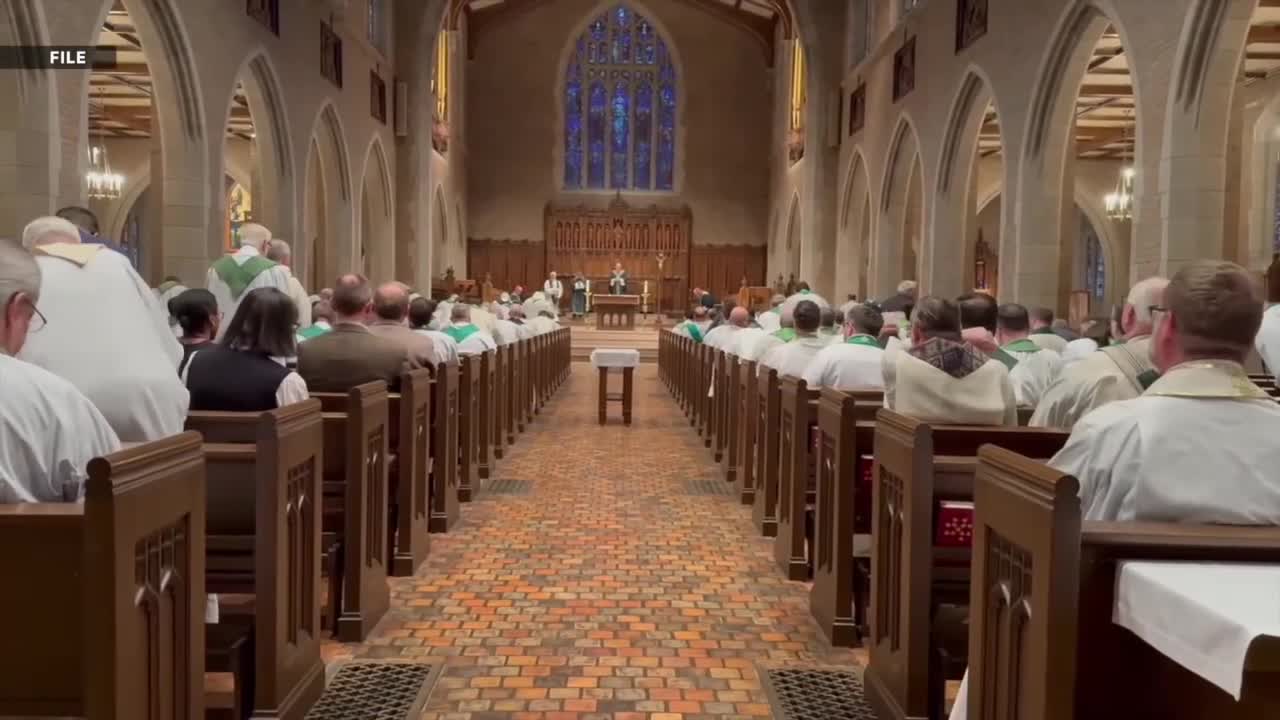


The Archdiocese of Detroit is reshaping how its 209 parishes operate — and for generations of metro Detroit families, the stakes go far beyond scheduling.
Some metro Detroit Catholic churches may stop holding weekend Mass. Others could merge with neighboring parishes. The Archdiocese of Detroit is moving forward with a sweeping restructuring plan driven by two forces that have been building for decades: fewer Catholics in the pews and fewer priests to lead them.
Final decisions are expected in April. Here's what the data shows — and what it could mean for your parish.
- 209 — Parishes in the Archdiocese
- 900K — Catholics Today
- 165 — Priests Projected by 2029
The numbers behind this restructuring tell a stark story. The Archdiocese of Detroit once served roughly 1.5 million Catholics across southeast Michigan. Today, that number sits closer to 900,000 — a drop of 40 percent. At the same time, the supply of priests is shrinking. By 2029, the archdiocese projects fewer than 165 priests will be serving in parish ministry across all 209 parishes.
Do the math: that's more parishes than there are priests to staff them. Something has to give. The question the archdiocese spent the summer of 2024 trying to answer — by gathering input from more than 17,000 Catholics — is what that something looks like for each community.
- 1.5M — Catholics at Peak — Historical high for the archdiocese
- 900K — Catholics Today — A 40% decline from peak
- 209 — Parishes — Currently in the archdiocese
- 165 — Priests by 2029 — Projected serving in parish ministry
What exactly does losing weekend Mass mean for a parish? Father Mario Amore, the Archdiocese's Executive Director for parish renewal, was careful to separate 'no Mass' from 'closed.' A church that no longer holds a weekend Mass could still operate — still run food pantries, still host ministries, still serve as a community anchor in its neighborhood. The building doesn't necessarily go dark.
But for many parishioners, the distinction feels thin. These are churches where families have baptized children, buried parents, and marked the passages of their lives for generations. The archdiocese gathered feedback from more than 17,000 Catholics through August and September before releasing its refined restructuring models — a signal that leadership knows this isn't just an administrative reorganization. It is a conversation about identity.
We want to be sure that those ministries are able to continue. So that means we need to have further conversations, especially at the sites that may no longer have Mass. They may not be a Mass site anymore how we can creatively continue to offer the assistance to those in needFather Mario Amore, Executive Director for parish renewal at the Archdiocese of Detroit
That nuance matters enormously for the communities involved. A parish that loses weekend Mass but keeps its food pantry, its after-school programs, its grief support groups — that is a very different outcome from a shuttered building with a padlock on the door. The Archdiocese is trying to thread that needle: consolidate the sacramental life of parishes while preserving the social fabric they support.
Father Amore acknowledged the difficulty directly. The six counties of southeast Michigan the archdiocese serves are not monolithic — urban Detroit neighborhoods, inner-ring suburbs like Grosse Pointe Park, and outlying communities all face different pressures and have different needs. The April decision deadline gives communities only a few months to weigh in on what preservation of their church's mission actually looks like.
We need to do something to be able to continue to serve and be a strong Catholic presence throughout the six counties of southeast MichiganFather Mario Amore, Executive Director for parish renewal at the Archdiocese of Detroit
What Happens to Parish Ministries at Non-Mass Sites?
The Archdiocese of Detroit has signaled it does not want restructuring to mean the end of community services at affected sites. Father Amore specifically mentioned that social assistance programs — food pantries, outreach ministries, and services to those in need — are priorities the archdiocese wants to preserve even at locations that may no longer hold weekend Mass.
The archdiocese has committed to further conversations with affected communities about how that preservation happens in practice. What those arrangements look like — shared staff, volunteer-led programming, partnerships with other organizations — has not yet been determined. Those conversations are expected to be part of the period leading up to the April final decision.
What Happens Between Now and April
- Review the restructuring models — The Archdiocese released new model proposals this week based on feedback from more than 17,000 Catholics. Parishioners can review what is proposed for their area.
- Engage in parish conversations — Father Amore emphasized that communities, especially those at sites that may lose Mass, will have further conversations with archdiocese leadership about their future.
- Watch for the April decision — Final decisions from the Archdiocese of Detroit are expected in April. That announcement will determine which parishes merge, which lose Mass, and what comes next.
Whatever April brings, the restructuring of the Archdiocese of Detroit represents one of the most significant changes to Catholic life in southeast Michigan in generations. The math is unsparing: 209 parishes, fewer than 165 priests by 2029, and a membership base that has shrunk by 40 percent from its peak. The archdiocese cannot staff what it has. The question is not whether change is coming — it is how that change is shaped, and by whom.
For the 17,000 Catholics who raised their voices during the August–September feedback period, that question was worth answering. For the communities watching the April deadline approach, the answer cannot come soon enough.
What You Can Do Before April
- Note the April Decision Deadline: Final decisions from the Archdiocese of Detroit on parish restructuring are expected in April. Stay connected to your parish for updates.
- Talk to Your Parish Leadership: Father Amore said further conversations are planned with affected communities — especially sites that may lose weekend Mass. Your parish council is the starting point.
- Connect with Your Community: The archdiocese gathered feedback from more than 17,000 Catholics to shape these models. Community voices shaped this process — and can continue to shape what comes next.
