




MONROE, Mich. (WXYZ) — The Michigan Department of Health and Human Services says there have been more than 170 cases of Cyclosporiasis reported in Michigan since June 22.
Watch Simon Shaykhet's video report and comments from Dr. Nandi:
In an update on Tuesday, the state health department gave the new number, which is up more than 20 cases from Monday.
"We currently have 67 cases in Monroe County. We are currently investigating the source. This is caused by an intestinal parasite. It’s from contaminated food," says Lindsay Patrick with the Monroe County Health Department.
According to the MDHHS, Michigan typically has about 50 cases a year.
“Outbreaks of cyclosporiasis have been occurring across the United States and now here in Michigan,” said Dr. Natasha Bagdasarian, chief medical executive. “Based on the unusual number of cases we have identified in a little over a week, we anticipate additional cases of illness being reported. We recommend Michiganders contact their health care provider if they experience sudden, ongoing diarrhea and reach out to their local health department if additional members of their family are suffering from the same symptoms."
Lindsay King is recovering after getting sick. Her doctor says her symptoms are consistent with cyclosporiasis
“It was being posted by the health department and whatnot. I checked off all the symptoms and was like Oh my gosh, that’s what I have,” King says. “Lovely bowel issues everyone is reporting, which has just been horrible. Horrible.”
Dr. Avani Sheth with the Wayne County Health Department says cases could continue to rise.
“This is just a new, actively evolving investigation, and so we may see an uptick in those cases as well,” Sheth says.
Watch Simon Shaykhet's Monday video report:
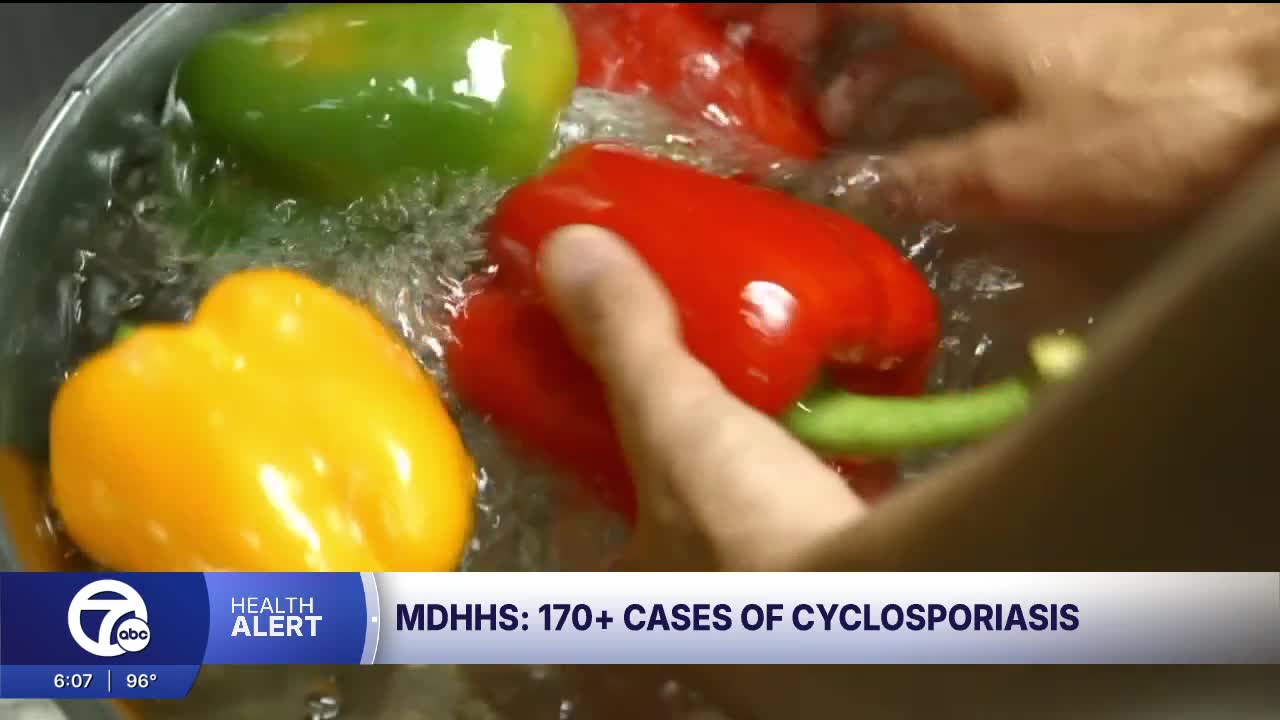
At this point, while they are trying to identify a point of common exposure, officials say all produce needs to be thoroughly washed, whether it's in a restaurant or a home.
“Where they might have purchased the produce or if they were in restaurants two weeks prior. You should be mindful to wash any fresh produce you purchase,” Patrick says. “It can be what’s called self-limiting because not everybody can take that antibiotic.”
FULL INTERVIEW: Lindsay Patrick with Monroe County Health Department on Cyclosporiasis
We spoke with Lisa Vanhoose, who is recovering from the illness.
“I started getting really sick, where I was lethargic and couldn’t pick my head up. It came back positive, so they immediately admitted me into the hospital,” she says.
As for where she may have gotten it?
“I ordered a salad. I went through a drive-thru once,” she says.
As for her advice to those who may have been infected.
“Immediately get help. Because it’s very dangerous," Vanhoose says. "I felt like I was dying.”
Jolie Sherman speaks with another patient below:
The health department says Cyclosporiasis "is a diarrheal illness caused by infection with the parasite Cyclospora cayatenensis which is commonly found in developing countries and spread by food or water contaminated with feces. In recent years, outbreaks have occurred in the U.S. as a result of eating contaminated fresh produce, especially during the summer months."
MDHHS says they are working with local health departments to investigate the increase in these cases and are sharing information with the CDC and MDARD.
Stephanie Shaughnessy, who also tested positive for cyclosporiasis, says she’s had food poisoning before, but this was much worse. While she’s on the road to recovery with antibiotics, she is still gaining back her appetite and feeling weak.
“I could not function on Thursday or Friday. I mean, there was no getting out of bed. I mean, I slept all day on Thursday and Friday,” Shaughnessy said.
Related Story: Monroe County Health Department investigating cluster of Cyclosporiasis cases
Shaughnessy, it’s been an emotional roller-coaster. The mother of three says she started experiencing symptoms last Tuesday and by Friday, she was hospitalized.
“My symptoms were fatigue, nausea, watery diarrhea. I vomited twice, but the nausea was real. The nausea is what hit me hard,” she said. “Like I said, it’s not easy. It takes you out.”
Cyclospora infection is not known to spread from person to person. Symptoms occur anywhere from 2 to 12 days after exposure and may include:
- frequent watery diarrhea
- loss of appetite and weight
- abdominal cramps and bloating
- nausea (vomiting is less common)
- low-grade fever
In order to prevent contracting the condition, you should:
- Avoid consuming food or water that may be contaminated with feces.
- Wash all fruits and vegetables thoroughly under running water before eating, cutting, or cooking.
- Scrub firm fruits and vegetables, such as melons and cucumbers, with a clean produce brush.
- Cut away any damaged or bruised areas on fruits and vegetables before preparing and eating.
- Refrigerate cut, peeled, or cooked fruits and vegetables as soon as possible (within two hours).
People who are experiencing symptoms should contact their local health care provider.
For more information about Cyclosporiasis from the CDC, click here.
