

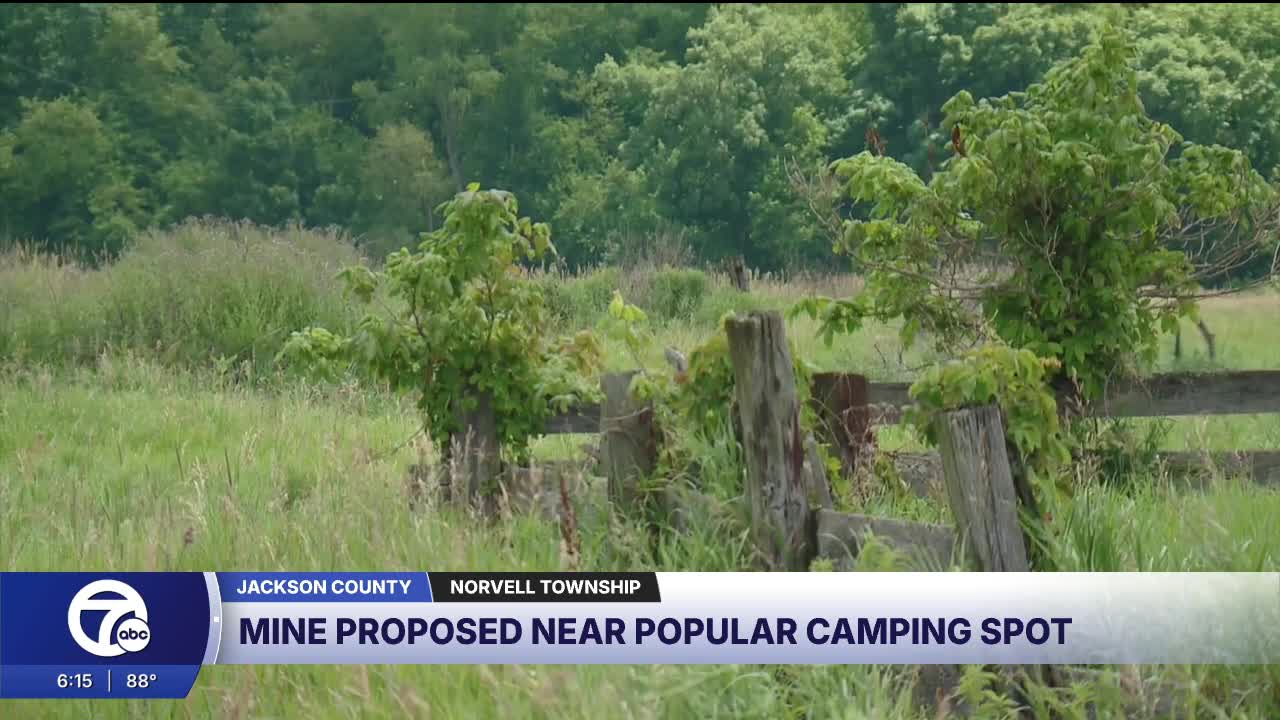


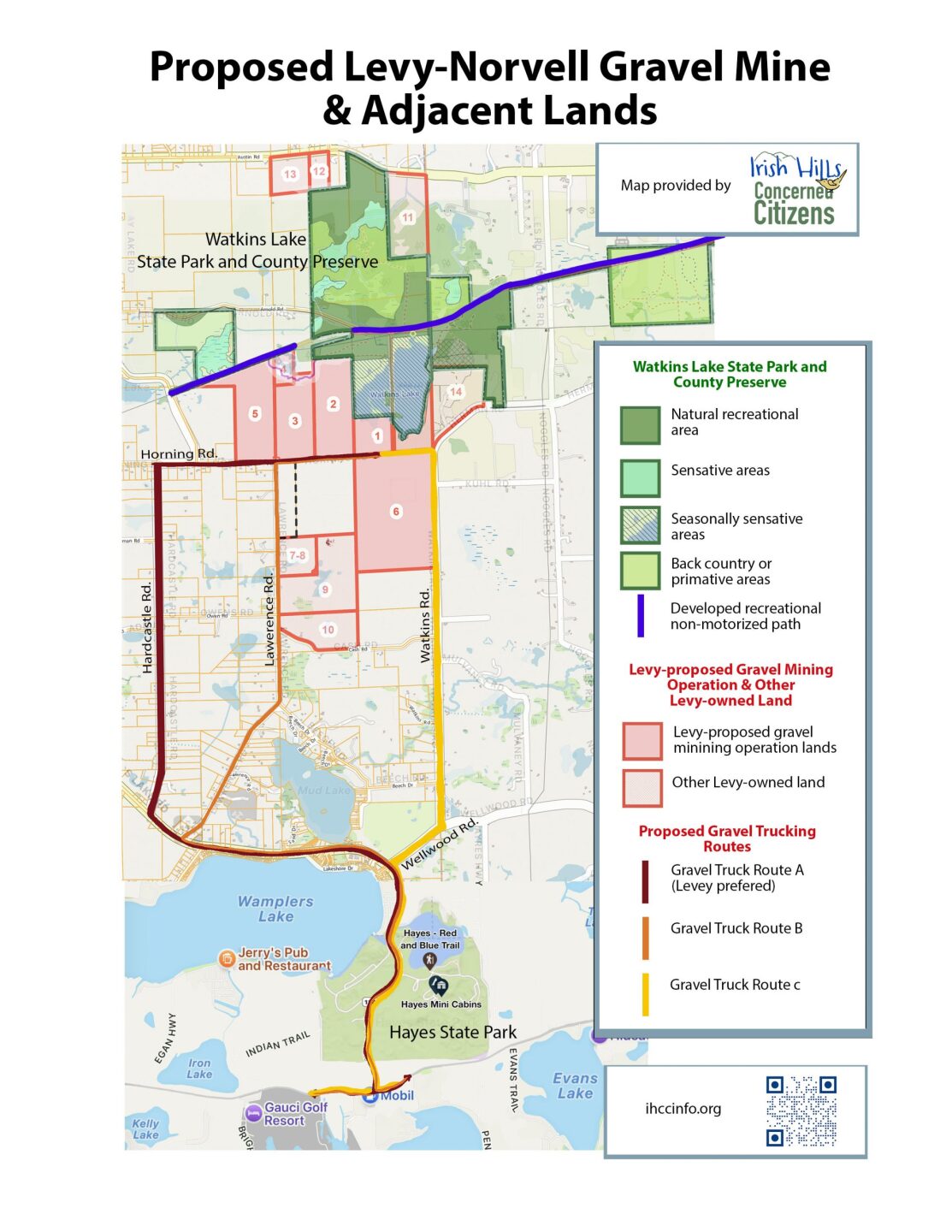
NORVELL TWP., Mich — A proposed 625-acre sand and gravel mine adjacent to Watkins Lake State Park in Jackson County has sparked concern among nearby residents, environmental advocates, and families who spend their summers in the area.
Watch Ruta Ulcinaite's video report:
American Aggregates of Michigan, a Dearborn-based subsidiary of the Edward C. Levy Company, submitted an application to Norvell Township last November for the mine. The application is still in its early stages, and additional studies must be completed before the project can move forward, according to Norvell Township Supervisor Andrew Haystead.
DRONE VIDEO: Aerial view of site of proposed mine adjacent to Watkins Lake State Park
"Basically, they have to check all the boxes, if it's within our zoning ordinance and meets all the requirements as far as setbacks and hours of operation and everything like that," Haystead said.
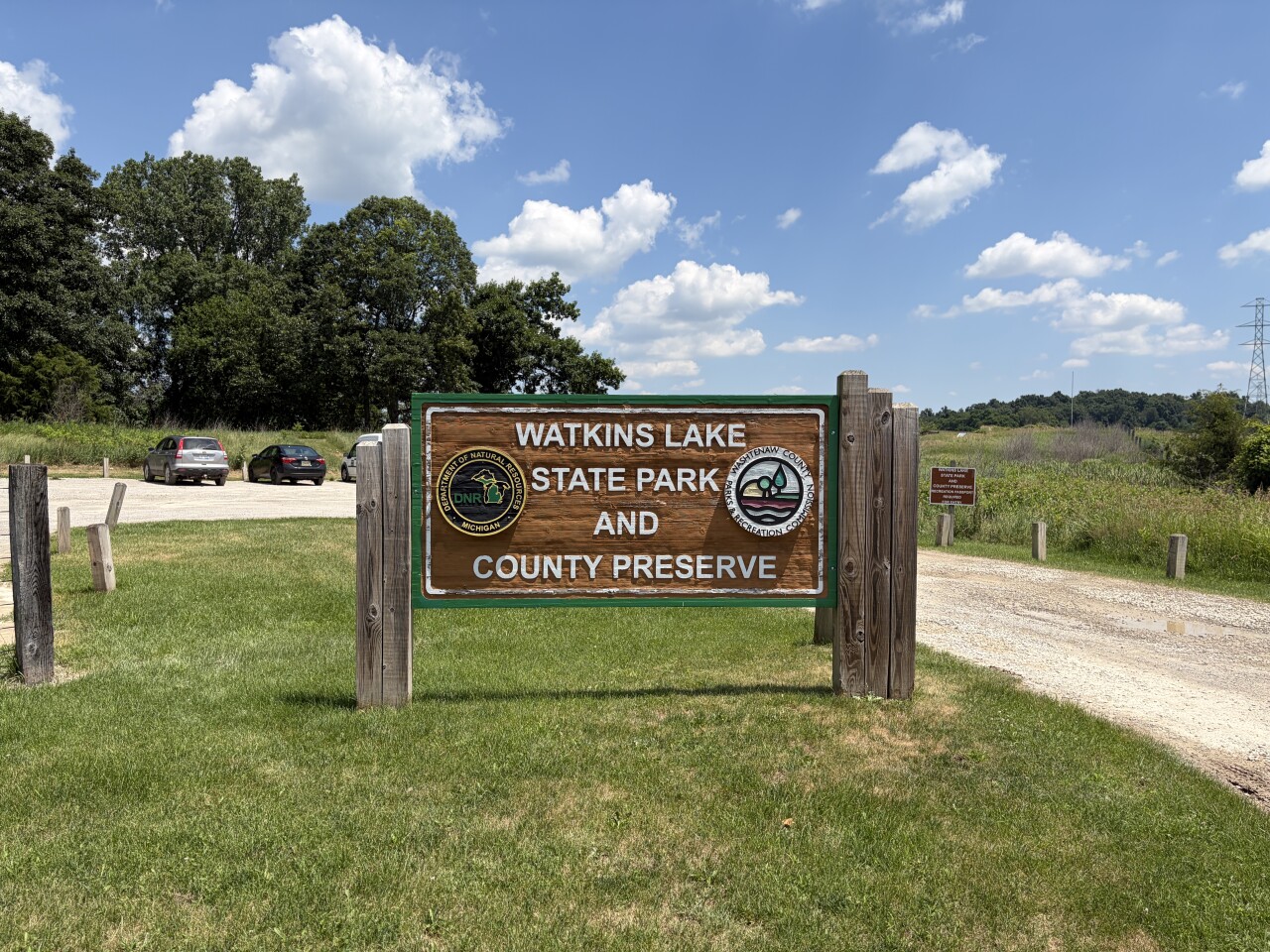
Watkins Lake State Park and County Preserve is an MDNR-designated waterfowl refuge that supports diverse wildlife and endangered species, including the bald eagle.
Sybil Kolon, who was born in Detroit and now lives just miles from the park, is among those raising concerns. She is involved with Irish Hills Concerned Citizens, a group opposing the project.
"This has been a tourist area, I mean, going back before 1900, and now it's being rediscovered cause people don't want to have to drive so far. It's so close to Detroit," Kolon said.

Silas Bialecki, a board member of Irish Hills Concerned Citizens, also weighed in on what the area means to those who live and visit there.
"What we have here is worth more than any money in the world, and it's worth more than any potential benefits that a mine could bring to the area," Bialecki said. “This is to me one of the crown jewels of the area, and it can’t be replaced, and once you lose it, it’s gone forever.”

The proposed mine would also sit less than two miles from Camp Dainava, a Lithuanian children's summer camp in Washtenaw County. Dana Rugienius, former president of the board of directors at the camp, raised concerns about the camp's proximity to the site.
"The proposed site for the gravel mine is approximately two miles from here, and it's located southwest of us; winds generally travel southwest," Rugienius said. "The air quality, the water, the traffic, the noise, those are all questions of safety."
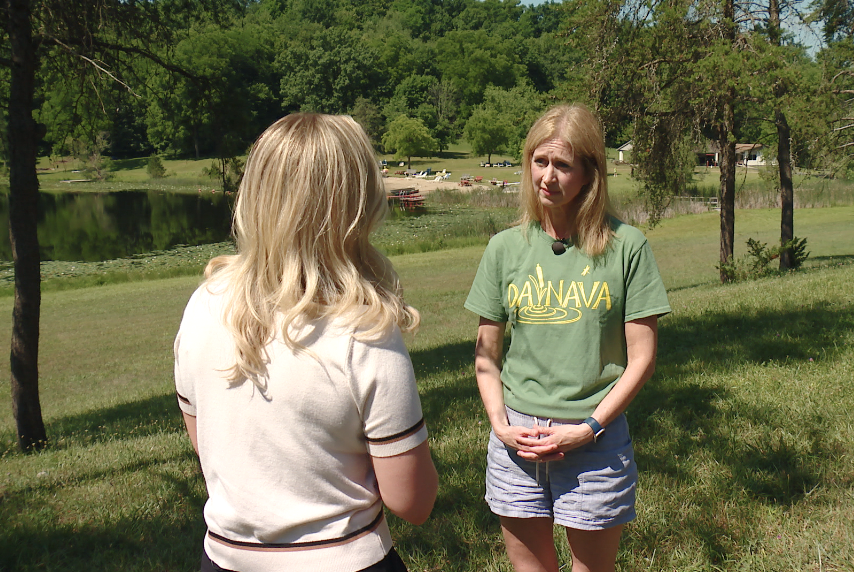
Camp Dainava has 70 years of history, meaning, and culture. Families from Metro Detroit, like the Kasputis family from Livonia, hope that legacy remains intact.
"That's all going to be littered up with trucks and traffic," Tadas Kasputis said about the trucks that are expected to drive through the area as material is mined.
“This is home base for me; this is where I come to. I turned 40 years old this past winter, and I've been coming here for 40 years," he added.
Rick J. Kidd, Vice President of Edw. C. Levy Co. shared the following statement regarding the proposal:
Levy is proud to have responsibly operated sand and gravel mines in Michigan for more than 50 years and to have served communities across the country for more than a century. The proposed project reflects our longstanding commitment to being a good steward of the neighborhoods where we operate and to partnering with communities throughout the process. Sand and gravel are essential materials that help maintain and improve our roads while supporting local jobs and reducing costs for the state and counties.
We are carefully reviewing data, conducting research, and listening to feedback alongside leading environmental experts in hydrology, hydrogeology, wetlands, and other disciplines to help inform a safe and environmentally responsible approach. Levy remains committed to complying with all applicable local, state, and federal regulations and permitting requirements. We will continue engaging with the community and sharing information as the project progresses.
Regarding the potential benefits that the mine could bring, Kidd said the following:
Natural aggregate mining provides the sand, gravel, and stone that Michigan relies on to build and maintain roads, bridges, schools, hospitals, homes, and other critical infrastructure used every day.
In addition to supplying these essential materials, aggregate operations support local jobs, generate tax revenue for communities, strengthen nearby businesses, and help keep construction costs affordable by sourcing materials close to where they are needed. Whenever possible, our operations prioritize local businesses to help build, support, and maintain our facilities.
Once mining is complete, many sites are reclaimed into valuable community assets, including lakes, parks, wildlife habitats, residential developments, agricultural land, and equestrian preserves, creating lasting benefits for future generations.
Kolon acknowledged the need for gravel but drew a firm line on location.
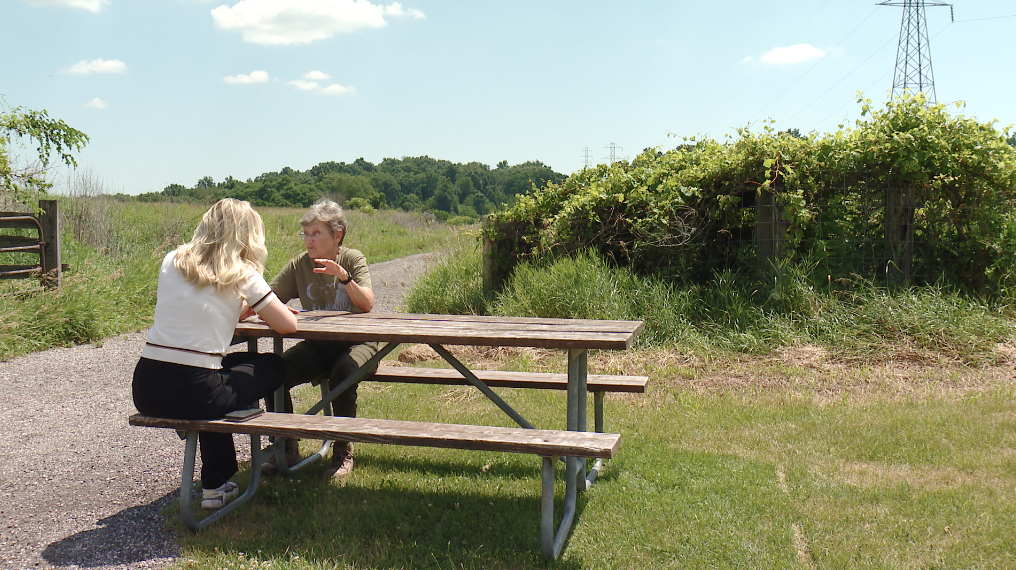
"The idea of putting a gravel mine immediately next to this park is just..." she said. "Not here."
Haystead said the township is working to balance the interests of residents with legal land use considerations.
"We're trying to do the best for the residents. We try to be as transparent with this whole process as possible," Haystead added.
The project still needs to be reviewed by the township attorney and go through the planning commission, with a final vote resting with the township board.
—————————————————————————————————
This story was reported on-air by a journalist and has been converted to this platform with the assistance of AI. Our editorial team verifies all reporting on all platforms for fairness and accuracy.
