

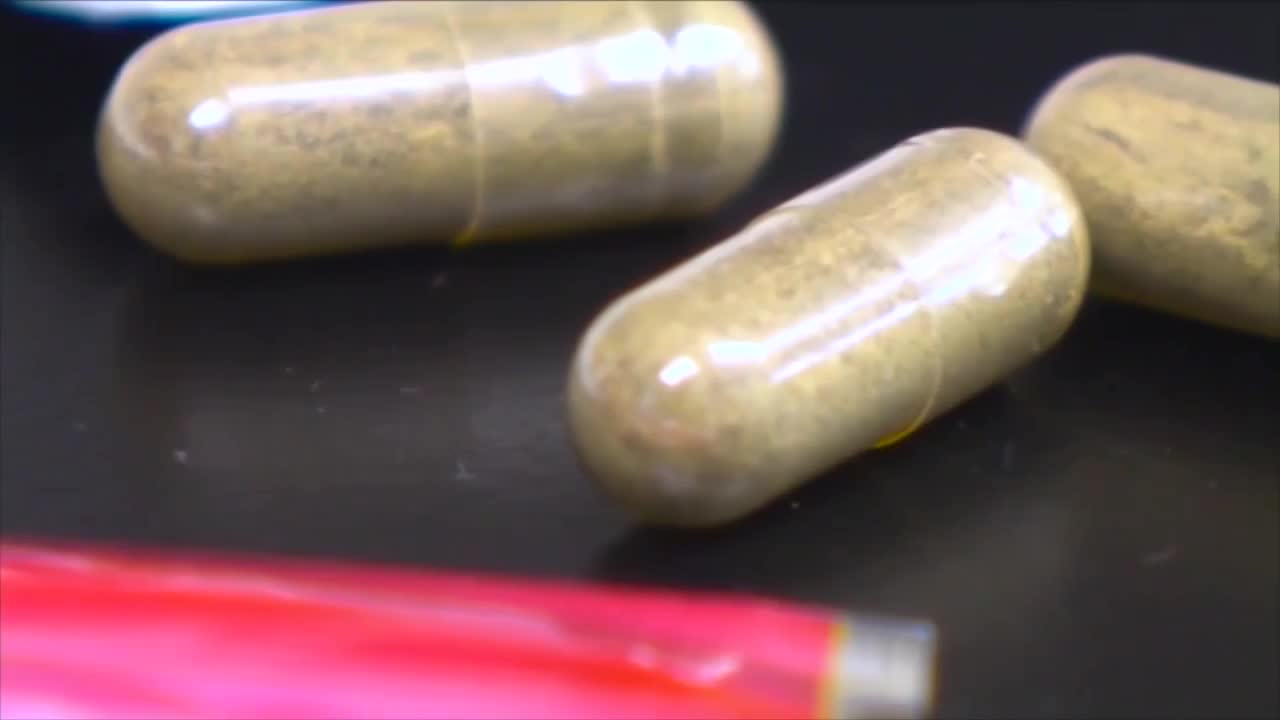


PLYMOUTH TOWNSHIP, Mich. (WXYZ) — Plymouth Township is taking a hard line on kratom.
Within the next month, the township will ban the substance and its synthetic forms, sometimes referred to as "gas station heroin." Violators could face thousands of dollars in fines and misdemeanor charges.
Watch Christiana Ford's report in the video player below:
Those caught selling or distributing the products could face civil fines ranging from $1,000 to $7,500, depending on the offense. An aggravated violation carries a fine of up to $25,000. Repeat violations carry misdemeanor penalties.
Businesses selling kratom will have 30 days to clear it from their shelves before facing fines and other penalties.
"Supervisor Curmi brought this up, it's kind of similar to marijuana, for example, and communities have the opportunity to say yes we're gonna allow for the sale of marijuana in our community or not," Kim Gaedeke, the Plymouth Township clerk and a member of the township Board of Trustees said. "It's kind of a similar, you know, path that we just said until we learn more about kratom, whether the natural form and all these other forms, that we just are wanting to keep our community safe and protect our citizens.”
Gaedeke says their biggest concern is young people.
"As a parent, it's scary to, to know that this product is out there and particularly being marketed in a way where young teens and young adults really can't distinguish between the all-natural kratom and the synthetic and derivatives of kratom that are a lot more potent and leads to overdose," Gaedeke said.
According to the Drug Enforcement Administration (DEA), kratom is a tropical tree native to Southeast Asia. Consumption of its leaves produces both stimulant effects (in low doses) and sedative effects (in high doses), and can lead to psychotic symptoms, and psychological and physiological dependence.
This month, the Drug Enforcement Administration (DEA) and the Department of Health and Human Services (HHS) decided to implement a threshold-based Schedule I federal control on specific potent Kratom-related compounds rather than banning all traditional botanical Kratom leaves.
Synthetic concentrates like 7-OH, also known as "gas station heroin," are considered more potent and dangerous.
“We are drawing a clear line between natural kratom and dangerous, enhanced opioid products,” said HHS Secretary Robert F. Kennedy, Jr. in a statement. “We listened to the public, followed the science, and developed a clear recommended threshold for temporary scheduling that targets concentrated 7-OH and MGPI without sweeping natural botanical kratom into Schedule I. The Trump Administration will continue taking decisive action against dangerous products that fuel addiction while making sure our policies are grounded in rigorous science.”
Some residents say the total ban in the township is a welcomed change.
"I'm happy that they banned the sale of it because right now there's no age limit on it, which is just astounding to me that nobody hasn't been doing more about it," resident Christine Rinaman said.
It's a frustration parent Katlyn Powell can relate to.
"I've personally seen people that I've known use this and drink this and it is scary and awful and the thought of a child at any age because there's no age limit on it being able to buy this at a gas station or if they get into a smoke shop is super scary," Powell said.
But not everyone agrees. Several kratom users took to the podium Tuesday to talk about how a blanket ban would hurt them, highlighting that there's a difference between natural kratom and the more potent synthetic mixes like 7-OH.
"To me, comparing natural kratom to 7-OH is like comparing ibuprofen to morphine. I've taken kratom for years," Dylan Bonell said, who lives in Royal Oak but grew up in the area.
Bonell is one of a few advocates who attended the meeting Tuesday night.
"Tomorrow morning my pain will still be here. Your decision is whether I'll have one fewer way to manage it," Beth Blackwood from Dearborn said.
"If I can't buy the plain leaf legally, I'm pushed back to the pills that nearly killed me," kratom user Daniel Kelly said.
Gaedeke acknowledges some people benefit from kratom, but says the township chose to act now while lawmakers and researchers work toward a safer long-term solution.
"I think it's a, it's a great opportunity to be an example for other communities because sometimes it only just takes one for others to follow," Gaedeke said.
This story was reported on-air by a journalist and has been converted to this platform with the assistance of AI. Our editorial team verifies all reporting on all platforms for fairness and accuracy.
