

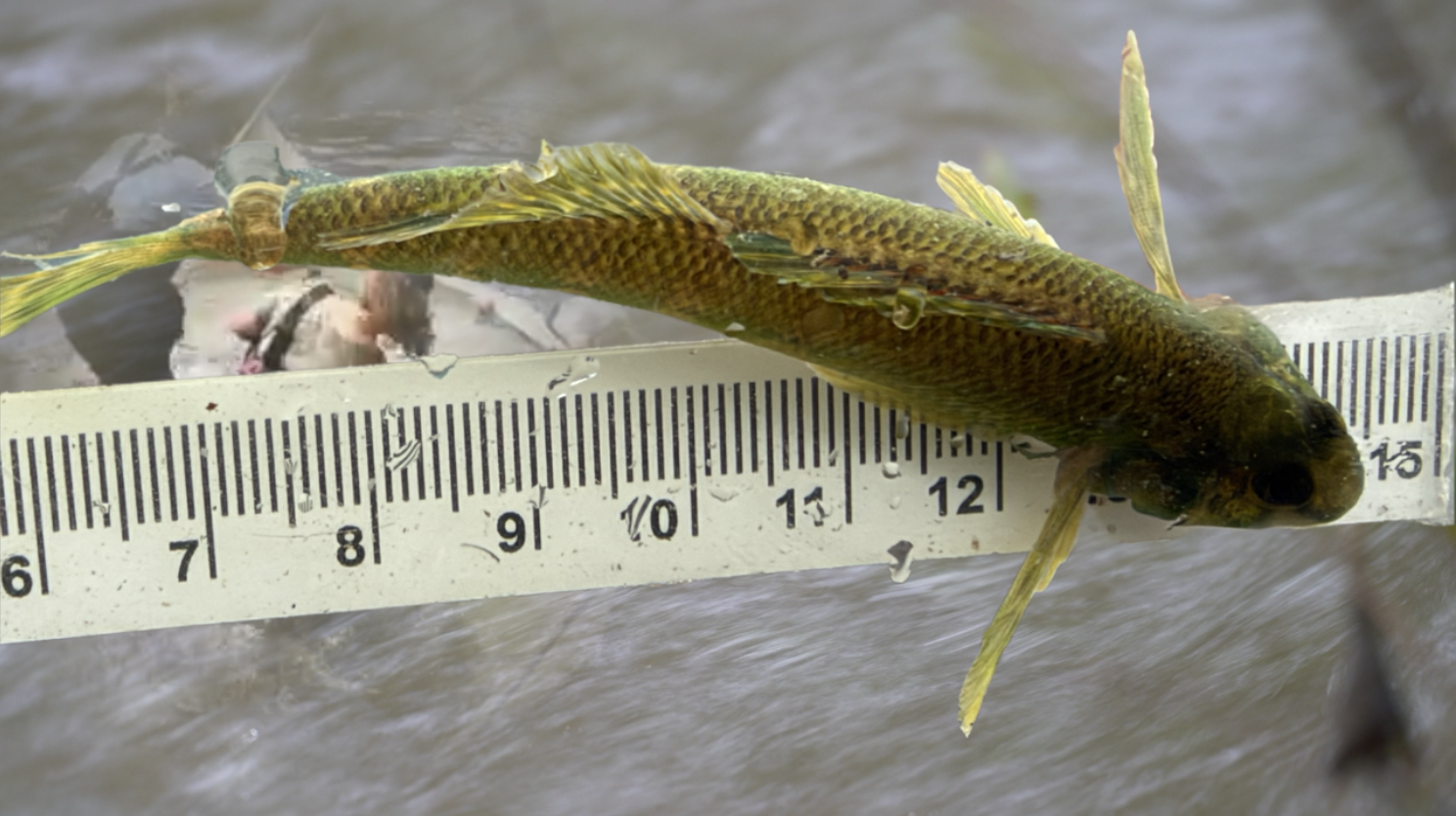


DEARBORN, Mich. — A fish species so sensitive to pollution it vanished from the lower Rouge River more than 100 years ago has been found again — and environmental groups say it is a sign that decades of cleanup and restoration work are paying off.
Ashley Flintoff, executive director of Friends of the Rouge , said her team netted six greenside darters in the murky waters at Ford Field Park on Sept. 17.
"The Rouge River has suffered from decades and decades of legacy pollution and contamination. I think this is our way of bringing back the river and speaking up for the river," Flintoff said.
WATCH JEFFREY'S VIDEO REPORT:
The discovery sparked an immediate reaction.
"Screaming so loud, passersby's looked over and were like, 'what do you have in there?'" Flintoff said.
Flintoff describes the greenside darter as "intolerant" of its surroundings.
"Meaning that they are very sensitive to pollution and to habitat," Flintoff said.
She believes industrialization pollution initially forced the fish to flee — as machinery boomed and contaminated the waters. The Rouge River actually caught fire for a period in 1969, a moment that partially contributed to the push to pass the Clean Water Act.
"The river is so polluted nothing could live in it at the point," Flintoff said.
Before the area was industrialized, the river would have supported more plant and wildlife — including ducks, bugs, other animals and 55 different species of fish. That same Sept. 17 outing also set a new record for Friends of the Rouge: the group documented 21 species of fish in the river — the most it has ever recorded in a single survey, surpassing a previous high of 19.
"It tells us the work that has been done over the past 40 years in this watershed is really doing its job," Flintoff said.
The organization is also marking its 40th anniversary.
Parkgoers Norma Zurawski and her mother Casey were pleased to hear about the find.
"I love fish," Norma Zurawski said.
"It's very cool that those efforts that people are making are actually working," Casey Zurawski said.
Flintoff said millions of dollars spent on water quality and habitat projects are paying off. She also credited the community for doing its part to help keep the 127 river miles of the Rouge clean and healthy, alongside the organization's own restoration and stormwater mitigation efforts.
"There are ways for humanity and nature to coexist and we can have a healthy and thriving river," Flintoff said.
The six fish were released after being documented. The ones found appear to have the capacity to breed, raising the possibility that more greenside darters could return to the lower Rouge River.
———
This story was reported on-air by a journalist and has been converted to this platform with the assistance of AI. Our editorial team verifies all reporting on all platforms for fairness and accuracy.
