



(WXYZ) — Three years after the Oct. 7, 2023, attack on Israel and the start of the war in Gaza, the conflict remains deeply personal for many metro Detroit families with ties to the region — and its impact is now extending to the political arena as Michigan voters prepare for one of the nation's most closely watched U.S. Senate races.
Watch Faraz's story in the video player below:
For Palestinian American Laila Balboul, the effects of Oct. 7 and the war that followed are still felt every day.
"It's not an event that happened and ended and people have moved on," Balboul said.
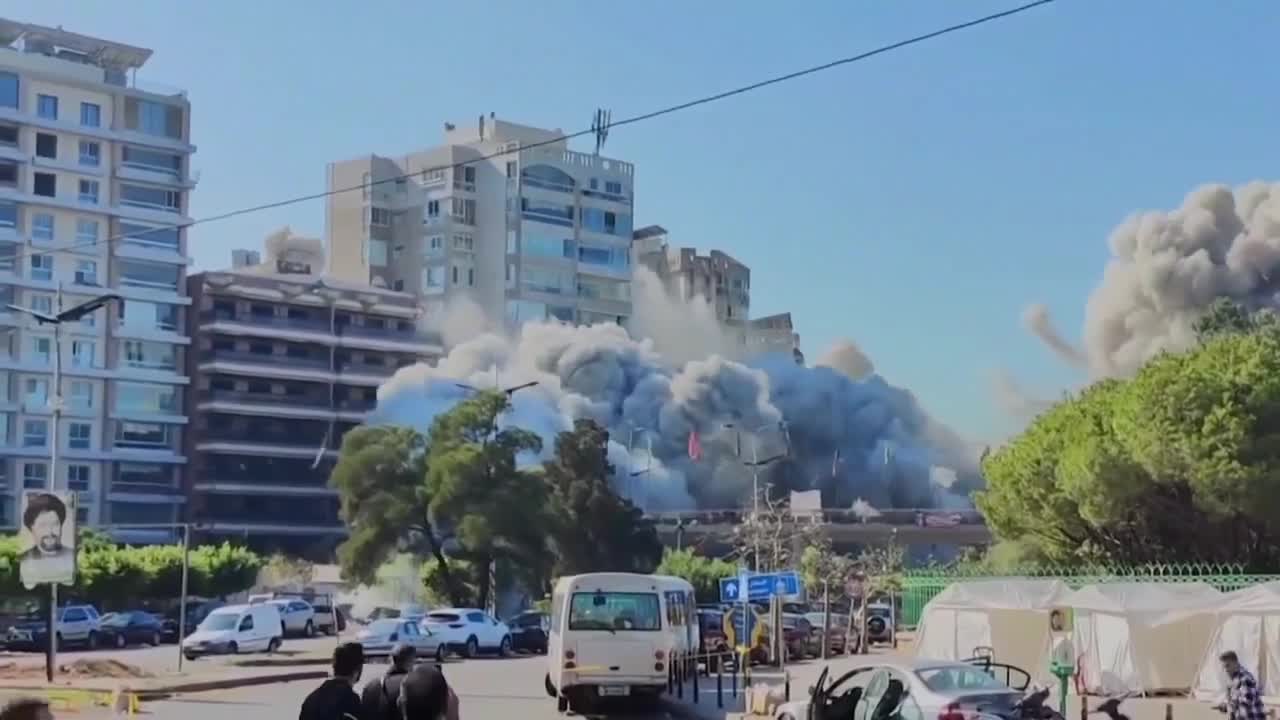
Over the last three years, the war has left tens of thousands dead in Gaza, while the Oct. 7 attacks in Israel killed more than a thousand people. The war quickly expanded into Lebanon before escalating into a broader regional conflict involving Iran and its proxies — developments many in Metro Detroit have followed closely.
Allan Gale, an American Jew who lives in the Metro Detroit area, said the conflict has changed the fabric of the community.
"I used to say metro Detroit has large Arab and Jewish populations, and for more than 100 years we've lived together and there have been no incidents of vandalism or violence. I can't say that anymore. You know what happened to Temple Israel," Gale said.
Earlier this year, a Dearborn Heights man drove his truck into Temple Israel while children were inside. The 41-year-old was shot and killed by the West Bloomfield synagogue's security team. The FBI said the man responsible lost four family members in an Israeli airstrike in Lebanon days before launching his attack on Temple Israel.
Previous Story: Suspect dead after attack on Temple Israel
Both communities say the conflict's impact has stretched far beyond the battlefield.
"More Jews seem to be affiliating and coming to terms with their Jewish identity," Gale said.
Balboul said her own family has not been spared.
"My children have been targeted. I didn't think that I would ever have to face harassment and just being targeted for simply being Palestinian," Balboul said.
When asked if she had experienced this kind of treatment before, Balboul said she had not.
"I can't say that I have," Balboul said.
Despite their experiences, both say the focus now should be finding a path forward.
"Certainly education, denunciation of violence, community leaders stepping up," Gale said.
"Leadership matters. One of the ways we can make our voices heard is how we vote," Balboul said.
With many still impacted by the conflict, they are now looking ahead to November's midterm elections. Michigan's U.S. Senate race between Democratic nominee Abdul El-Sayed and Republican nominee Mike Rogers is expected to be one of the most closely watched contests in the country.
Oakland University Political Science professor Peter Trumbore says other issues may now take priority for most voters.
"In 2024, this was a really, it was a very fresh issue. It was a very divisive issue, certainly in Democratic politics, not just in Michigan, but nationwide. And so played a big role. I think two years later, there are other issues that for the majority of voters are going to be much more important," Trumbore said.
Trumbore says issues like affordability, grocery prices, gas prices and the overall economy are expected to dominate the conversation.
"Voters vote their pocketbooks 9 times out of 10," Trumbore said.
But for many Jewish and Arab Americans in Metro Detroit, the impact of the war remains personal — and political.
When asked whether the midterm elections could offer a solution to what's happening in the Middle East, both expressed cautious hope.
"I would hope it'd be a step forward," Gale said.
"I think as humans, I think we are all in this together," Balboul said.
This story was reported on-air by a journalist and has been converted to this platform with the assistance of AI. Our editorial team verifies all reporting on all platforms for fairness and accuracy.
