

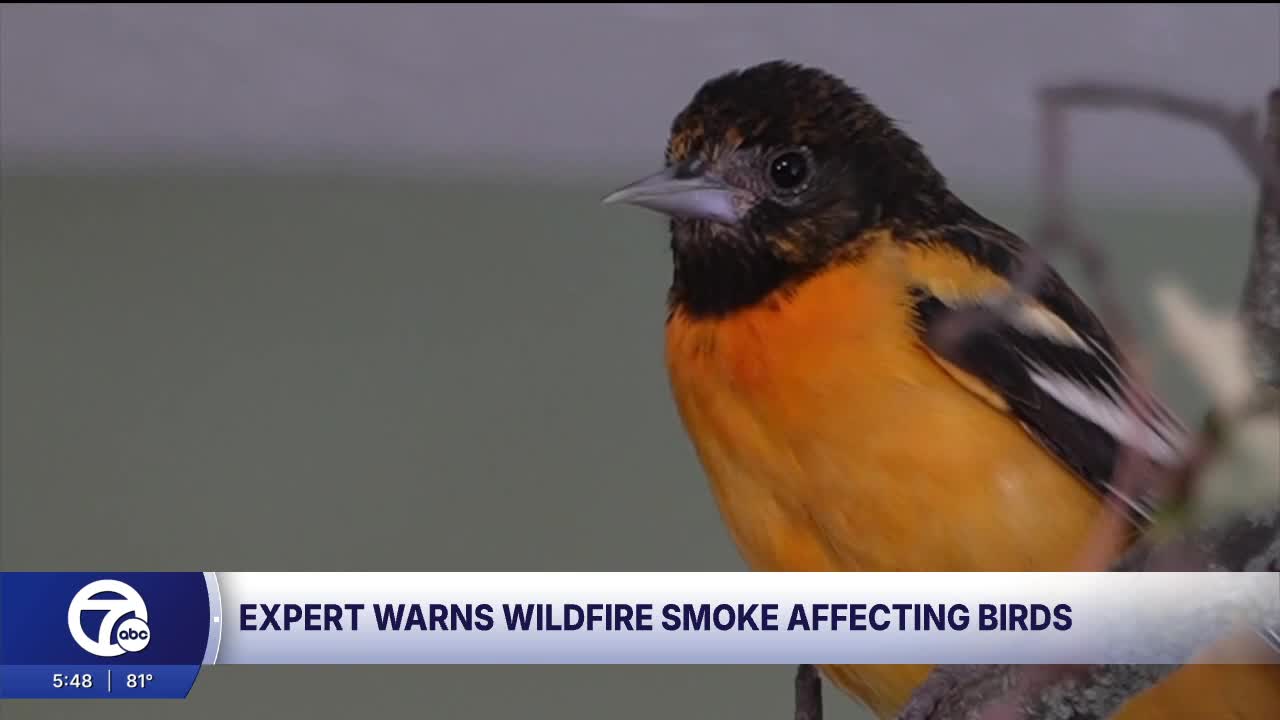


SALINE, Mich. (WXYZ) — Wildfire smoke blanketing parts of the region is raising concerns beyond human health — wildlife specialists say birds face serious risks from the lingering haze, and some are already showing troubling symptoms.
Georgianna Ritenour, a bird rehabilitation assistant at the Bird Center of Michigan, says birds are uniquely vulnerable because of how their respiratory systems work.
Watch Jeffrey Lindblom's video report below:
"For birds, it takes two breaths to cycle air through their lungs because it's just a one-way respiratory route," Ritenour said.
That two-breath cycle exists for a reason: birds need more oxygen to sustain flight.
"Because they need more oxygen to power their muscles for flight," Ritenour said.
Watch our full interview with Georgianna Ritenour below:
Birds absorb 25% more oxygen than mammals, supporting a heightened metabolic rate that powers their highly active lifestyle.
"Because they're using energy to pump their muscles in their chest, it takes a lot to prevent those muscles from denaturing," Ritenour said.
But that same powerful respiratory system also makes birds more fragile. Because they take two breaths for every one a human takes, they also inhale twice as many wildfire particles floating in the air.
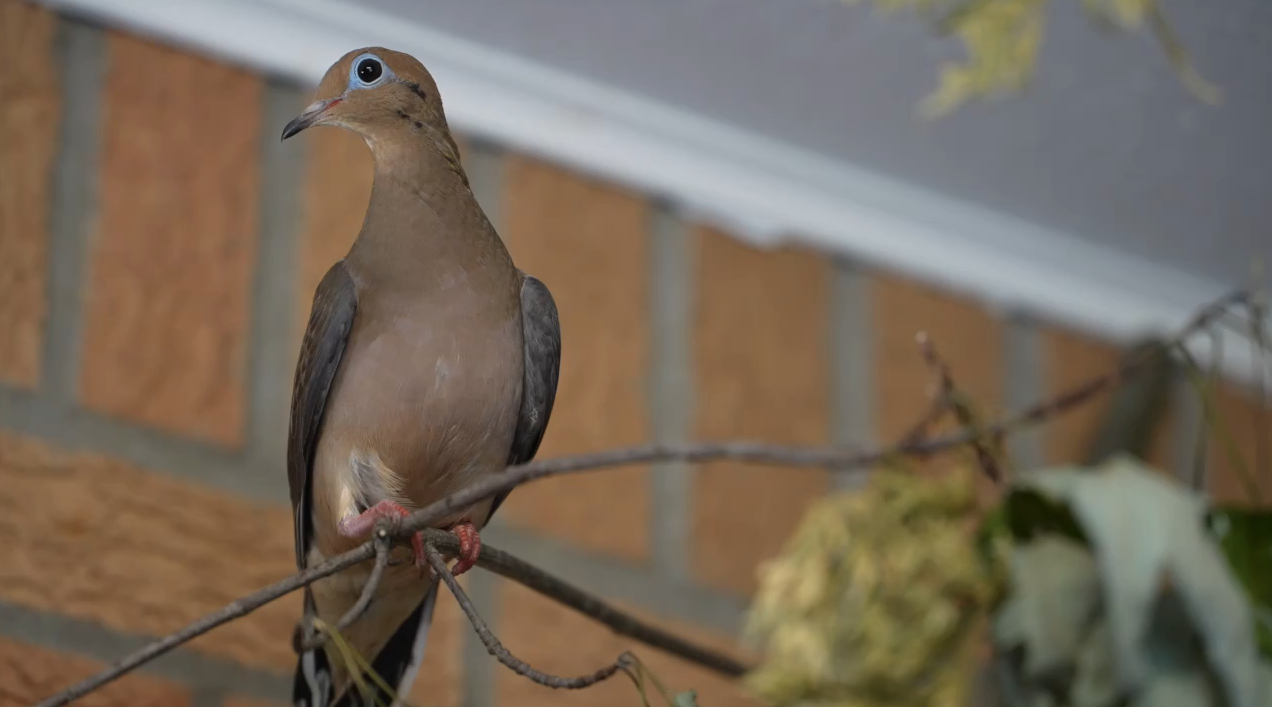
Ritenour says some birds are already changing their behavior in response to the smoke.
"A lot of birds are hanging out on the ground, even if they're tree-dwelling species just to avoid some of that smoke," Ritenour said.
The Bird Center of Michigan has seen more birds arriving with neurological conditions that Ritenour suspects are linked to smoke exposure. Bird studies suggest wildfire smoke can lead to less vocalization, increased disorientation and changes in migration patterns for some species — like geese — placing smaller birds at even higher risk.
"They seem outwardly healthy, but they're acting differently. So now, as the air quality is improving, more people are finding these birds with these residual effects," Ritenour said.
Unlike people, birds have no way to seek shelter from the smoke.
"Wild animals, especially birds, can't go inside and protect themselves from the smoke," Ritenour said.
Arihant Jain, a wildlife enthusiast, recently brought a bird to the center after finding it injured in his yard.
"Clearly, something is wrong with her and I called these great folks up and they said bring them over," Jain said.
While Jain is not sure whether the bird's condition is smoke-related, he hopes to see it helped — like the several hundred other birds the center is currently treating.
Ritenour says anyone who finds an injured bird or one acting abnormally should reach out for help.
———
This story was reported on-air by a journalist and has been converted to this platform with the assistance of AI. Our editorial team verifies all reporting on all platforms for fairness and accuracy.
