

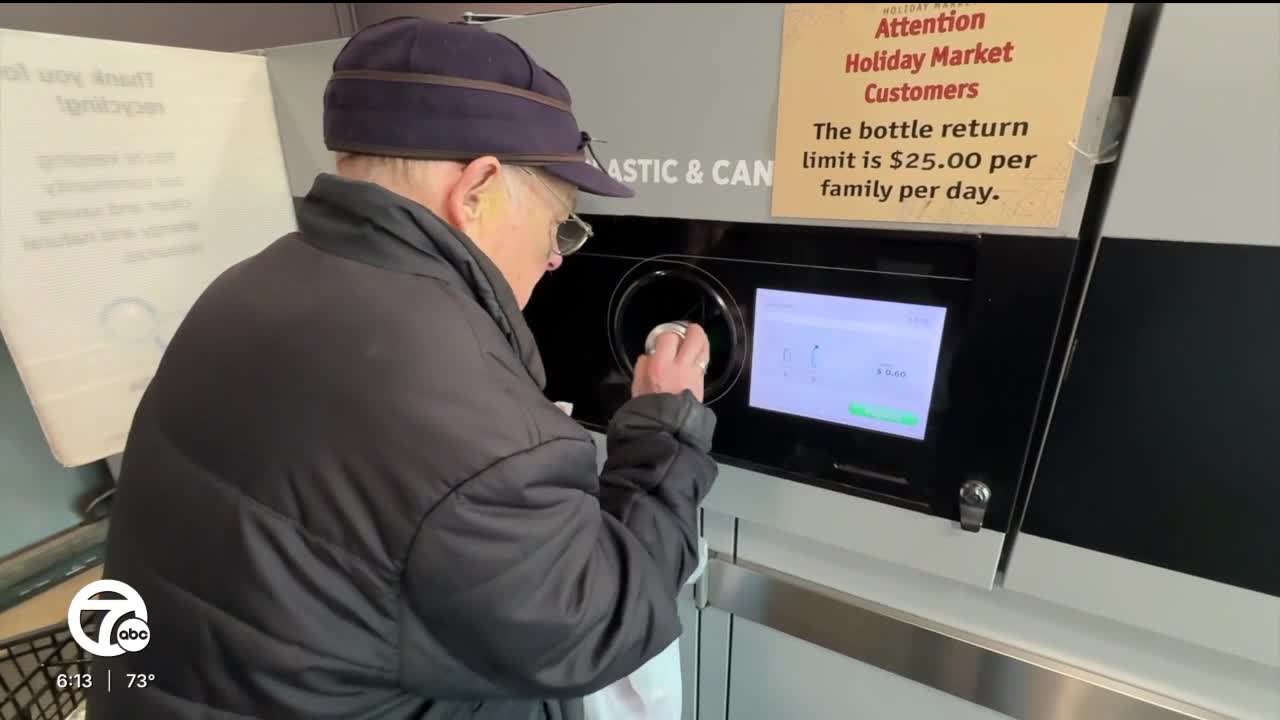


DETROIT (WXYZ) — This year marks 50 years since Michigan’s landmark bottle bill — the law that tacked a 10‑cent deposit onto eligible cans and bottles, refunded when you return them at the store.
Watch Brett Kast's video report:
But after five decades, some independent retailers say they’ve had enough and are urging lawmakers to scrap the program entirely.
It’s a routine Michiganders know well. The sounds, the smell, the stickiness, and the occasional frustration — all to reclaim that 10-cent deposit from a system five decades old.
John Denha is the owner of Savon Foods, a locally owned grocery store on 7 Mile in Detroit. They don’t sell alcohol, but when selling carbonated soft drinks, they’re legally required to collect a 10-cent deposit and in return, take back the empties.

By the week's end, Denha says they’ll have 10-15 bags of bottle returns in the back, which he says are often dirty, smelly, and could have rodents or pests.
“It's more of a nuisance and a burden on us because we're selling fresh meat, fresh produce, and then we have this dirty area for the bottles," said Denha.
To manage it, he’s invested more than $10,000 for a bottle return machine — a big expense for a small business. And keeping the area clean is an ongoing cost.
“It's a mess, from start to finish," said Denha.
That burden is why Bill Wild and the Midwest Independent Retailers Association are calling for an end to Michigan’s bottle bill, originally passed in 1976 to curb littering. Michigan is currently one of only 10 states with a bottle deposit law.

“When you say it out loud, that we’re asking you to take your trash back to the grocery store, what other industry do we say that to?” said Bill Wild, CEO of the Midwest Independent Retailers Association.
While Wild says retailers are almost universally opposed, shoppers I spoke to were more mixed.
“I think it's fair, I think it drives the right incentive to get people to return, recycle," said shopper Mark Oakes.
"I think it’s more a nuisance," said shopper Gerald Williamson.
While the program boasted a more than 90% return rate for years. Recently, especially after COVID, return rates tanked, falling to just 70% in 2024, the lowest ever recorded.

So what’s behind this decline? Certainly, a lot has changed since 1976. For one, 10 cents doesn't have the same value to us as it did back then; there’s also more online shopping and grocery delivery, meaning less people are physically going to the store. Plus, the majority of Michiganders now have curbside recycling.
"This is a law that hasn't really been changed in 50 years," said Shelie Miller, University of Michigan professor of the School for Environment and Sustainability.
Last fall, Miller and a team of researchers released a study on Michigan’s bottle bill and how to make it better.
"One of the big recommendations of our study is if there is a revisit of the bottle system, to change funding," said Miller.
In 2024, $115 million worth of bottle deposits went unreturned, with 75 percent of it going back to the state. The study found that money would be better off being invested in the system, whether to help businesses or to make returns more convenient, possibly with centralized drop-off sites.
“Overall, bottle bills work, bottle bills are really the most effective way of improving recycling and continuing good recycling," said Miller.
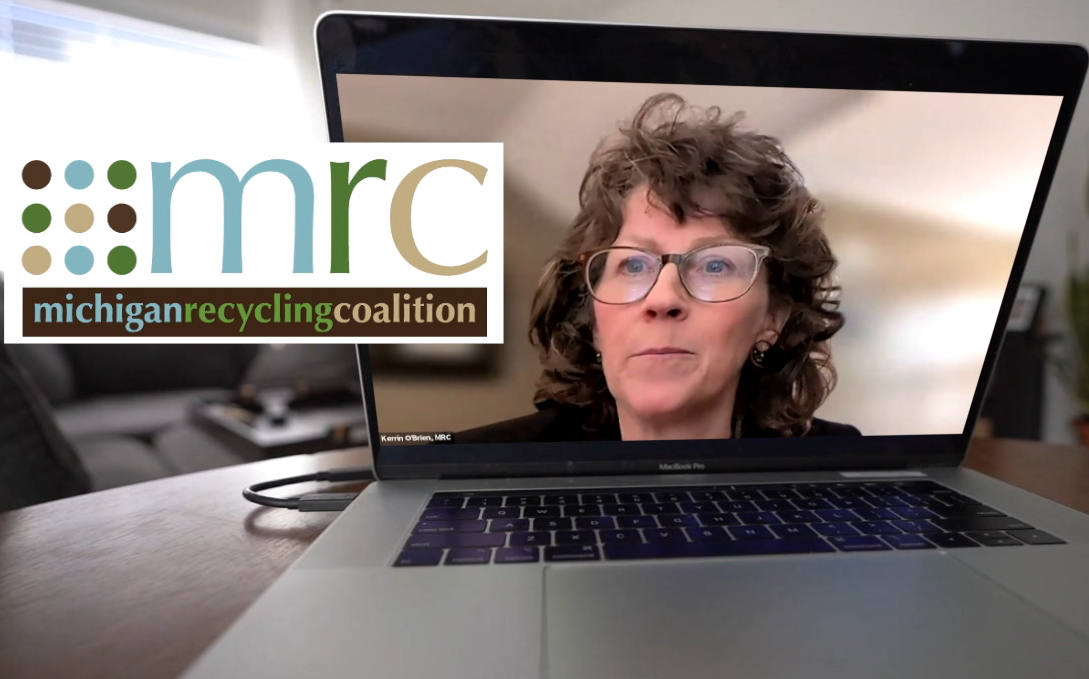
Despite falling returns, Kerrin O’Brien and the Michigan Recycling Coalition support having a bottle bill, but at the same time, aren’t opposed to reforms
“We are not in favor of repealing this law; it is an important part of the underpinnings of recycling," said O'Brien. "Of late, the program is not performing as well as it used to, and I think we're all looking at that program to see how can we return those rates to the levels they used to be.”
As for Denha, he’s all for more recycling and reform, just not in his store.
“I want our customers to know that the burden we go through on accepting bottles, it would be beneficial for everyone to go to a recycling center or do curbside recycling,” Denha said.
