

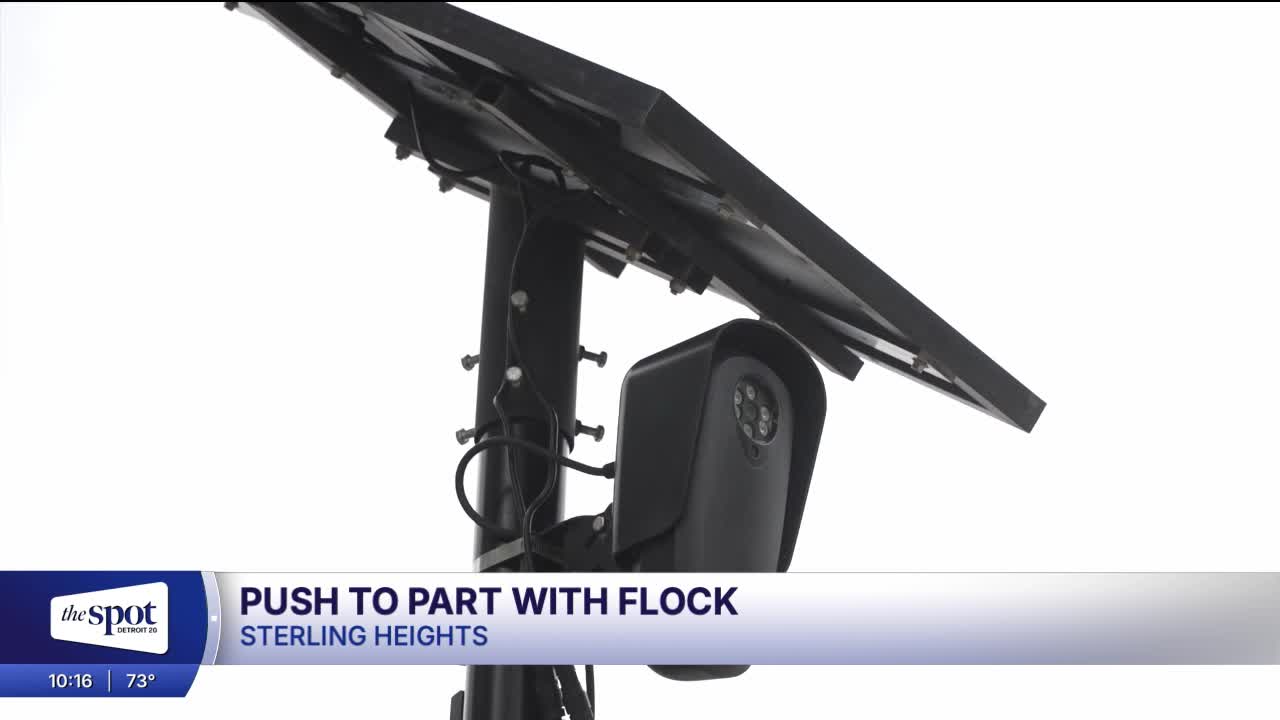

STERLING HEIGHTS, Mich. (WXYZ) — A debate over surveillance technology and privacy is growing in Sterling Heights, where city council members are demanding more information about how the city's automated license plate reader system is being used and who has access to the data it collects.
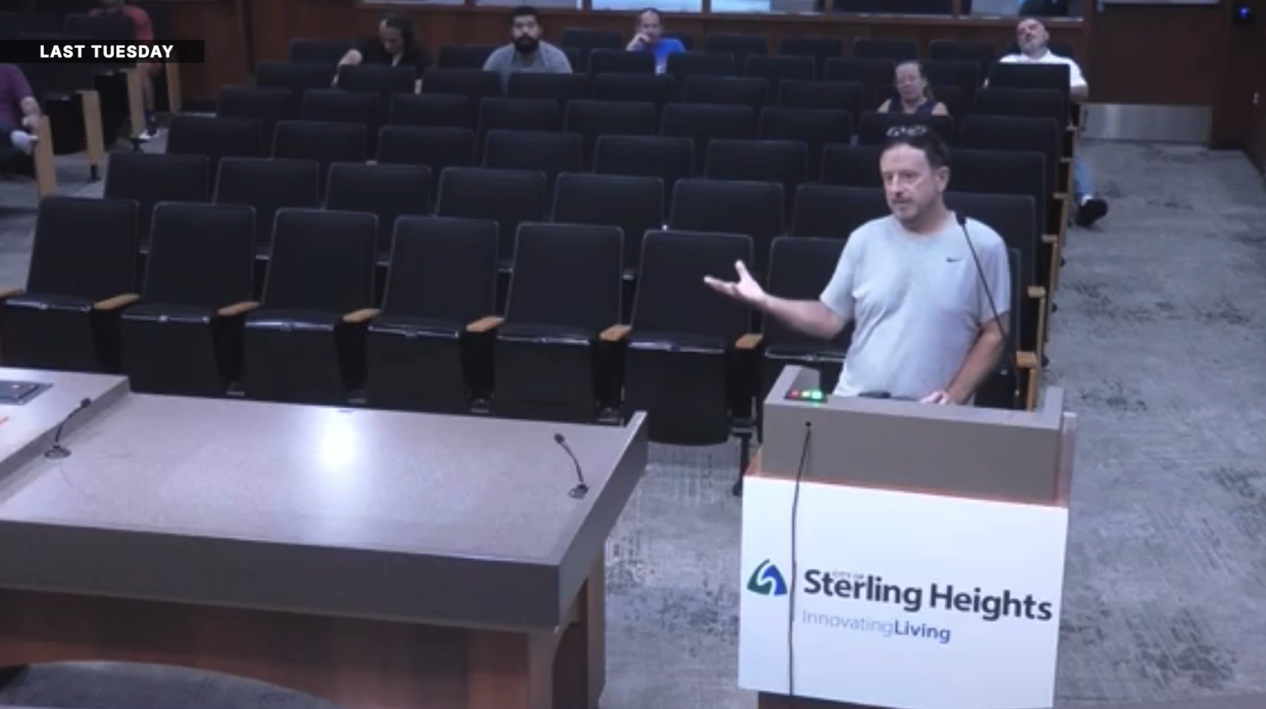
At last Tuesday's public comment period, residents voiced concerns about Flock cameras — devices that scan and record license plates — questioning whether the technology violates privacy rights and could be misused.
Watch Evan Sery's video report below:
"I don't like being surveyed without use of warrants, or it doesn't seem like it abides by the Fourth Amendment," one resident said.
"I know my data's in there, my son's data is in there, my wife's data is in there," another resident said.
"I have a lot of questions," a third resident said.
Sterling Heights Councilman Michael Radtke, who has opposed the city's use of Flock cameras since the city began using them four years ago, said the public turnout reflects a broader anxiety about digital tracking.
"I think people are very concerned about AI and digital tracking and a lack of privacy, and people are responding by going to meetings," Radtke said.
Radtke acknowledged the cameras can serve a law enforcement purpose but warned of potential for abuse.
"Yes, it can catch criminals. It can also be used for abuse — stalk your ex-girlfriend, follow political activists," Radtke said.
According to the city police department's Flock transparency website, only license plates and vehicles are detected. Facial recognition, people, gender and race are not. In the last 30 days, the cameras have read over 1 million unique license plates.
At that same council meeting, Radtke and the rest of city council ordered the police department to release more information about what is behind those numbers.
"So I'm just asking, without objection, I'd like to see the year's logs," Radtke said.

Radtke also raised concerns about whether data collected locally could make its way to federal authorities.
"Sterling Heights has a very firm policy on this and our officers are following the law, but what's to stop someone on a federal task force from going to their home department, requesting information and bringing it back to the federal government? There's no safeguard," Radtke said.
The city's transparency dashboard states that data is for the Sterling Heights Police Department only and is never sold to third parties.
Not everyone in Sterling Heights shares those concerns. At Dodge Park, resident Miles Berkow said Flock is simply a sign of the times.
"What used to be considered an invasion of privacy today is just a normal thing," Berkow said. "Everybody's got a camera, anybody can take your picture. I carry it, I can take pics of anybody and through the internet identify who they are."

Resident David Rocco said he is in full support of the program.
"If you've done nothing wrong, you got nothing to be worried about. It's to keep an eye on traffic and people not respecting the law," Rocco said.

Radtke, despite his opposition, said his immediate priority is accountability.
"I'm against Flock and I would vote to get rid of it tomorrow, but if we're gonna have it, I want to make sure it's being done in a lawful, ethical manner as our policy states," Radtke said.
The city's contract with Flock is set to be renewed next month.
—————
This story was reported on-air by a journalist and has been converted to this platform with the assistance of AI. Our editorial team verifies all reporting on all platforms for fairness and accuracy.


