

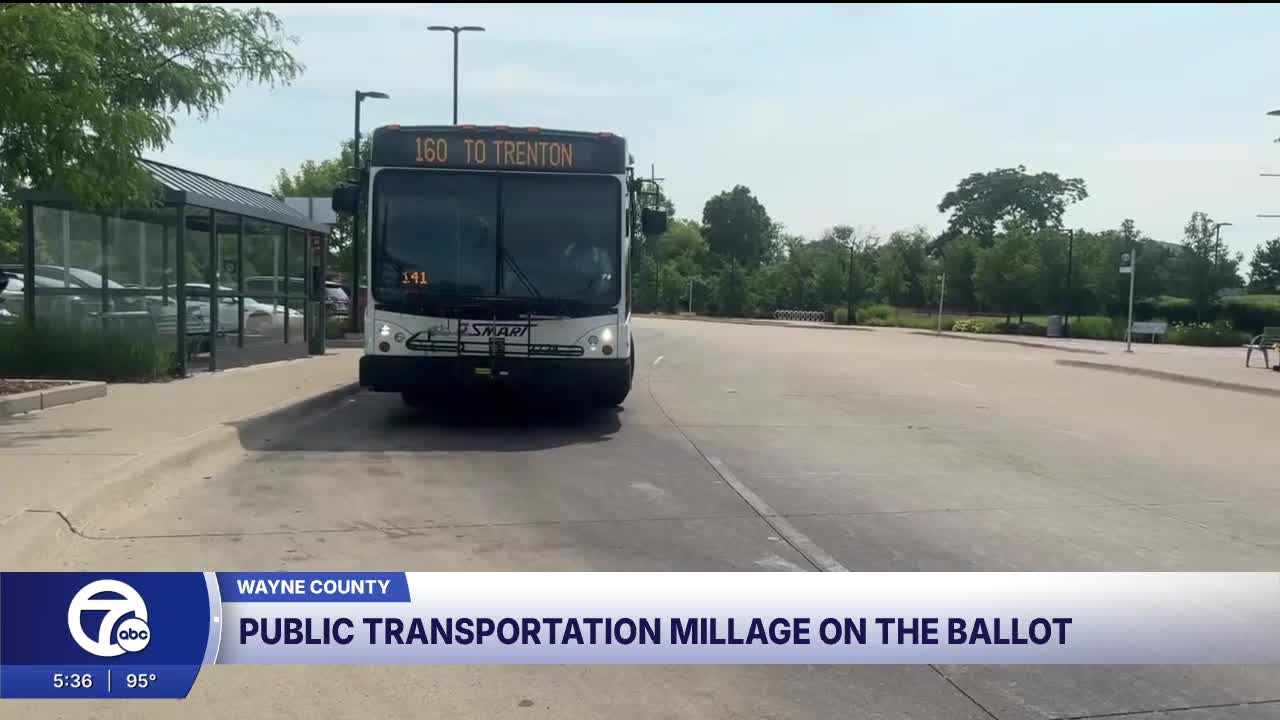


WAYNE COUNTY, Mich. (WXYZ) — Public transit connects thousands of people across Wayne County every day — from getting to work to making doctor's appointments. On Aug. 4, voters will decide whether the funding that supports those services will continue.
Watch Carli Petrus's video report:
Wayne County Executive Warren C. Evans said the millage, if passed, would keep transit services running and expand access across all 43 communities.
"It is extremely important that we think of transit in terms of opportunities," Evans said.
Evans pointed to the region's broader transit landscape as context for the vote.

"Wayne, Oakland, and Macomb ought to be a solid region and transportation is a big portion of that and Wayne County is the only county that hasn't stepped up to the plate to where they should yet," Evans said.
For supporters like Lisa Franklin, public transportation is more than a convenience — it's a lifeline. Franklin was paralyzed from the waist down after a drunk driver crashed into her in 1996, and she now relies on others to get where she needs to go. She said the funding would help increase access to jobs, healthcare, schools and shopping for thousands of people.
"I just want to make sure everybody knows that one day it could be you," Franklin said.

"18, or 118, somewhere down that line, you're going to need transportation from somebody else. We depend on this transportation service more than anyone else, so if we do it for us, then it's good for everybody," Franklin said.
If the millage passes, the 26 communities that already pay the transit tax would keep their current rate. The other 17 communities would begin paying the tax — a concern for some residents.
"It averages about $8 a month for a house value of $200,000," Evans said.
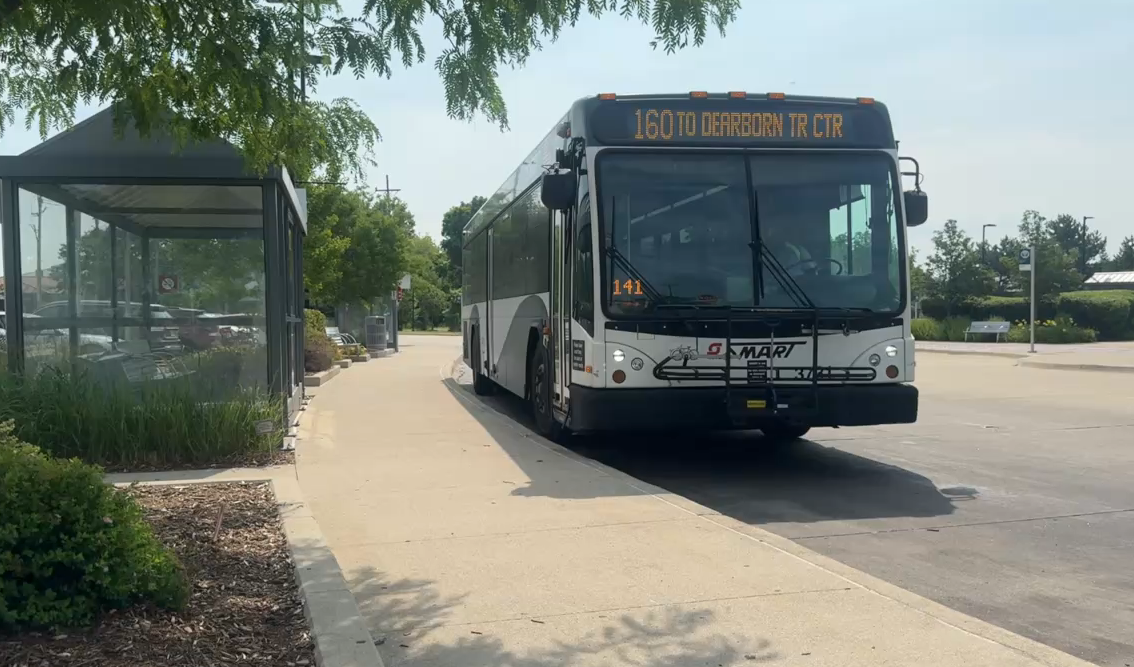
Brownstown Township is one of the 17 communities that would begin paying the tax. Resident Dana Palazzolo said the dollar amount isn't what gives him pause.
"$8 a month is really not a lot of money, I mean it's $96 a year or so," Palazzolo said.
But Palazzolo remains on the fence over questions about the millage's financial sustainability.
"But I think the fact that it just doesn't pay for itself," Palazzolo said.
If the millage does not pass, county leaders say transit funding would stop at the end of the year, which could lead to reduced or eliminated bus services.
Check out the millage proposal language below:
WAYNE COUNTY TRANSIT AUTHORITY PROPOSAL
Wayne County Transit Authority
Wayne County Public Transportation Millage
A proposal to authorize the Wayne County Transit Authority to levy a millage for the purpose of funding public transportation services in Wayne County, including operating, maintaining, improving, and expanding transit services; creating and expanding new fixed routes for bus service connecting local communities; expanding transportation services for seniors, veterans, people with disabilities, and the general public to access healthcare, education, and other daily needs. The millage would be levied at a maximum rate of 0.9831 mills (0.98 cents per $1,000 of taxable value) for a period of 10 years beginning with the 2026 tax year levy and ending with the 2035 tax year levy. This millage would replace an expiring millage levied by the Wayne County Transit Authority supporting the Suburban Mobility Authority for Regional Transportation (“SMART”). If this new millage is approved and levied, revenue will be distributed to Wayne County, SMART, Detroit Department of Transportation (DDOT), and other community and regional transit providers. It is estimated that $57,616,329.00 will be collected in the first year. Should this proposal be adopted?
This story was reported on-air by a journalist and has been converted to this platform with the assistance of AI. Our editorial team verifies all reporting on all platforms for fairness and accuracy.


